
DailyPetPicks is reader-supported. As an Amazon Associate, we earn from qualifying purchases, at no extra cost to you.
Most people buy a tick remover for dogs in June and forget about it by September. That is backwards. Adult deer ticks, the stage most likely to latch onto a dog, are active from October right through to May on any day the temperature climbs above freezing. Autumn walks through leaf litter are prime tick territory, and a tick found on a dog in November is just as real as one found in July.
There is also a genuine disagreement about technique that every listing glosses over: the CDC says pull straight out and never twist, while the best-known tick tool on the market tells you to turn it and never pull. Below we explain what both sides actually agree on, which matters far more than the twist, and then give four picks for the best tick remover for dogs, each suited to a different kind of owner.
Why tick season doesn’t end in autumn
The University of Rhode Island’s TickEncounter Resource Center, one of the most widely cited tick programmes in the US, states that adult blacklegged ticks are active from October through May as long as the daytime temperature stays above freezing. Nymphs dominate summer; adults take over in autumn and on mild winter days. Researchers writing in The Conversation make the same point: ticks are hungry in the fall, and people relax exactly when they shouldn’t.
Dogs are low to the ground, push through brush and leaf piles, and carry ticks home on their coats. That makes a tick remover for dogs a year-round tool in most of the US, not a summer one. Keep it where you keep the leash.

The twist argument: CDC vs. the Tick Twister
Here is the conflict in plain terms. The CDC’s tick removal fact sheet says to grasp the tick with fine-tipped tweezers as close to the skin as possible and pull straight away from the skin with steady, even pressure, and to avoid twisting or jerking. O’Tom, the French company behind the Tick Twister, instructs the opposite: slide the hook under the tick, lift very lightly, turn it, and the tick comes away after two or three rotations. Its own instructions say never to pull.
Both methods are used by vets, and both are sold in huge numbers. So rather than pretend one side is wrong, look at what they share, because that is what actually protects your dog:
- Grip at the head, not the body. Both methods work at skin level. Fine tweezers grab the mouthparts; a hook or slot slides under the body to reach the same point.
- Never squeeze the swollen body. Crushing a fed tick is what pushes fluid back into the bite. A proper tick remover for dogs is designed so you never have to.
- Slow and steady, no yanking. The CDC’s warning about twisting is really a warning about jerky, forceful movement that snaps the tick. The Tick Twister’s rotation is slow and light.
Our practical take: if you have steady hands and good light, the CDC’s straight-pull method with fine-tipped tweezers is the reference standard. If you struggle with tweezers on a wriggling dog, or the tick is buried in thick fur, a hook-style tick remover for dogs is easier to get right, and an easy method done calmly beats a perfect method done badly.
What never to do
The CDC is blunt about folk remedies: do not use petroleum jelly, heat, nail polish, or other substances to make a tick let go, because they may cause the tick to force infected fluid into the skin. That rules out the lit-match trick, the dab of nail polish, and the smear of Vaseline that still circulate online. Don’t wait for the tick to drop off on its own, either. The fact sheet says to remove it as soon as possible.
And don’t pull with bare fingers if you can avoid it. Fingers squeeze, which is exactly the problem described above. Even a cheap plastic tick remover for dogs is better than fingertips.
The 4 best tick remover for dogs picks
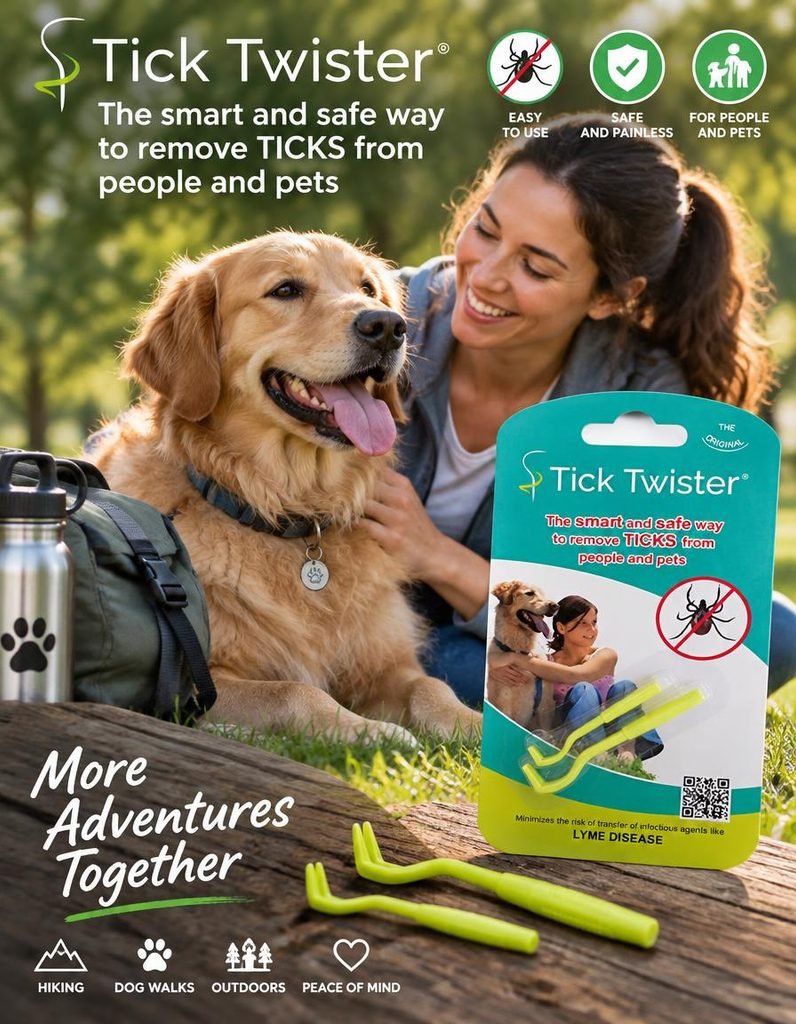
1. Tick Twister Tick Remover Set Small Large
The Tick Twister is the tool many vets hand to clients, and it is the one the rotation method was built around. Each pack contains two hooks, a small one for unfed or tiny ticks and a large one for engorged ones, and you choose the hook that fits the tick. The forked tip slides under the body without compressing it, which is the single most important thing a tick remover for dogs can do.
It works especially well on dogs with medium or long coats, where getting tweezers flat against the skin is awkward. The hooks are plastic, light, and cheap enough to keep one in the car, one in the walk bag, and one in the bathroom drawer.
- Best for: owners who find tweezers fiddly, thick or long coats
- Method: slide under, lift lightly, rotate slowly
- Watch out for: it takes a little practice to seat the fork correctly on very small ticks; use the small hook for those
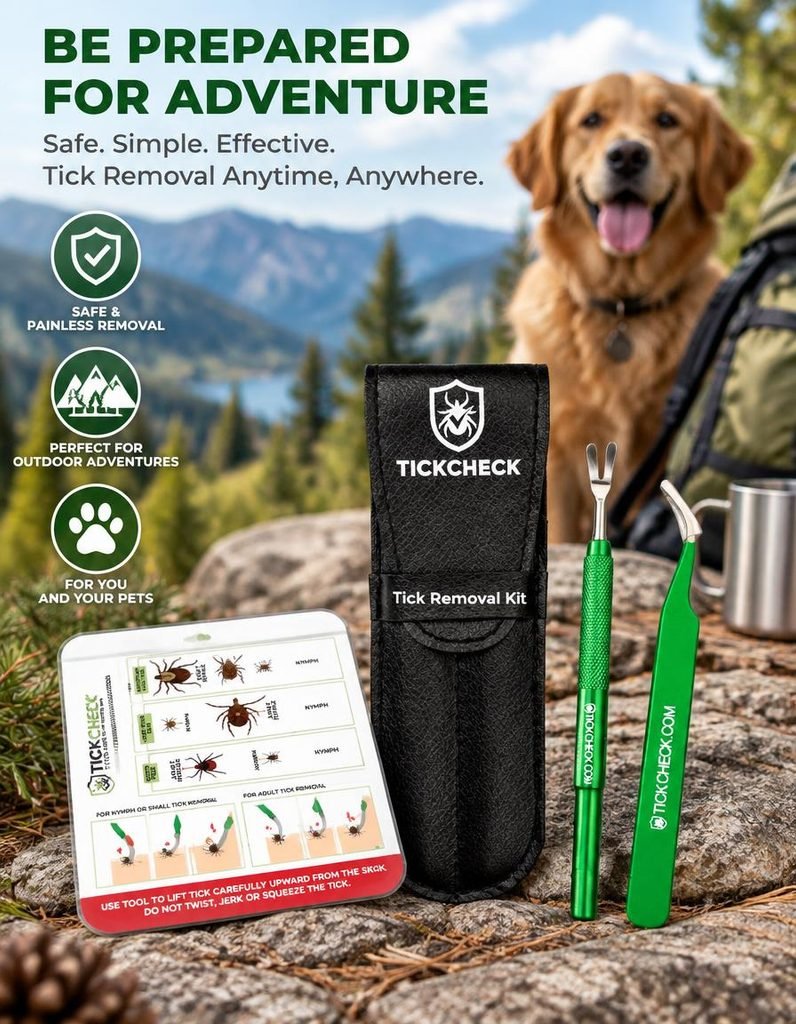
2. TickCheck Premium Tick Remover Kit – best for the CDC method
If you want to follow the CDC’s straight-pull instructions exactly, you need fine-tipped tweezers, not the blunt flat-ended kind from a bathroom cabinet. This kit gives you both options in one case: a pair of stainless steel fine-point tweezers and a stainless steel slotted remover, plus a leather case and a pocket tick identification card.
That combination is why it is consistently one of Amazon’s best-selling tick tools. Use the tweezers for small ticks in short coats where you can see the head clearly, and the slotted remover when the tick is larger, or the dog won’t hold still. It is also the tick tool we recommend adding to any pre-made kit in our dog first aid kit roundup, because most kits ship with flimsy tweezers.
- Best for: owners who want the reference method, short-coated dogs
- Includes: fine-point tweezers, steel slotted remover, case, ID card
- Watch out for: fine points are sharp; part the fur and work in good light
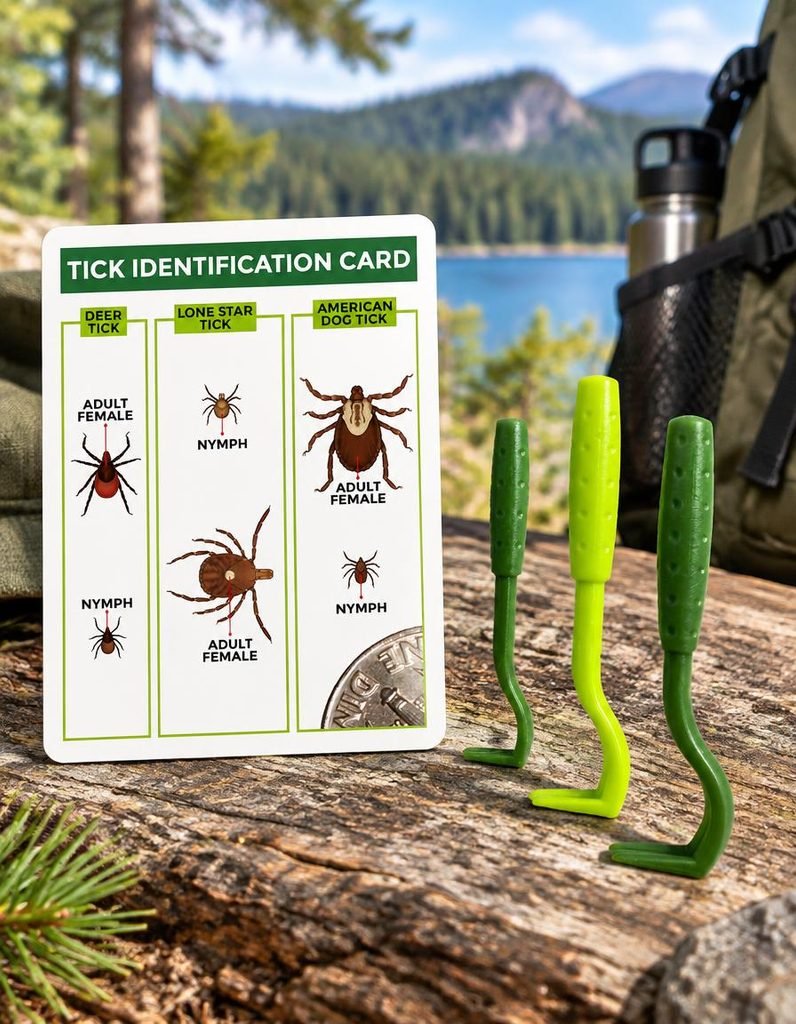
3. TickCheck Tick Remover Value 3 Pack – best to keep everywhere
The best tick remover for dogs is the one you actually have with you when you find the tick, and that is usually at the trailhead or in the car, not at home. This three-pack of flat notched removers is Amazon’s top-selling tick tool for exactly that reason. You slide the wide end of the notch under the tick against the skin and draw it toward the narrow end, which grips the head and lifts the tick out without squeezing the body.
They are flat enough to clip onto a keyring or slip into a treat pouch, so splitting the pack between car, walk bag, and home costs nothing. If you already carry one of our treat pouch picks, one of these lives in the side pocket.
- Best for: hikers, multi-car households, everyday carry
- Method: slide notch under, draw along the slot, lift
- Watch out for: less precise than tweezers on very tiny nymph-stage ticks
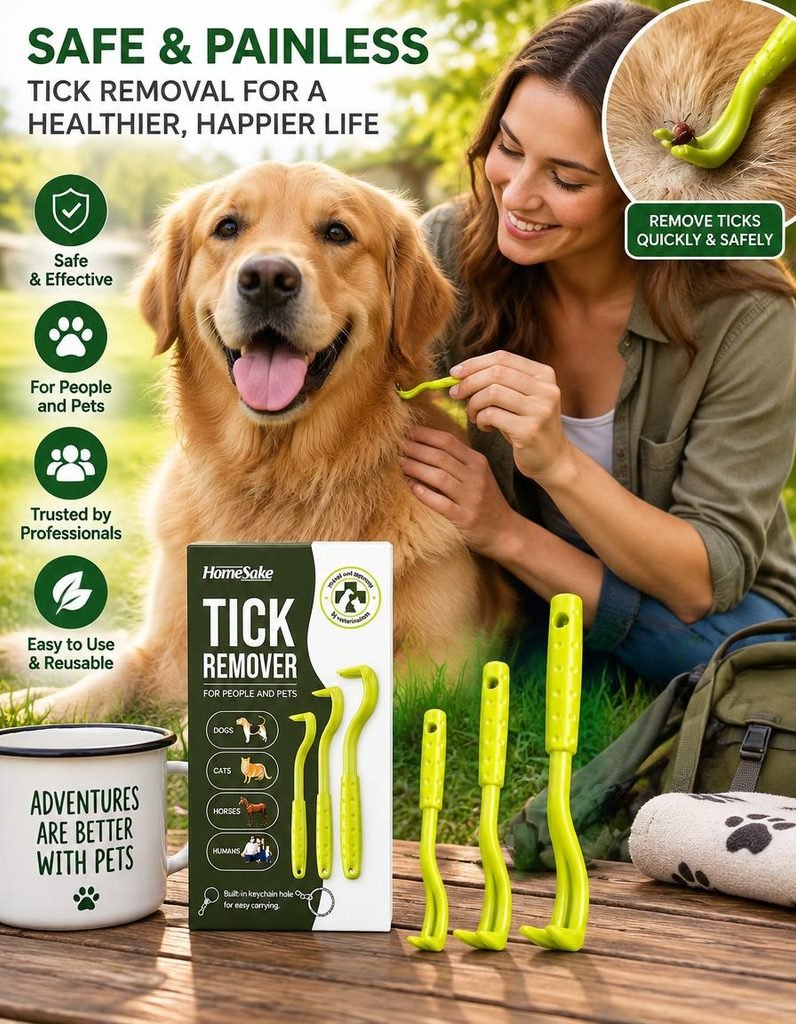
4. Homesake Tick Remover 3 Pack – best budget backup
Homesake’s set is another top-ranked notched-remover pack, with a keychain hole on each tool and an identification card. It uses the same slot mechanism as pick, and we’ll be honest that the two do the same job. Pick whichever is cheaper on the day; the point of a budget tick remover for dogs is to buy enough of them that one is always within reach.
- Best for: a cheap spare set, dog walkers, pet sitters
- Method: same slide-and-lift slot as pick 3
- Watch out for: check the notch edges are smooth before first use
How to remove a tick from your dog, step by step
- Get help and light. One person steadies the dog, ideally with a lick mat or treat as a distraction; the other works.
- Part the fur. Push the hair flat around the tick so you can see where it enters the skin.
- Position the tool at skin level. Tweezers grip the head; a hook or notched tick remover for dogs slides under the body.
- Remove slowly. Straight, steady pull for tweezers and notched tools, or slow, light rotation for the Tick Twister. No jerking.
- Deal with the tick. The CDC suggests sealing it in a bag or container, wrapping it in tape, flushing it, or dropping it in alcohol. Many vets suggest keeping it in a sealed bag with the date in case your dog gets ill.
- Clean up. Wash the bite and your hands with soap and water or rubbing alcohol.
- Check for more. Where there’s one, there are often others.

If a small piece of mouthpart stays behind, don’t dig at it. The CDC’s guidance for people is to try removing it with clean tweezers, and to leave the skin to heal if you can’t. On a dog, keep an eye on it and call your vet if it swells or the dog keeps worrying at it.
Where ticks hide on a dog
Run your fingers slowly through the coat after every walk in long grass or woods, feeling for small bumps. The usual hiding places are inside and around the ears, under the collar, in the armpits, between the toes, around the groin and at the base of the tail. Slide the collar around rather than only feeling on top of it; if your dog’s collar is wide or padded, ticks love the space underneath. Our dog collar guide covers fit, and a regular brush-through, as in our home grooming guide, doubles as a tick check.
Removal is not prevention
A tick remover for dogs deals with ticks you find. It does nothing about ticks you miss, and some diseases can be passed on before a tick is spotted. That is the job of a veterinary tick preventative, which comes in chews, spot-ons, and collars and should be chosen with your vet for your dog’s weight, age, health, and local tick species. We don’t recommend preventatives on this site because the right one depends on a vet’s judgement.
Call your vet after a tick bite if your dog shows lethargy, fever, loss of appetite, swollen joints, or limping that comes and goes in the weeks that follow, and mention the date of the bite. If you’ve just brought a puppy home, our new puppy checklist includes asking about tick prevention at the first vet visit.
Paw care fits into a wider grooming routine. Answer five quick questions below for a schedule made for your dog.
FAQ
Should I twist a tick when removing it from my dog?
The CDC advises a straight, steady pull with no twisting when using tweezers. Hook tools like the Tick Twister are designed for slow rotation instead. Follow the instructions for the tool you’re using, and whichever you choose, never squeeze the tick’s body or jerk it.
What’s the best tick remover for dogs with long hair?
A hook-style tool such as the Tick Twister is usually easiest in a long coat, because you can slide it under the tick without needing to get tweezer tips flat against the skin through the fur.
Can I use Vaseline or a match to remove a tick?
No. The CDC specifically warns against petroleum jelly, heat, nail polish, and similar substances, because they may make the tick release infected fluid into the bite. Use a proper tick remover for dogs or fine-tipped tweezers.
Do dogs get ticks in winter?
Yes, in many areas. Adult blacklegged ticks are active from October to May on days when it is above freezing, so mild winter days still carry a risk.
Should I keep the tick?
It’s a good idea. Seal it in a small bag or container with the date written on it. If your dog becomes unwell, your vet may want to know what kind of tick it was and when the bite happened.
The bottom line
The twist-or-pull debate matters less than the basics both sides share: grip at skin level, never squeeze the body, go slowly, and skip the folk remedies. For most owners, the the Tick Twister set is the easiest tick remover for dogs to use well; for the CDC’s tweezer method, get the TickCheck Premium kit; and to make sure a tool is always within reach, scatter a cheap notched three-pack between the car, the walk bag, and home. Then keep using them through autumn, because the ticks certainly will.
Still looking for something?
Find the Right Gear for Your Dog
Tell us what's going on, and we'll point you to the picks and guides that fit your dog.
Describe what you needTry: pulls on the leash sheds everywhere peeing inside crate size