
For most dog owners, nail trimming is the most nerve-wracking grooming task. One wrong cut hits the quick; it hurts, it bleeds, and your dog remembers it forever. But overgrown nails cause real pain and joint problems, so they have to be kept short. The good news is that with the right tools and technique, it does not have to be scary. This guide shows you exactly how to trim dog nails safely and calmly, step by step, so you can keep your dog comfortable without the stress.
Table of Contents
- Why Nail Trimming Matters
- Understanding the Quick
- Tools You’ll Need
- Step-by-Step: How to Trim Your Dog’s Nails
- What to Do If You Cut the Quick
- Tips for Nervous Dogs
- How Often to Trim
- Frequently Asked Questions
- Final Thoughts
Why Nail Trimming Matters
Keeping nails short is not just cosmetic — it is essential to your dog’s health. When nails grow too long, they change the way a dog stands and walks, which over time leads to splay feet, joint strain, and even arthritis. Long nails are more likely to snag and tear painfully, and in severe cases they can curl around and grow into the paw pad.
You can usually tell nails are too long if you hear them clicking on hard floors or see them touching the ground when your dog stands. Learning how to trim dog nails properly prevents all of these problems and keeps your dog moving comfortably. For a vet-backed overview of nail anatomy and technique, the American Kennel Club’s nail trimming guide is an excellent reference.
Understanding the Quick
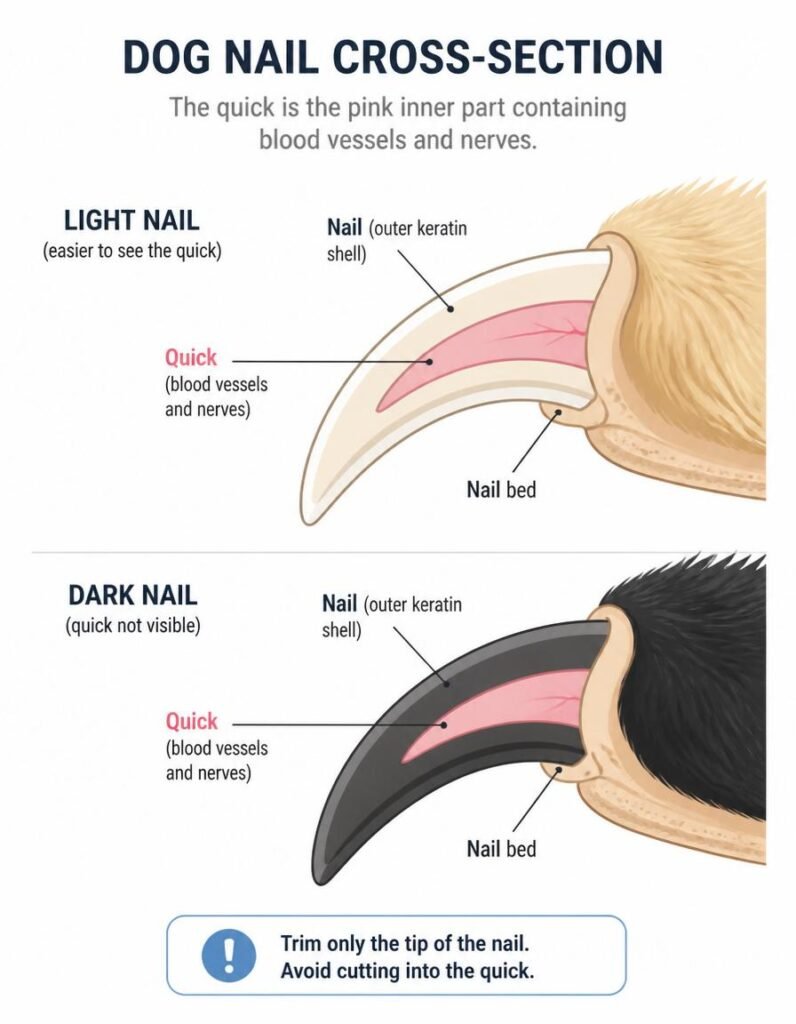
The single most important thing in how to trim dog nails is to understand the quick before you start. The quick is the soft inner part of the nail that contains the blood vessel and nerve. Cutting into it causes pain and bleeding, so the goal of safe trimming is to avoid it.
- On light or clear nails, the quick is visible as a pinkish area inside the nail. Trim only the clear part beyond it.
- On dark nails, you cannot see the quick, so you take off small amounts at a time and watch the cut surface — a small dark dot appearing in the center means you are getting close and should stop.
The key rule for how to trim dog nails without hurting them: when in doubt, take off less. You can always trim more, but you cannot undo a cut.
Tools You’ll Need
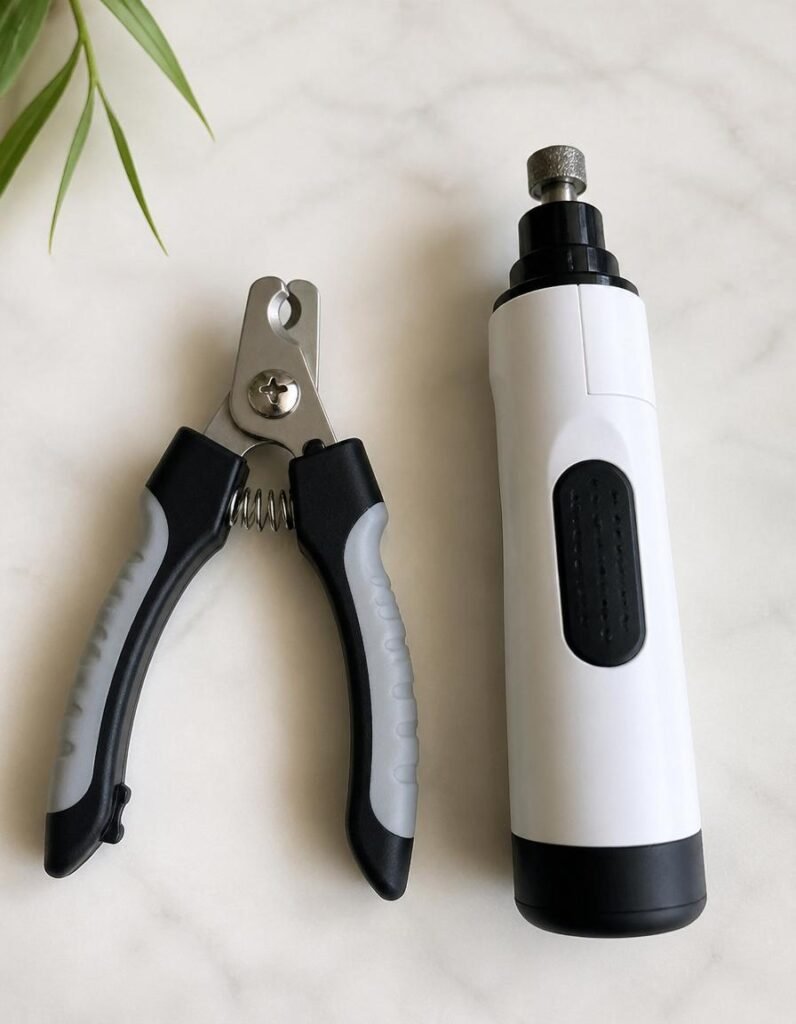
Having the right tool makes learning how to trim dog nails far easier. You have two main options:
- Nail clippers — Fast and effective. Scissor-style or guillotine-style clippers cut the nail in one motion. Best for owners who are confident and dogs who tolerate it well.
- Nail grinders — A rotary tool that files the nail down gradually. Grinders give you more control, are much less likely to hit the quick, and leave a smooth finish. They are ideal for thick nails, dark nails, or dogs that fear clippers.
For a gentle, controlled option, see our Dremel dog nail grinder review. You may also want styptic powder on hand to stop bleeding if you nick the quick, and you can find the rest of your grooming essentials in our best dog grooming tools roundup.
Step-by-Step: How to Trim Your Dog’s Nails
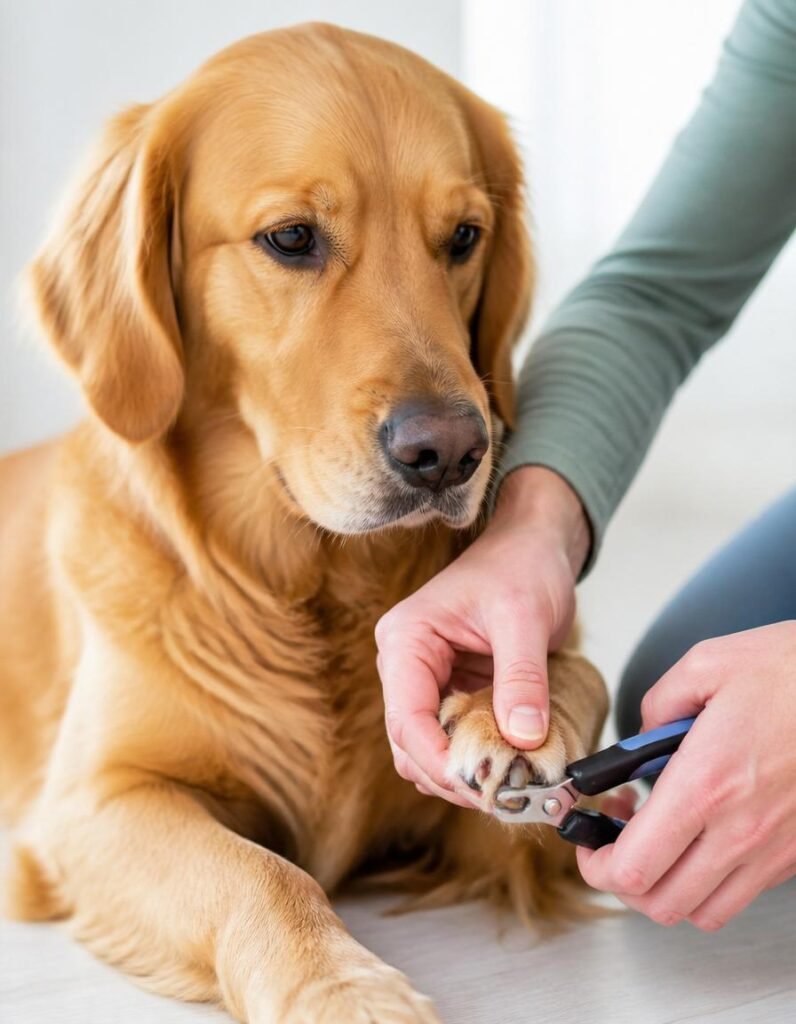
Here is the calm, safe way to trim, whether you use clippers or a grinder:
- Get your dog relaxed. Choose a calm time, settle your dog, and have treats ready. Let them sniff the tool first.
- Hold the paw gently. Support the paw and use your fingers to separate the toe you are working on. Do not squeeze.
- Identify where to cut. Find the quick on light nails, or plan to take off tiny amounts on dark ones.
- Trim a little at a time. Clip or grind a small amount from the tip, staying well clear of the quick. For grinders, use short touches to avoid heat buildup.
- Check the cut surface. On dark nails, stop as soon as you see a dark dot appear in the center.
- Reward generously. Praise and treat after each nail, or every few nails, to keep it positive.
Take breaks if your dog gets stressed. You do not have to do all four paws in one sitting — spreading it out is perfectly fine.
What to Do If You Cut the Quick
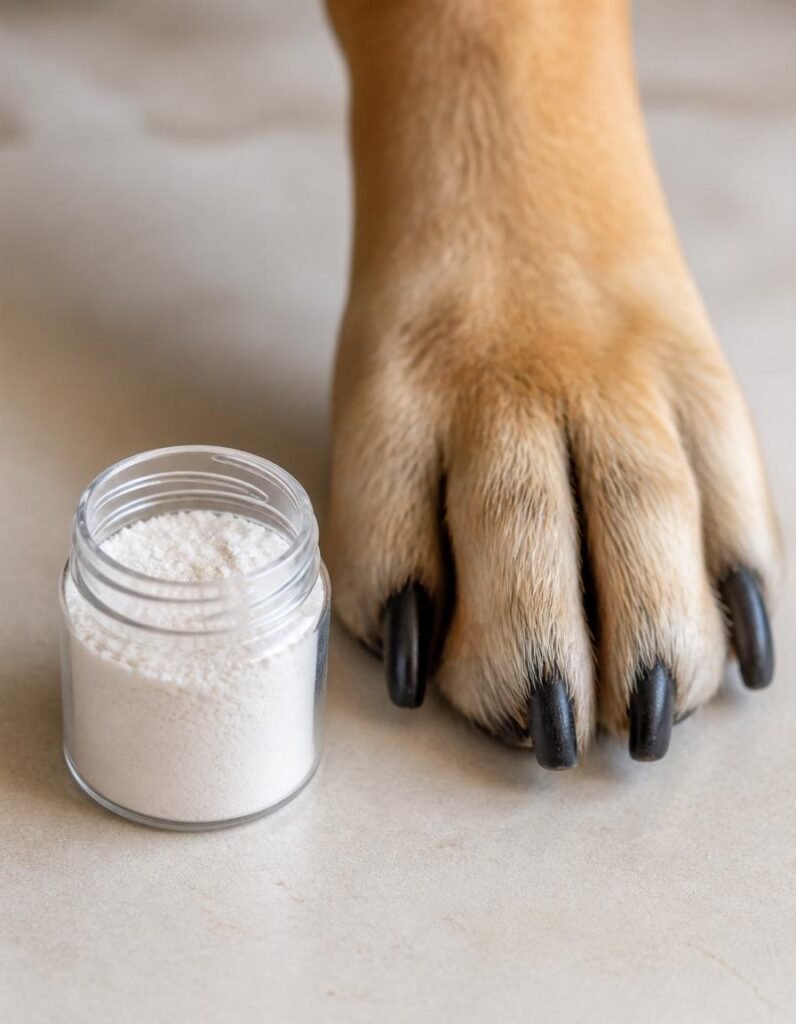
Even experienced owners occasionally nick the quick, so do not panic if it happens.
- Stay calm and reassure your dog.
- Apply styptic powder to the nail tip to stop the bleeding. If you do not have any, cornstarch or a bar of soap can work in a pinch.
- Apply gentle pressure for a minute or two until bleeding stops.
- Keep your dog calm and quiet afterward so the nail can seal.
The bleeding looks dramatic but is rarely serious. Knowing how to trim dog nails includes knowing how to handle this calmly so your dog does not pick up on your stress.
Tips for Nervous Dogs
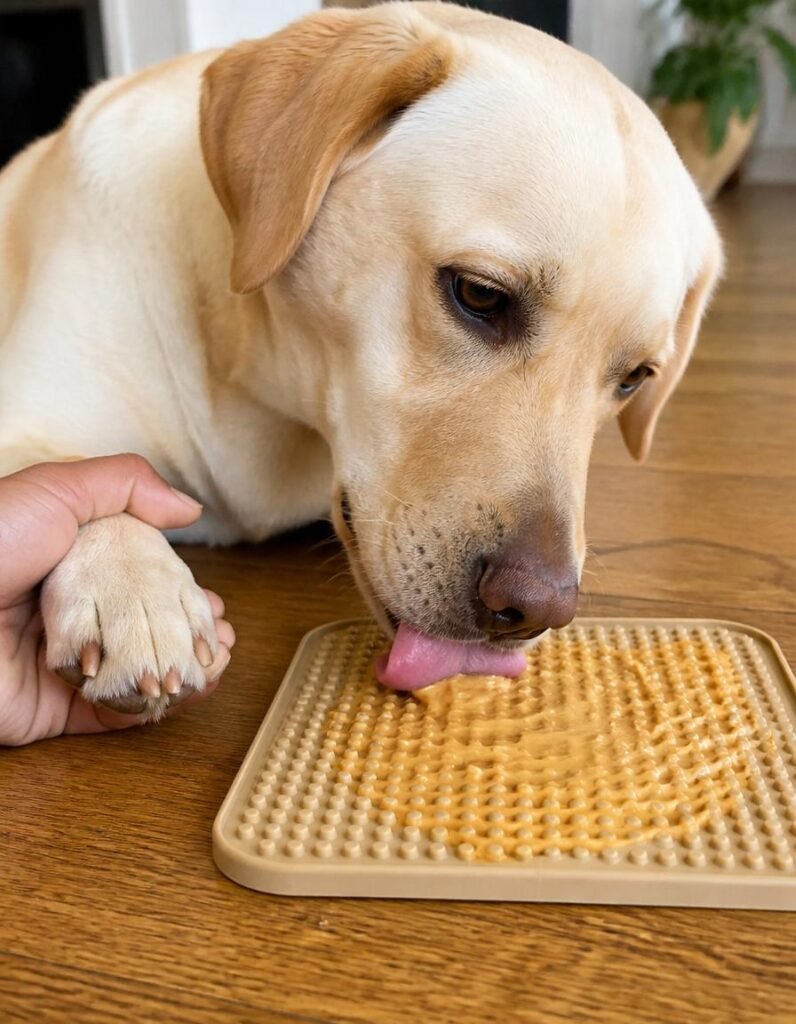
If your dog hates nail trims, go slow and build positive associations:
- Desensitize first. Touch and hold the paws daily without trimming, rewarding calm behavior.
- Introduce the tool gradually. Let them see, sniff, and hear the clipper or grinder before using it.
- Do one nail at a time. Trim a single nail, reward heavily, and stop. Build up over many short sessions.
- Use a lick mat. Spreading peanut butter on a lick mat keeps an anxious dog calmly distracted while you work.
- Never force it. Forcing creates lasting fear. Patience wins.
How Often to Trim
Most dogs need their nails trimmed every three to four weeks, though it varies with activity level — dogs walked often on pavement naturally wear their nails down more. A good rule of thumb is to trim whenever you hear nails clicking on the floor. Trimming a little, often, also keeps the quick from growing long, which makes every future trim easier and safer.
Related reading: what to keep in a dog first aid kit.
Nail Trimming Tools
Pick whichever tool your dog tolerates better: a grinder files the nail down gradually, while clippers are faster. See our grooming tools under $30 for more.
Dremel Dog Nail Grinder
Grinds nails down a little at a time, which makes it easier to avoid the quick. Read our Dremel review.
Boshel Dog Nail Clippers
A straightforward clipper featured in our grooming tools roundup.
Frequently Asked Questions
How do I trim dog nails that are black? On dark nails, you cannot see the quick, so take off very small amounts at a time and watch the cut surface. Stop as soon as a dark dot appears in the center, which means you are nearing the quick.
Are clippers or grinders better? Both work. Clippers are faster, while grinders give more control and a smoother finish and are less likely to hit the quick, making them great for nervous dogs or thick, dark nails.
What if my dog won’t let me trim their nails? Go slow — desensitize the paws, introduce the tool gradually, do one nail at a time with lots of rewards, and use a lick mat to distract. If trimming remains impossible, a vet or groomer can help.
How short should I cut my dog’s nails? Trim so the nail no longer touches the ground when your dog stands, staying well clear of the quick. It is always safer to take off a little at a time.
Final Thoughts : How to Trim Dog Nails
Learning how to trim dog nails safely comes down to the right tool, understanding the quick, and going slow with plenty of rewards. Take off a little at a time, stop before the quick, keep styptic powder handy just in case, and build positive associations so your dog stays calm. Whether you choose clippers or a grinder, regular trimming keeps your dog comfortable, protects their joints, and turns a once-dreaded task into a quick, stress-free routine.
Disclosure: dailypetpicks.com is a participant in the Amazon Services LLC Associates Program, an affiliate advertising program designed to provide a means for sites to earn advertising fees by advertising and linking to Amazon.com. This means we may earn a small commission if you purchase through our links, at no extra cost to you.