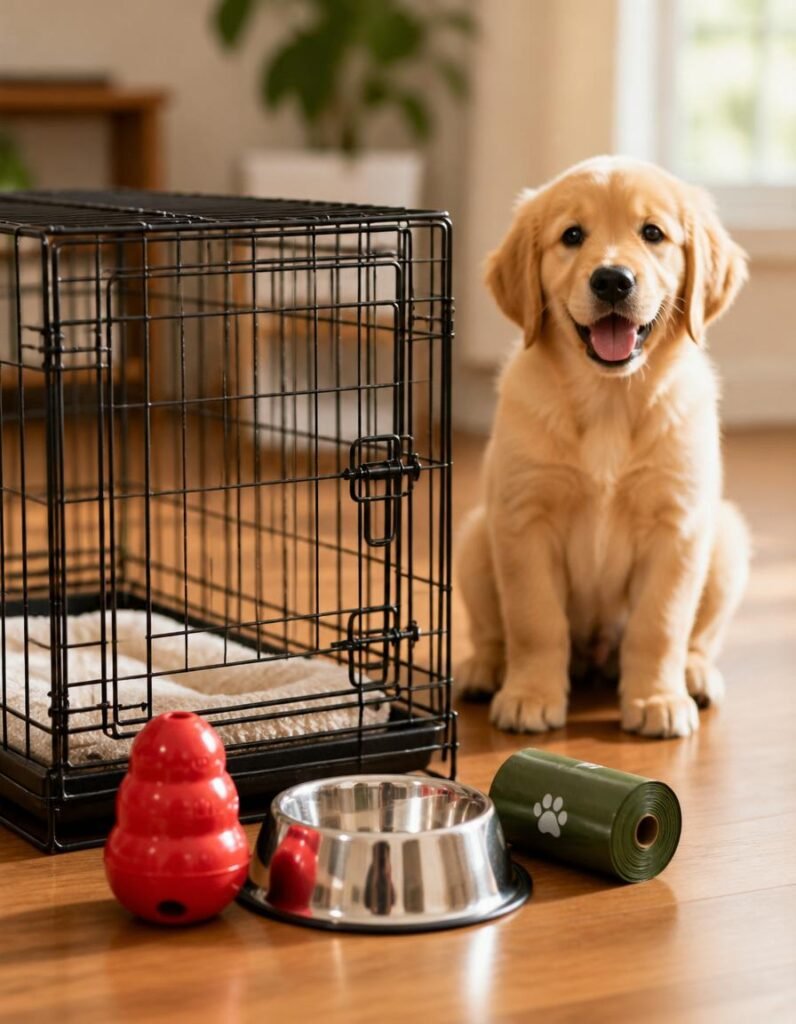
Bringing home a new puppy is exciting, but those first weeks can be chaotic without a plan. One of the best things you can do for both of you is crate training. Done right, a crate becomes your puppy’s safe, cozy den — making house-training faster, nights calmer, and your home safer. Done wrong, it becomes a source of stress. This guide walks you through exactly how to crate train a puppy the gentle, positive way, step by step, so your puppy learns to love their crate.
Table of Contents
- Why Crate Training Works
- Choosing the Right Crate
- Step 1: Introduce the Crate
- Step 2: Feed Meals in the Crate
- Step 3: Build Up Time Inside
- Step 4: Practice Leaving the Room
- Step 5: Crating Overnight
- Common Crate Training Mistakes
- Frequently Asked Questions
- Final Thoughts
Why Crate Training Works
Dogs are den animals by instinct — they naturally seek out small, enclosed spaces where they feel safe. A crate taps into that instinct, giving your puppy a place that is entirely their own. Understanding this is the foundation of learning how to crate train a puppy successfully.
The benefits are huge:
- Faster house-training. Puppies instinctively avoid soiling their sleeping space, so a properly sized crate teaches bladder control quickly.
- A safe space. When you cannot supervise, the crate keeps your puppy safe from chewing hazards and accidents.
- Calmer nights. A crate gives your puppy a secure spot to settle and sleep through the night.
- Easier travel and vet visits. A crate-trained dog handles car trips, travel, and vet stays with far less stress.
The golden rule: the crate must always be a positive place. It is never a punishment. For more on the science of positive crate use, the American Kennel Club’s crate training guide is an excellent vet-backed resource.
Choosing the Right Crate
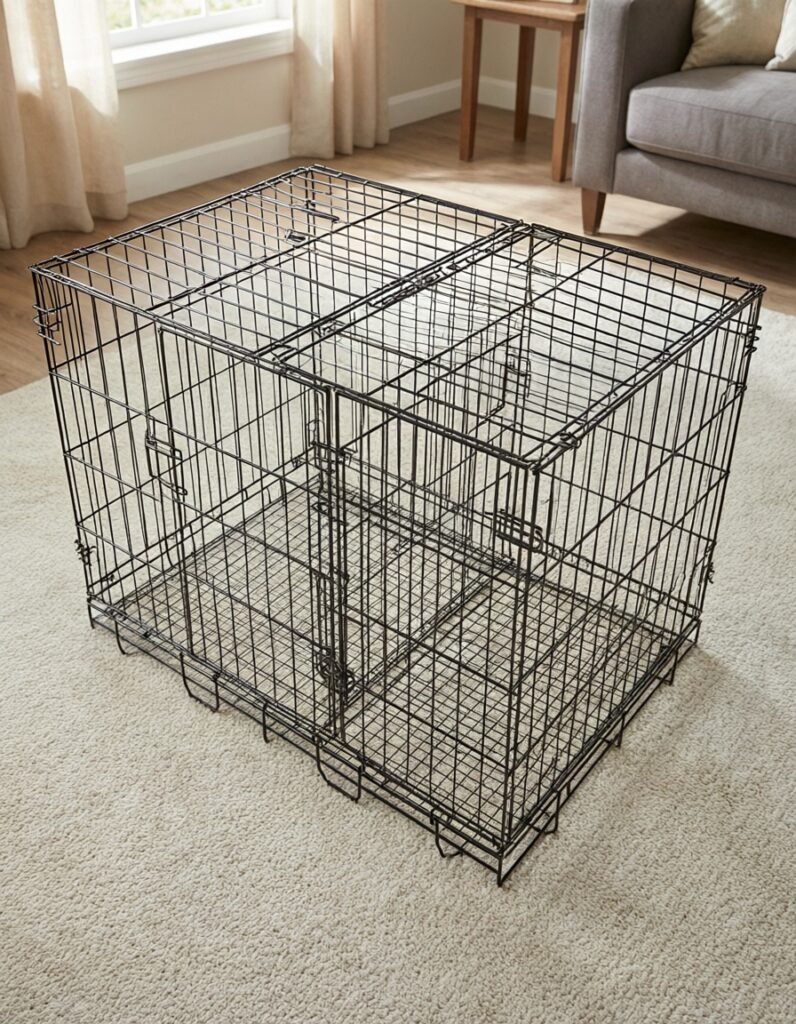
Before you start, you need the right crate — it is the foundation of how to crate train a puppy successfully. It should be just big enough for your puppy to stand up, turn around, and lie down comfortably — no bigger. Too much space lets a puppy potty in one corner and sleep in another, which defeats house-training.
For a growing puppy, the smart move is to buy a crate sized for their adult weight and use a divider panel to shrink the space while they are small, expanding it as they grow. A folding wire crate with a divider is ideal for this. See our MidWest iCrate dog crate review for an affordable option that grows with your puppy, and make sure you have the rest of the basics ready with our new puppy checklist.
Step 1: Introduce the Crate
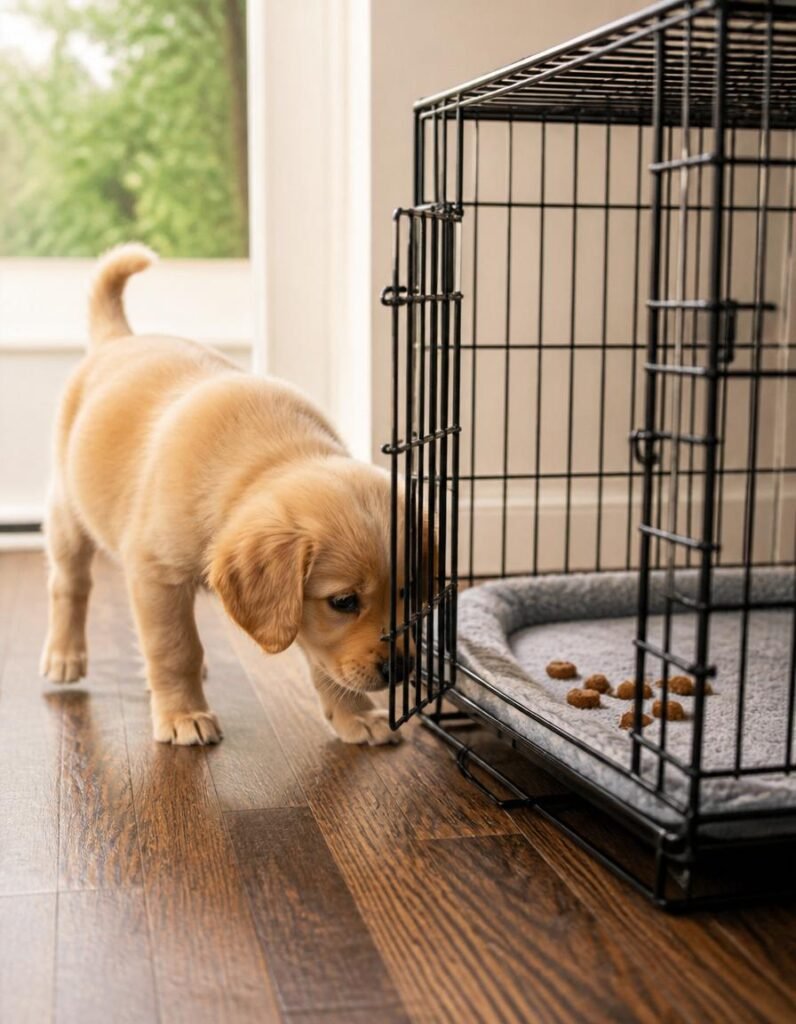
Start by making the crate inviting and letting your puppy explore it with zero pressure.
- Place the crate in a room where the family spends time, so your puppy does not feel isolated.
- Leave the door open and let your puppy investigate at their own pace.
- Toss treats and toys inside so they discover good things happen in the crate.
- Add a soft blanket or bed to make it cozy.
- Praise calmly whenever your puppy goes near or inside on their own.
Never force your puppy in. Let curiosity and rewards do the work over the first day or two.
Step 2: Feed Meals in the Crate
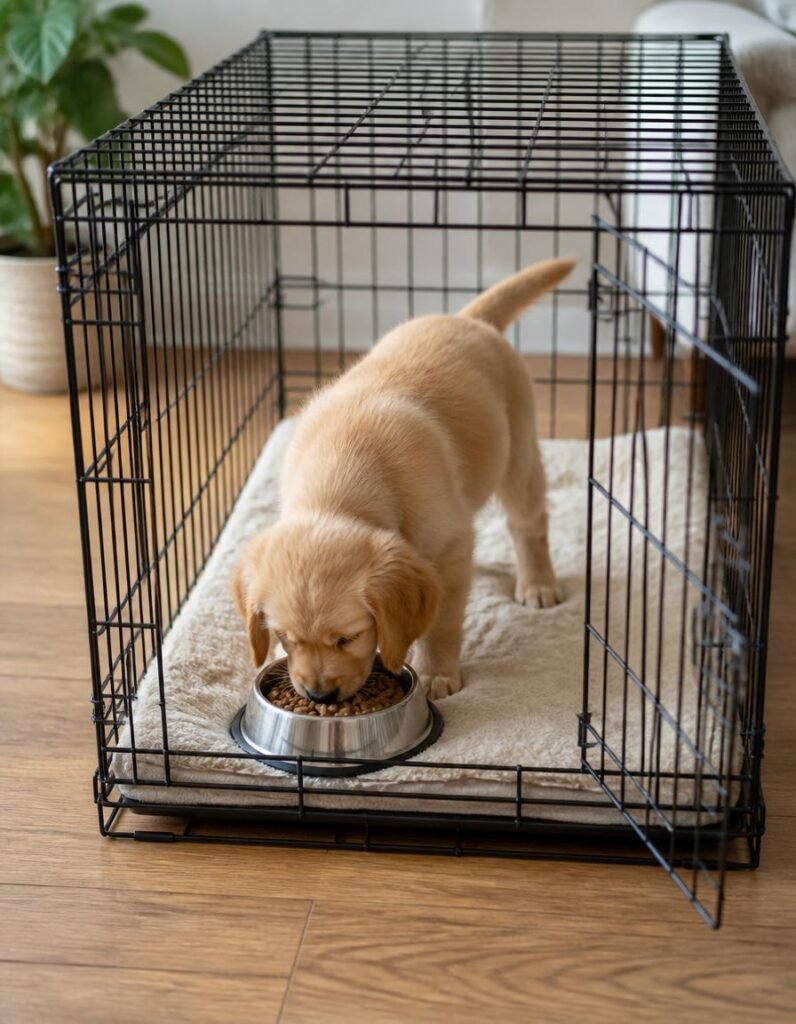
Once your puppy will step inside, start feeding their meals in the crate. This builds a strong, positive association fast.
- Place the food bowl at the back of the crate so they walk fully inside to eat.
- The first few times, leave the door open.
- Once they are eating calmly, gently close the door while they eat and open it as soon as they finish.
- Gradually leave the door closed for a few minutes longer after each meal.
If your puppy whines, wait for a quiet moment before opening the door, so they do not learn that fussing gets them out.
Step 3: Build Up Time Inside
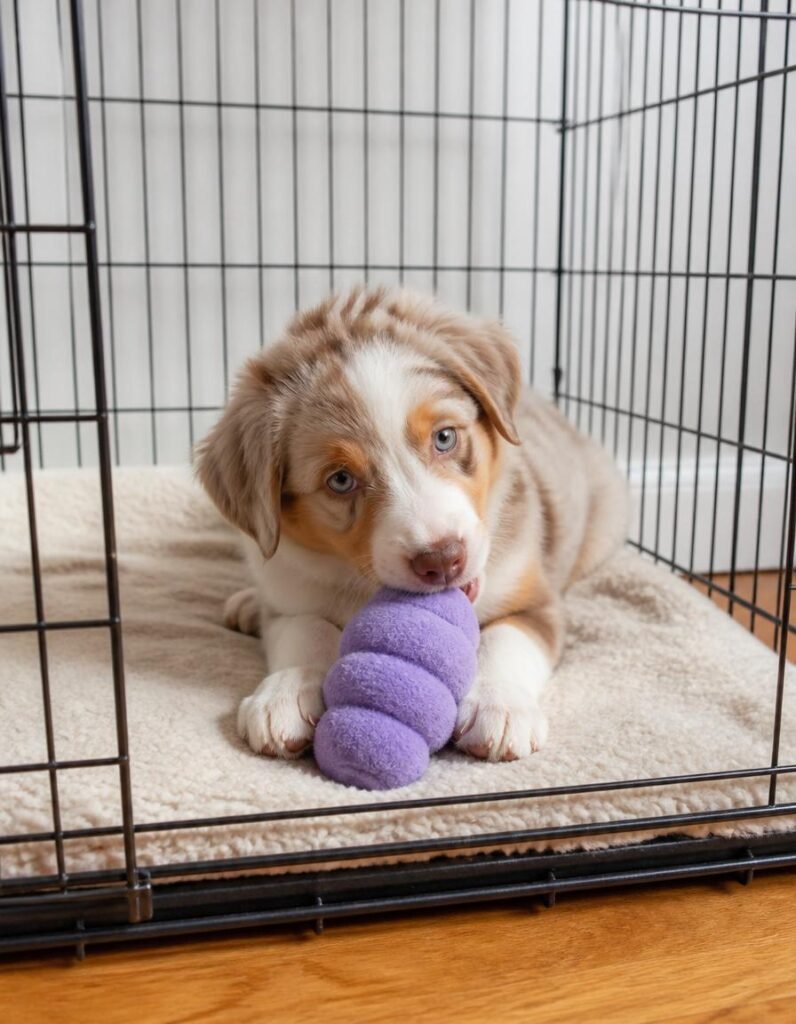
A big part of how to crate train a puppy is building up crate time gradually. Now start crating your puppy for short periods while you are nearby.
- Use a command like “crate” or “kennel” and lure them in with a treat.
- Reward them for going in, then sit quietly nearby.
- Start with five to ten minutes, then slowly extend the time.
- Give them a safe chew toy or a stuffed KONG to keep them happily occupied.
Keep these early sessions short and positive. The goal is for your puppy to settle calmly, not just tolerate the crate.
Step 4: Practice Leaving the Room
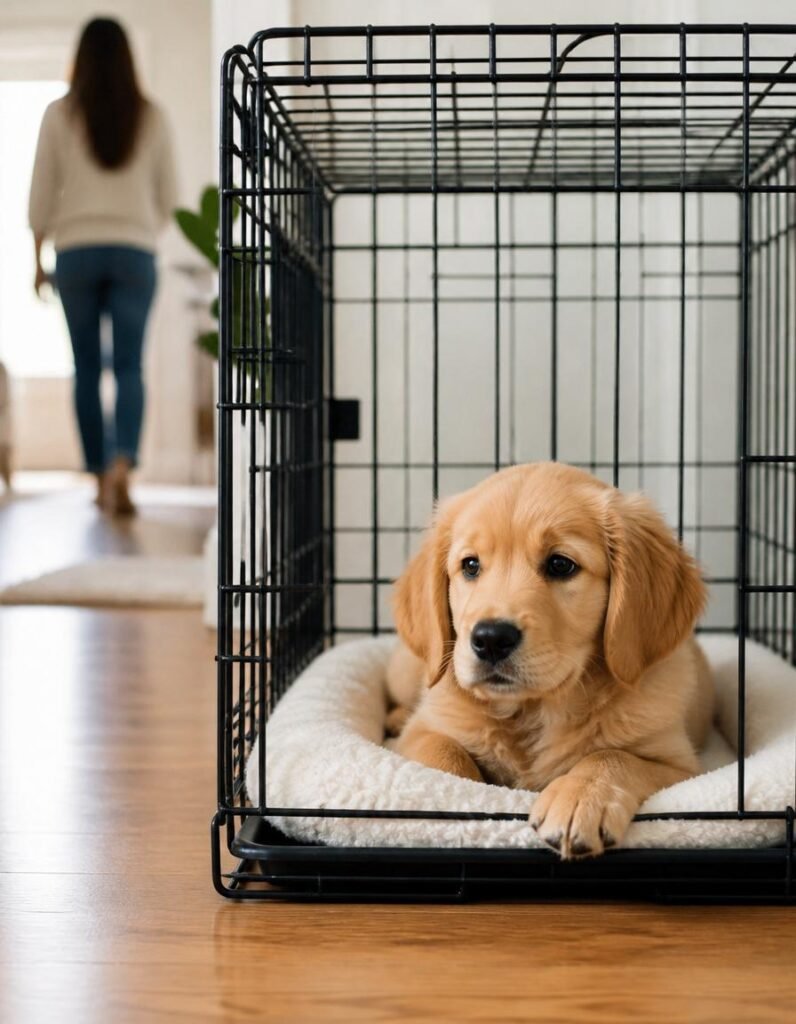
Once your puppy is comfortable being crated while you are present, start stepping away.
- Crate your puppy with a chew or toy, then leave the room for a few minutes.
- Return calmly without making a fuss, and let them out only when they are quiet.
- Gradually increase how long you are gone.
- Vary the routine so they do not anticipate exactly when you will return.
This step is key to preventing separation anxiety and teaching your puppy that being alone in the crate is safe and temporary.
Step 5: Crating Overnight
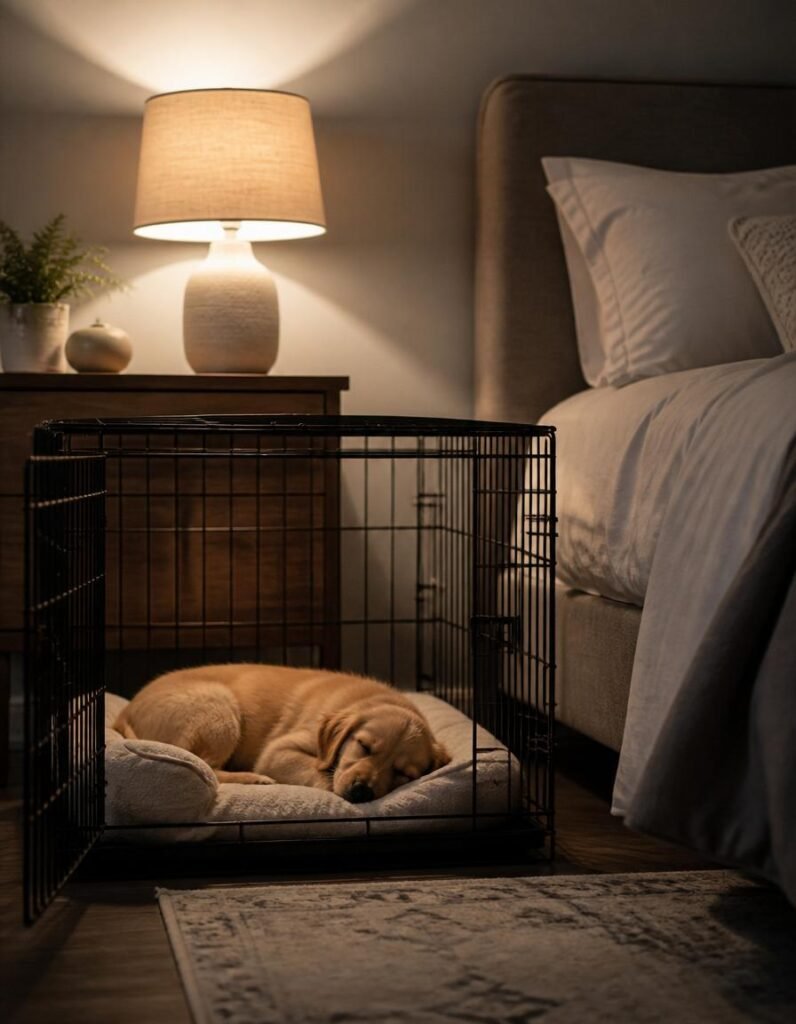
Nighttime crating helps your puppy sleep and supports house-training.
- Place the crate in or near your bedroom at first, so your puppy feels secure, and you can hear if they need to go out.
- Take your puppy out to potty right before bed.
- Expect to get up once or twice overnight for young puppies, who cannot hold their bladder all night yet.
- Keep nighttime potty trips calm and boring, with no play, so they learn night is for sleeping.
As your puppy grows and their bladder strengthens, they will sleep through the night, and you can gradually move the crate if you wish.
Common Crate Training Mistakes
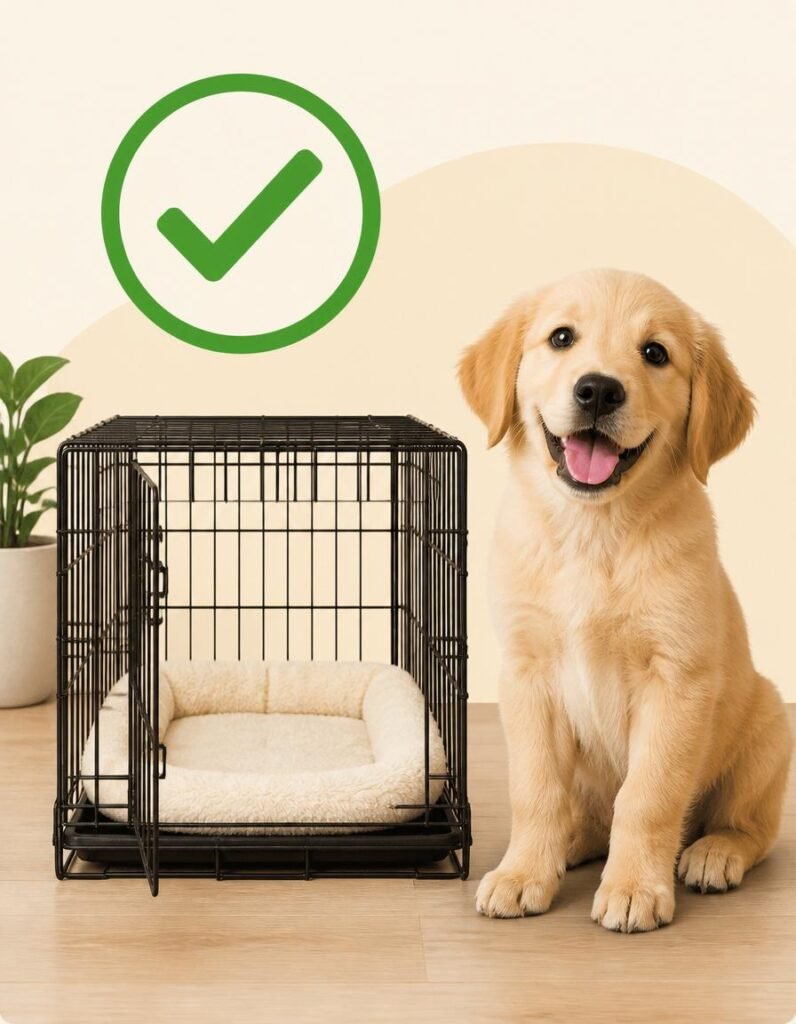
Even once you understand how to crate train a puppy, a few common mistakes can slow progress or create fear. Avoid these pitfalls:
- Using the crate as punishment. This destroys the positive association and makes your puppy fear it.
- Moving too fast. Rushing the steps leads to anxiety. Go at your puppy’s pace.
- A crate that is too big. Too much space undermines house-training.
- Letting them out while whining. This teaches that fussing works. Wait for calm.
- Leaving them crated too long. Puppies cannot hold their bladder for long, and excessive crating is unfair.
Related reading: the best dog crate covers and dog doorbells for potty training.
Gear That Makes Crate Training Easier
A properly sized crate, a cover that makes it feel like a den, and something to chew are the basics. See our MidWest iCrate review and crate cover roundup for details.
MidWest iCrate
A folding wire crate with a divider panel, so the crate can grow with your puppy instead of being replaced.
MidWest Quiet Time Privacy Crate Cover
Our best overall crate cover. Covering the crate cuts visual distractions and helps many dogs settle.
KONG Classic Dog Toy
Stuffed with food, it gives your puppy a calm job to do in the crate. Read our KONG Classic review.
Frequently Asked Questions
How long does it take to crate train a puppy? Learning how to crate train a puppy usually takes one to two weeks of consistent, positive training for the puppy to feel comfortable, though full house-training takes longer. Go at your puppy’s pace rather than rushing.
How long can a puppy stay in a crate? A rough guide is one hour per month of age, up to a maximum of three to four hours during the day. Puppies need frequent potty breaks and cannot be crated all day.
Should I crate my puppy at night? Yes — crating overnight is an important part of how to crate train a puppy, as it helps with sleep and house-training. Keep the crate near you at first and expect a couple of overnight potty trips for young puppies.
What if my puppy cries in the crate? Make sure they do not need to potty, then wait for a quiet moment to respond. Avoid letting them out while crying, as it teaches them that fussing works.
Final Thoughts : How to Crate Train a Puppy
Learning how to crate train a puppy comes down to patience, consistency, and keeping every experience positive. Take it step by step — introduce the crate, feed meals inside, build up time, practice leaving, and ease into overnights — and your puppy will come to see their crate as a safe, cozy den rather than a cage. Get the foundation right in those first weeks, and you will have an easier house-training journey, calmer nights, and a confident, secure dog for years to come.
Disclosure: dailypetpicks.com is a participant in the Amazon Services LLC Associates Program, an affiliate advertising program designed to provide a means for sites to earn advertising fees by advertising and linking to Amazon.com. This means we may earn a small commission if you purchase through our links, at no extra cost to you.