DailyPetPicks is reader-supported. When you buy through links on our site, we may earn an affiliate commission at no extra cost to you.
The cone your vet sends home is free, unloved, and the first thing most owners try to replace. Within a day of surgery, you are searching for something softer, quieter, and less miserable to watch. That instinct is reasonable. It is also how dogs end up back at the clinic with an open incision.
Here is the problem with almost every “cone alternative” list: it ranks products by comfort, when the only specification that decides whether a recovery collar works is reach. Can your dog still get its mouth to the wound? If yes, nothing else about the product matters. A comfortable dog cone that fails is worse than an uncomfortable one that works, because the failure costs you a second surgery.
This guide sorts the category the way a vet actually thinks about it: by where the wound is. Below are three picks, each covering a different part of the body, plus the fitting checks that decide whether the dog cone you buy will hold for the full two weeks.
The spec is reach, and the fix for a failing cone is a bigger one
The clearest statement of this comes from the ASPCA’s post-surgery instructions. Their guidance, if your pet can still reach the surgery site while wearing a collar, is to move to a larger collar. Not a softer one. Not a differently shaped one. Bigger.
That single line quietly contradicts the entire “comfy alternative” genre. The market sells you sideways moves — a donut instead of a cone, a fabric flower instead of plastic — when the authority on the subject says the correction is vertical. Longer. Further past the nose.
Reach is a geometry problem, and it varies enormously by dog. A dachshund cannot fold itself in half; a whippet can put its mouth on its own hip without appearing to try. Long-nosed breeds defeat shallow collars because the muzzle already protrudes past the rim before the neck bends at all. This is why one dog cone can be a total success on a bulldog and useless on the greyhound next door.
You do not have to take my word for the limitation. BARKLESS, which sells inflatable donut collars, states on its own product listing that ordinary inflatable collars fail to prevent licking effectively — which is why theirs adds a rigid shield. Their large-dog listing goes further and warns that the collar may not suit dogs with longer noses, legs, or tails, or flexible breeds such as greyhounds. When a manufacturer publishes the failure mode of its own product category, it is worth believing.
What the research says about the “cone of shame”
The discomfort is not in your head. A University of Sydney team surveyed 434 owners whose pets had worn an Elizabethan collar in the previous year and published the results in the journal Animals. Their finding: 77.4% reported a worse quality of life score while the collar was on. The researchers concluded that owners should be better warned about the harms and that alternatives should be used where possible.
But the useful part of that study is not the headline number. It is the problems that predicted a poor score. Three things stood out: the collar interfering with drinking, the collar interfering with play, and the collar causing irritation.
That converts a vague shopping criterion into three concrete checks. “Comfortable” is marketing. “Can the dog get its tongue into a water bowl?” is testable in your kitchen this afternoon. When you evaluate any dog cone, work through those three, in that order, and ignore the adjectives on the packaging.
Two owner-side notes worth knowing before you buy. The drinking problem is often solved by the bowl rather than the collar — a narrow, deep bowl is much easier to reach into with a rim around your head than a wide, shallow one. And the irritation is usually at the neck edge, not the rim, which is why padding where the collar meets the dog matters more than padding anywhere else.
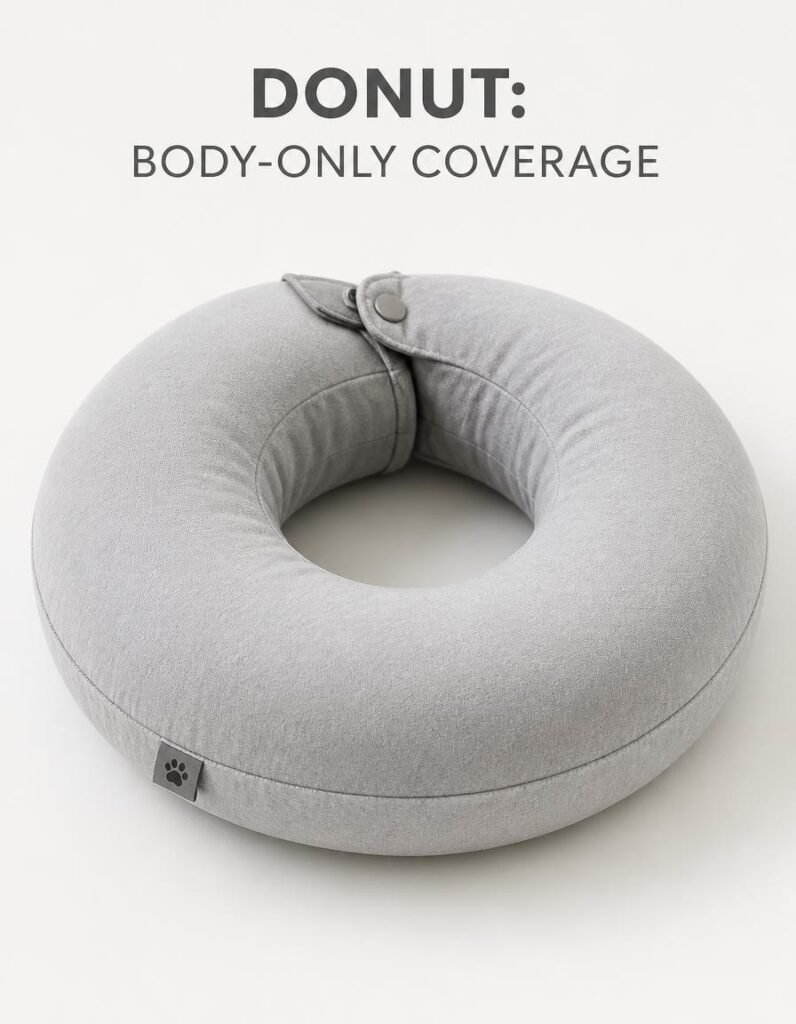
Buy for the wound location, not for your dog’s mood
This is the whole method. Before comparing products, establish what you are actually protecting:
- Belly or groin (spay, neuter, abdominal surgery) — a bodysuit beats every collar here, because it covers the site instead of blocking the route to it.
- Head, ears, eyes or face — a collar is mandatory; a suit does nothing. See our guide to cleaning dog ears if this is a recurring irritation rather than a one-off.
- Paws and lower legs — the hardest case. This needs a dog cone with maximum reach, because the dog only has to bend its neck downward, which is its most natural movement.
- Hips, thighs and tail base — a shallow collar will not stop a flexible dog. Either go deep or cover the limb directly.
- Flanks and back — usually well handled by a suit, and by the shortest collar that still passes the reach test.
Follow your vet’s instructions above anything here. Restrict activity for the healing period, and never apply creams or ointments to an incision unless you were told to — VCA’s guidance on surgical incisions is explicit that hydrogen peroxide and alcohol damage cells and delay healing. Non-dissolving sutures usually come out 10 to 14 days after surgery, so that is the window your dog’s cone has to survive.
The 3 best dog cone picks, matched to where the wound is
1. GLADOG Soft Dog Cone Collar (3 sizes per set) — best overall
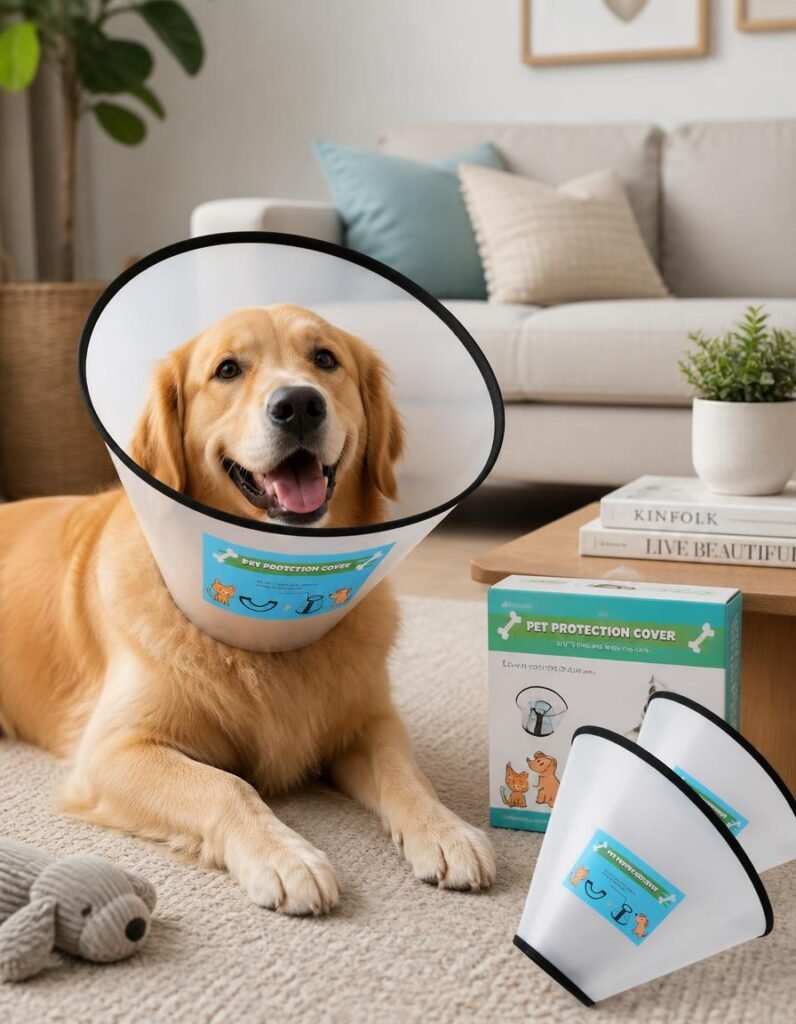
This is the pick that solves the problem nobody warns you about: you are buying blind. Neck measurements are approximate, breeds vary, and the difference between a collar that holds and one your dog reverses out of is often half an inch. GLADOG ships three adjacent sizes in one set, so you fit the dog in the room rather than gambling on a chart and starting a return.
Structurally, it is flexible plastic rather than the rigid plastic cone — enough backbone to stop a determined dog, enough give that it does not gouge your skirting boards. It sits at #3 in Amazon’s Dog Recovery Collars & Cones category, which, for a product like this, matters: the mainstream sellers stay in stock, and the obscure ones vanish mid-recovery.
Watch out for: the transparency varies by batch, and this is a lampshade shape, so it will still clip doorframes. It is the most versatile dog cone here, not the most pleasant.
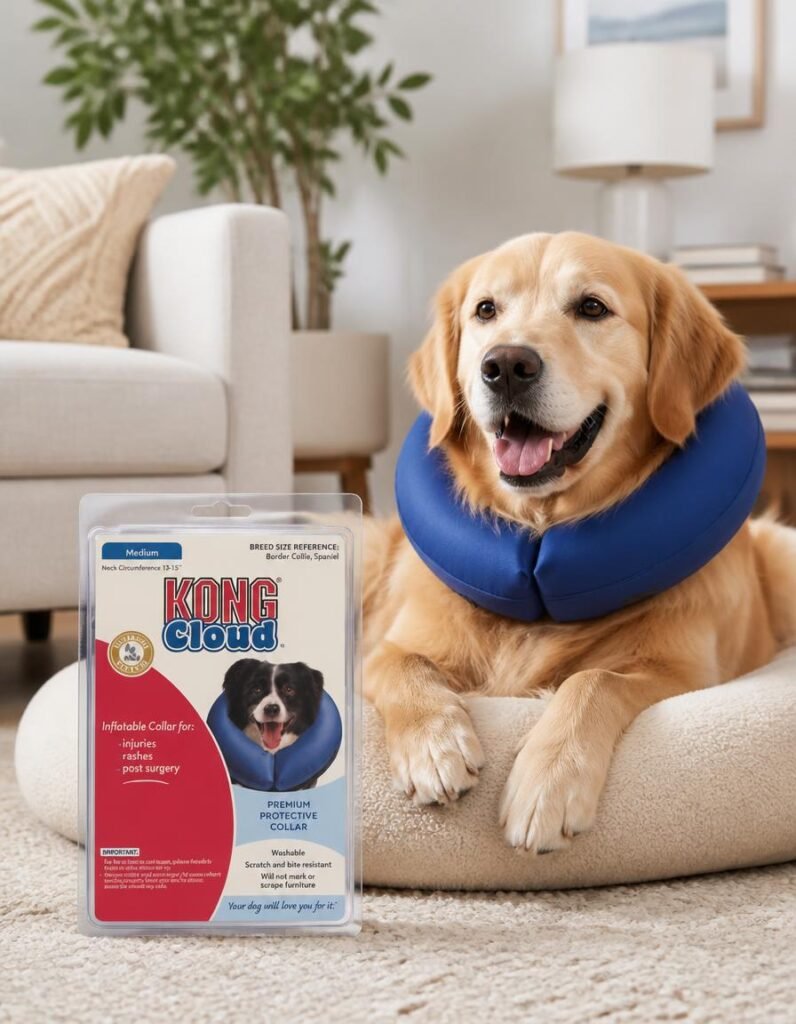
2. KONG Cloud Inflatable Collar — best for head, ear, and neck wounds
The inflatable donut is the most requested alternative and the most misunderstood. KVP, which manufactures the Cloud under the KONG name, describes it accurately on its own site: it provides body-only coverage while leaving the dog full visibility.
Read that as the specification it is. A donut does not extend past the muzzle, so it does not block the mouth from travelling — it blocks the neck from bending. That makes it genuinely good for wounds the dog reaches by curling: ears, the base of the skull, the neck, and the sites you might be treating after an infection flare. Pair it with our roundup of the best dog ear cleaners if you are managing chronic ear trouble.
It is a plush, machine-washable collar that does not bang into furniture, and for a dog that panics in a rigid cone, it can be the difference between resting and pacing all night.
Watch out for: it will not protect paws, hind legs, the tail, or the belly. A flexible dog simply curls around it. Buying a donut for a paw wound is the single most common mistake in this category.
3. Kuoser Recovery Suit — best for spay, neuter, and belly incisions
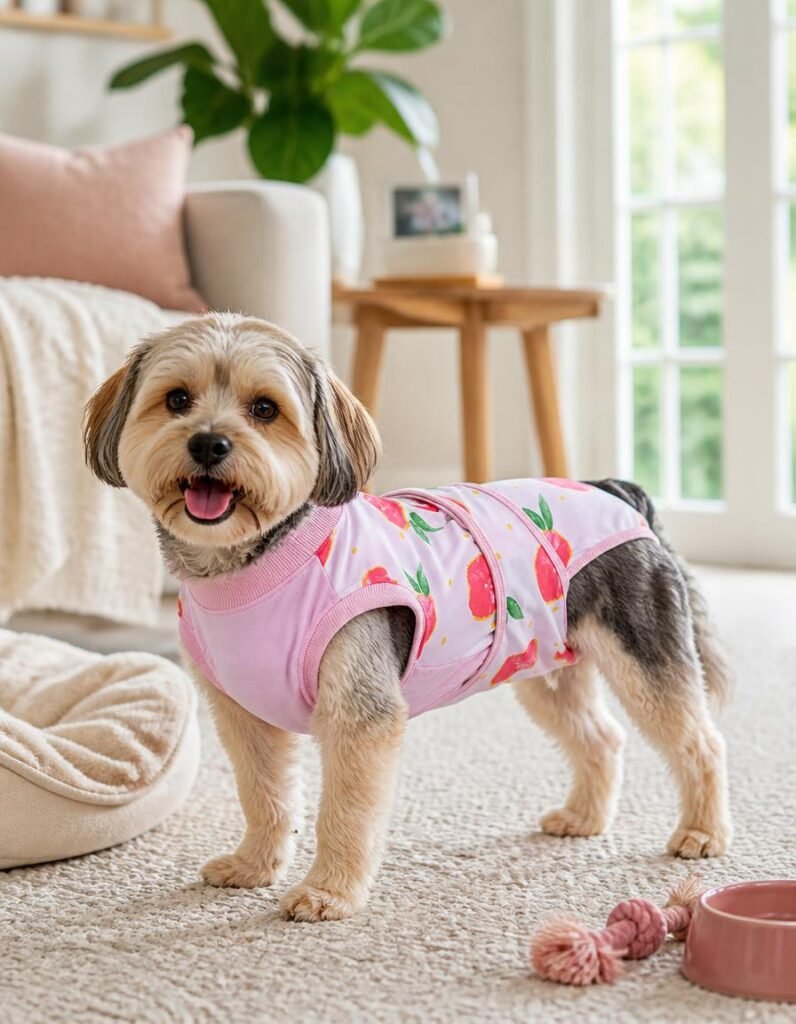
For an abdominal incision, a suit is not a compromise — it is the better tool. Rather than trying to stop the mouth from reaching everywhere, it covers the one place that matters. The dog eats, drinks, sleeps, and navigates normally, which means all three of the welfare problems the Sydney study identified simply do not arise.
The Kuoser is a cotton-spandex onesie with a row-button closure and a cut-away section at the rear for toileting. Vets recognise the format: VCA lists a surgical recovery garment as a legitimate alternative depending on incision location. This is also the option to reach for if the “cone” period is really about a hot spot or a skin flare on the trunk rather than a surgery.
Watch out for: a suit protects only what it covers. Head, ears, paws, and lower legs are all still available to a bored dog. Check it daily for a damp patch — dogs will lick through fabric, and a wet suit over an incision is worse than no suit at all.
What to skip
Fabric “flower” collars. Sold on looks. As a dog cone, they are short, soft, and collapse against the neck, which means they fail the reach test on nearly everything except a face wound on a very small dog.
Anything you cannot check by touch. If you cannot easily feel whether the rim still sits past the nose, you will not notice when it stops doing so.
Bitter anti-lick sprays as a substitute. As a supplement, fine, with your vet’s blessing. As for the whole plan, no — plenty of dogs are indifferent to them, and you find out by discovering an open incision.
The cheapest dog cone in a single guessed size. The savings disappear the moment you pay return postage, and they disappear completely if the wrong size costs you a clinic visit.
Fitting it so it actually holds
- Two fingers at the neck. Snug enough that the dog cannot reverse out of it, loose enough to slide two fingers under. Too loose is the most common fitting error, and it is the one that ends in a 2am reappearance.
- Thread the everyday collar through. Almost every recovery collar has loops for this. It is what stops the whole thing from rotating or being pushed off against furniture.
- Test the reach; don’t assume it. Let the dog try for the wound while you watch. If the mouth gets there, size up — that is the ASPCA’s own instruction.
- Watch the neck edge for rubbing in the first 24 hours, since irritation was one of the three welfare predictors in the research.
- Keep it on. Removal “just while I’m watching” is how most failures happen, because the dog only needs one unobserved minute.
Two weeks of restricted movement is hard on an active dog. Low-effort brain work helps more than you would expect — a few of the best dog puzzle toys will absorb energy without the running your vet has forbidden, and a settled, correctly sized crate makes confinement calmer for everyone.
Related reading: no-chew sprays that work.
Frequently asked questions
How long does my dog need to wear a dog cone?
Usually 10 to 14 days, which is when non-dissolving sutures or staples typically come out. Your vet sets the number based on the procedure. The itchiest phase tends to arrive around days five to seven as healing gets underway, which is exactly when owners start relaxing — so plan for the full period rather than the comfortable part of it.
Can my dog sleep in a dog cone?
Yes, and most dogs adapt within a couple of nights. If sleep is genuinely not happening, that is a signal about the specific product rather than the concept — an inflatable or a fold-back padded dog cone is far easier to rest a head on than a rigid rim. Raising the bed’s edge, or using a bolster, also helps a dog find a position.
My dog won’t eat or drink with it on. What now?
Try the bowl before you replace the collar: a deep, narrow bowl is far easier to use than a wide one, and raising it to chest height removes the need to angle the head. If that fails, a fold-back design solves it directly. Refusing water for any length of time is not something to wait out — call your vet.
Is a donut collar as good as a cone?
It depends entirely on where the wound is, which is the point of this guide. For ears, neck, and skull, a donut is often better because the dog can see and eat normally. For paws, hind legs, tail, and belly, it is not a substitute at all — even manufacturers of shielded donuts acknowledge that plain ones fail to prevent licking.
Can I take the dog cone off when I’m supervising?
Many vets allow supervised breaks, but ask yours first, and be honest about what supervision means. Watching television in the same room is not supervision. A dog can do meaningful damage to an incision in well under a minute, and licking introduces bacteria as well as mechanical damage.
What size dog cone do I need?
Measure neck circumference for the fit, then choose depth by the distance from the collar to the tip of the nose — the rim needs to sit past it. When you are between sizes, take the larger one. A multi-size set removes the guesswork entirely, which is why it is the top pick here.
The bottom line
Decide where the wound is, then buy for that. Belly and groin go to the recovery suit. Ears, neck, and skull go to the inflatable. Paws, legs, and anything on a flexible dog need a collar with real depth, and if it fails, the answer is a bigger one rather than a softer one. A back-leg wound may well be better served by covering the leg itself.
If you want one dog cone that handles most situations without a second order, the GLADOG multi-size set is the sensible default — it fits on the first try, it stays in stock, and it reaches. Keep the recovery kit stocked while you are at it; our dog first aid kit guide covers what belongs in the cupboard before you need it, and paw balm is worth having on hand for the irritation that starts the licking in the first place.
Two weeks is not very long. Getting the dog cone right on day one is what keeps it to two weeks.