A bored dog finds their own entertainment, and it’s usually your shoes. Puzzle toys fix that by giving your dog a job — hiding food behind sliders, flips, and spinning layers so they have to think their way to the reward. It’s the cheapest way to tire out a dog’s brain when a walk isn’t enough or the weather won’t cooperate.
The catch is that the best dog puzzle toys aren’t the hardest ones. Buy something too advanced, and your dog gets frustrated and walks away; buy something too simple, and they solve it in thirty seconds and lose interest forever. Matching the puzzle to your dog’s actual ability is the whole game.
This roundup sorts the best dog puzzle toys by difficulty level, with honest pros and cons for each pick and the puzzle toys worth skipping.
The One Thing That Matters Most: Difficulty Level
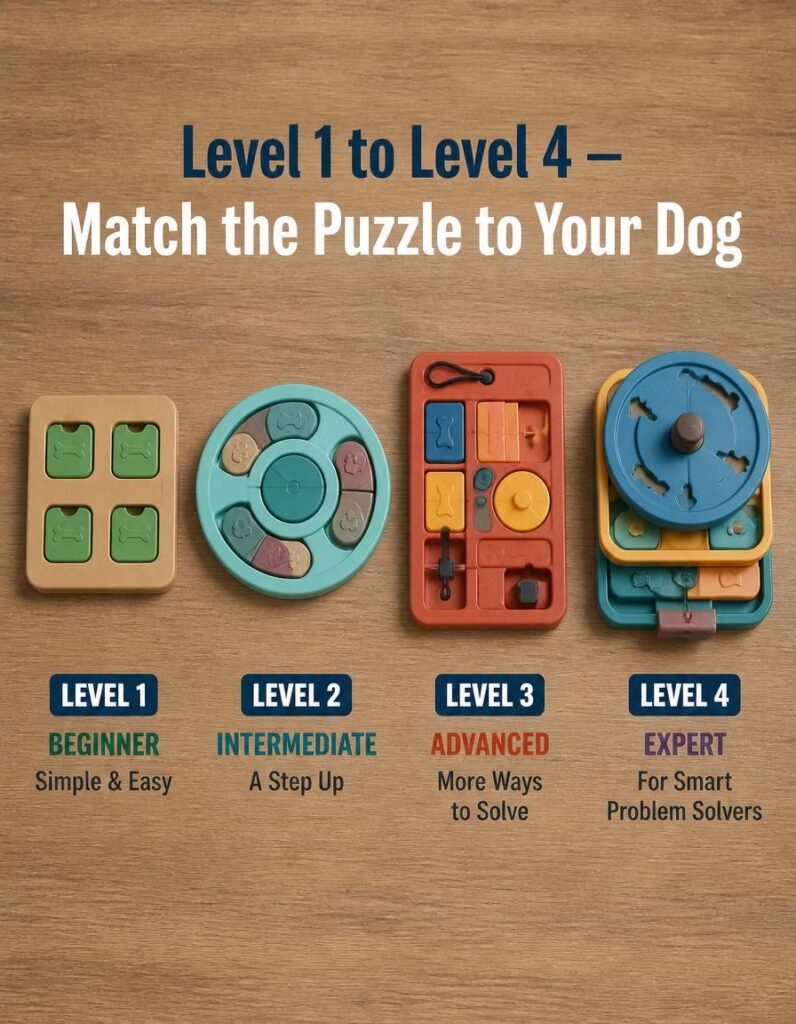
Before any product, understand the level system — it’s the single biggest factor in whether the best dog puzzle toys actually work for your dog. The dominant brand in this category — Nina Ottosson by Outward Hound — grades its puzzles Level 1 through Level 4, and that number matters more than price or looks.
- Level 1: Single-step. Lift a cover, find the treat. For puppies and total beginners.
- Level 2: Multi-step. Slide, spin, and lift. The sweet spot for most adult dogs.
- Level 3: Combined mechanisms that must be done in sequence.
- Level 4: Expert. Layered, multi-stage puzzles for dogs who’ve mastered the lower levels.
Here’s the practical rule: start one level below where you think your dog is. A dog that succeeds quickly stays engaged and comes back tomorrow. A dog that fails repeatedly gets frustrated, and frustration is what turns a puzzle into an expensive chew toy. You can always level up — you can’t un-teach a dog that puzzles are annoying.
Two safety notes that apply to every pick below: supervise your dog with any puzzle toy, and remove it if they start chewing the puzzle instead of solving it.
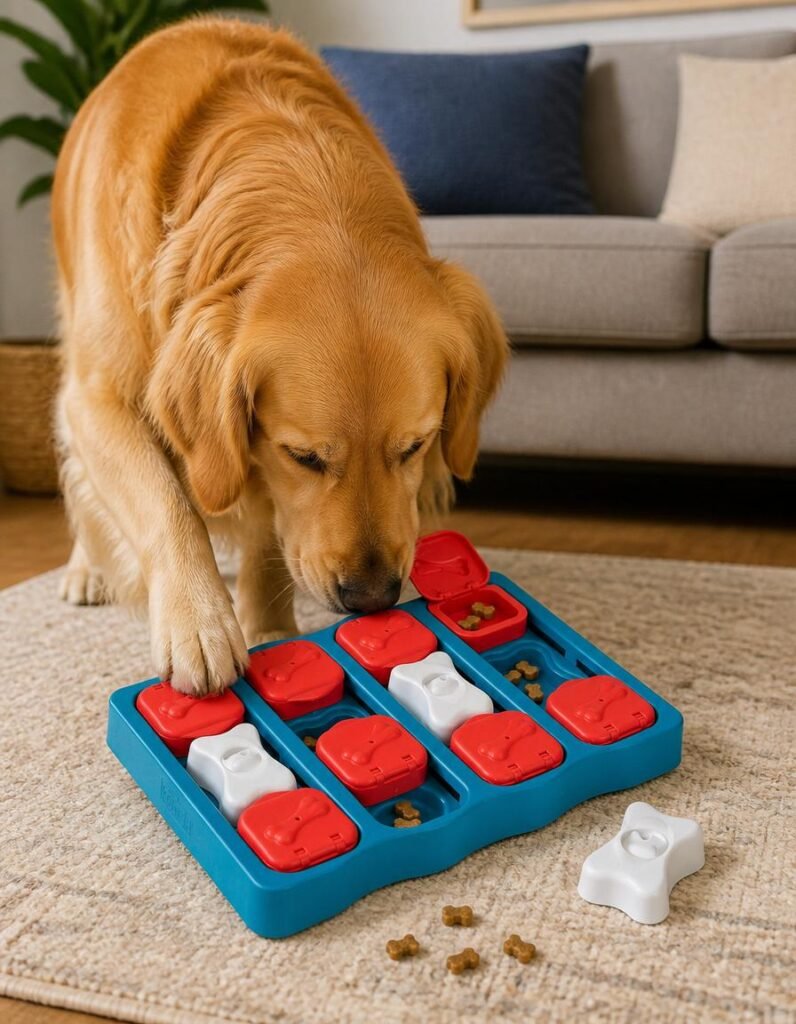
The Best Dog Puzzle Toy Overall: Nina Ottosson Dog Brick (Level 2)
If you want one puzzle for an average, clever-but-not-genius dog, this is it. The Dog Brick is the most popular puzzle in the Nina Ottosson line for a reason — it gets the difficulty exactly right.
Why it wins:
- Three different mechanisms in one board — sliding blocks, flip lids, and removable bone-shaped bricks that hide treats underneath. Your dog has to use varied techniques rather than repeat one trick, which is what keeps them working for real minutes instead of seconds.
- Genuinely lasts a session. Most dogs take 10–20 minutes the first time, then get faster as they learn — so it stays interesting across repeat use.
- Built to survive. Sturdy enough to be nosed and pawed around the floor, with a non-slip base so it doesn’t skate away mid-solve (a small detail that makes a big difference).
- Top-rack dishwasher safe — which matters a lot for something that ends up covered in slobber and treat dust.
The honest downsides:
- Not for total beginners. A dog who’s never seen a puzzle may need you to demonstrate the first few times.
- The removable bricks are loose pieces — a dedicated chewer can carry one off, so supervise.
- Mid-range price rather than budget.
Best for: most adult dogs — of all the best dog puzzle toys here, this is the one to buy if you’re only buying one.
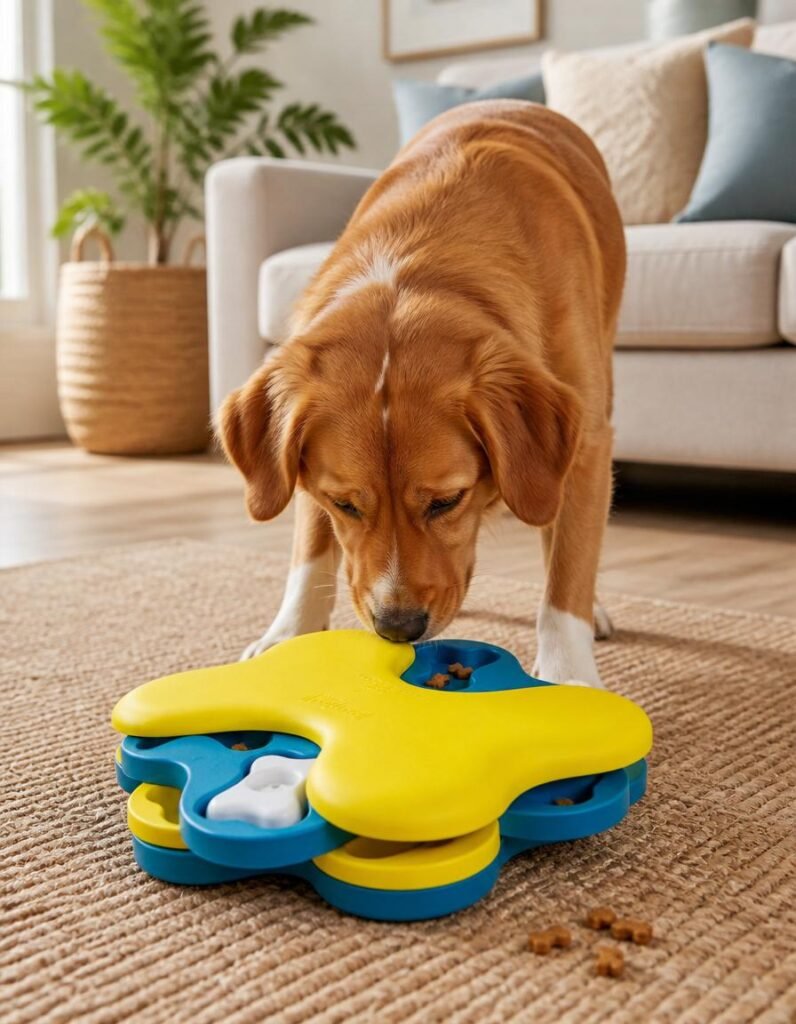
The Best First Puzzle: Nina Ottosson Dog Tornado (Level 2)
If your dog has never solved a puzzle, start here. The Tornado is the most-recommended entry point in the whole category, and it’s usually the cheapest of the serious picks.
Why it’s the best starting point:
- Instant feedback loop. Three spinning layers mean a nudge produces a spin, and a spin produces a treat — dogs understand the cause and effect within the first minute. That’s what makes it so easy to introduce to a skeptical or low-confidence dog.
- No demonstration needed in most cases, unlike board puzzles where you often have to show the dog what to do.
- Teaches the core concept — “things move and food is underneath” — which sets your dog up for harder puzzles later.
- Excellent price for a proven, brand-name puzzle.
The honest downsides:
- Solved fast by smart dogs. Many beginners crack it in 5–10 minutes, and clever dogs will outgrow it — treat it as a stepping stone, not a forever puzzle.
- Bone-shaped covers are removable pieces, so the same supervision rule applies.
Best for: first-time puzzle dogs, nervous dogs, and anyone testing whether their dog enjoys puzzles before spending more.
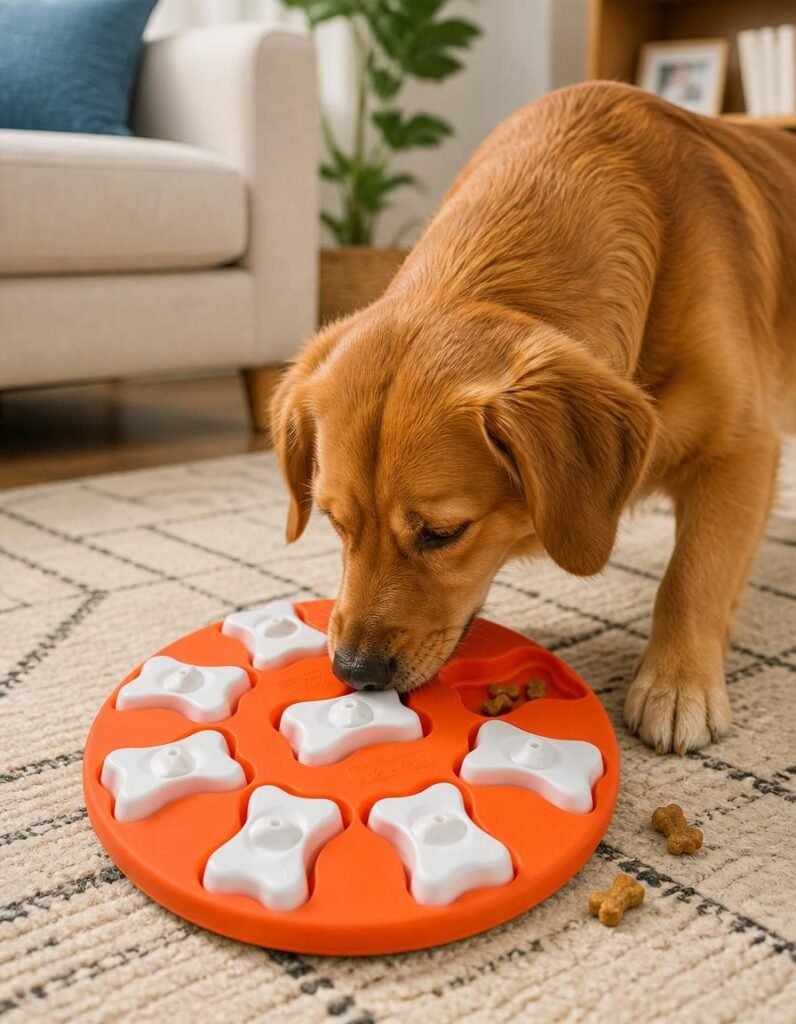
The Best for Puppies: Nina Ottosson Puppy Smart (Level 1)
Puppies need a win, not a challenge. The Puppy Smart is deliberately simple — nine treat compartments covered by bone-shaped lids your puppy just has to nudge or lift off.
Why it’s the puppy pick:
- Level 1 simplicity means your puppy succeeds early, which builds confidence instead of frustration.
- Nine compartments hold kibble or treats, so it doubles as a slow feeder at mealtime.
- Scent escapes through the top, which helps a puppy work out where the food is without help.
- A genuine introduction to problem-solving that prepares them for Level 2 puzzles later.
The honest downsides:
- Outgrown quickly. It’s a starter toy — most puppies graduate within weeks, so plan on buying a Level 2 next.
- Puppies chew everything, so the bone covers need watching more than with an adult dog.
Best for: puppies and older dogs who are complete beginners or lack confidence.
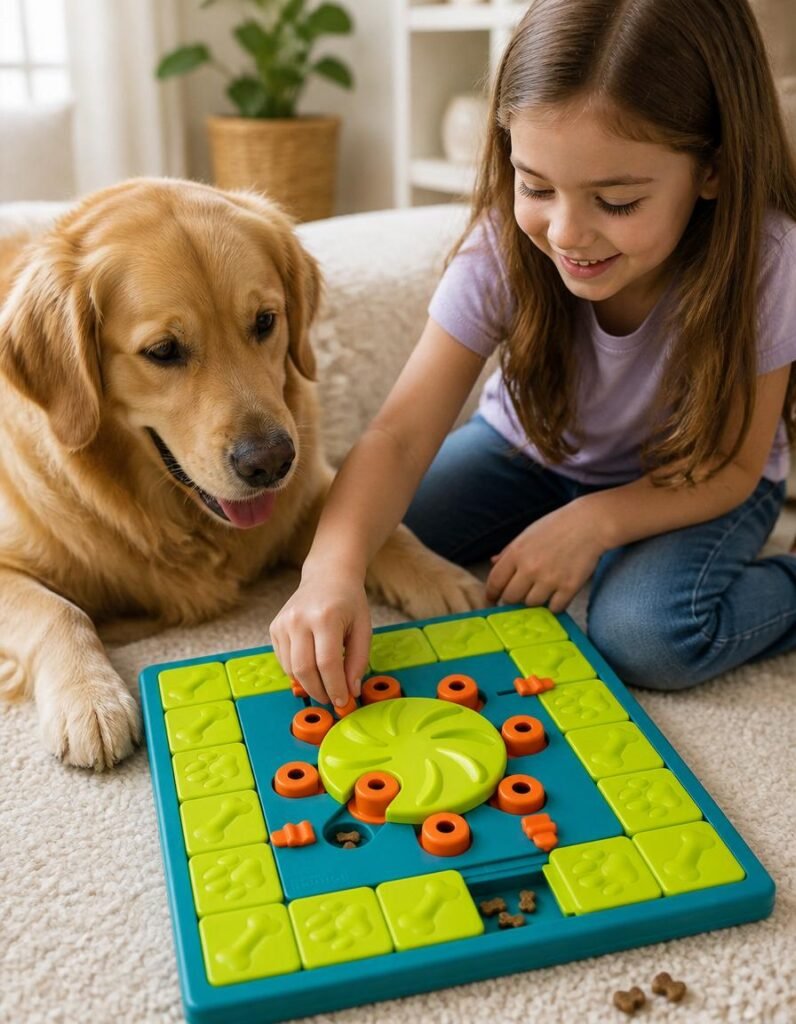
The Best for Expert Solvers: Nina Ottosson MultiPuzzle (Level 4)
When your dog is demolishing Level 2 puzzles in three minutes, it’s time for the hardest thing in the line. The MultiPuzzle is a genuine multi-stage challenge.
Why it’s the expert pick:
- Layered, sequential mechanics. Treats hide in both outer and central compartments, and your dog has to slide multiple puzzle pieces in the right order to reach them — a real sequence, not a single trick.
- Made for dogs who’ve mastered Levels 1–3, so it actually holds the attention of a dog that’s bored by everything else.
- Food-safe construction — BPA, PVC, and phthalate-free tough plastic.
The honest downsides:
- Absolutely wrong for beginners. Repeated failure here causes frustration and chewing — the manufacturer is explicit that it’s for dogs who’ve cleared the lower levels first.
- Hand washes only, unlike the dishwasher-safe Dog Brick.
- Loading treats into the tighter compartments is fiddlier than on simpler boards.
- Premium price.
Best for: experienced puzzle dogs who solve everything else too quickly.
The Best Calming Option: Outward Hound Lickin’ Layers
Not all enrichment should be stimulating. For anxious dogs, the licking motion itself is soothing — which makes a lick mat a different and genuinely useful tool alongside the best dog puzzle toys above.
Why it’s a standout:
- Three peel-back silicone layers you spread with peanut butter, wet food, or yogurt — your dog works down through them.
- Licking is calming, so it suits anxious dogs, thunderstorm nights, crate time, or winding down rather than firing up.
- Easy concept — no learning curve, which works for dogs that get frustrated by mechanical puzzles.
- Great for picky eaters who need food motivation.
The honest downsides:
- Not a mental challenge. It’s an enrichment and calming tool, not a problem-solving puzzle — don’t expect it to tire out a smart dog’s brain.
- Messier than dry-treat puzzles, and it needs washing after every use.
- Silicone can be chewed by determined dogs.
Best for: anxious dogs, calming routines, and owners who want soothing enrichment rather than a brain workout.
[Check price on Amazon]
Quick Comparison
Here’s how the best dog puzzle toys compare side by side:
| Puzzle | Level | Type | Best for |
|---|---|---|---|
| Nina Ottosson Dog Brick | 2 | Multi-mechanism board | Most adult dogs — the all-rounder |
| Nina Ottosson Dog Tornado | 2 | Spinning layers | First puzzle, nervous dogs |
| Nina Ottosson Puppy Smart | 1 | Lift-cover board | Puppies and beginners |
| Nina Ottosson MultiPuzzle | 4 | Layered, sequential | Expert solvers |
| Outward Hound Lickin’ Layers | — | Silicone lick mat | Anxious dogs, calming |
What to Skip
The best dog puzzle toys earn their place by matching your dog. These are the ones that usually don’t:
| What to skip | Why |
|---|---|
| A Level 3–4 puzzle for a beginner dog | Repeated failure creates frustration, and a frustrated dog chews the puzzle instead of solving it. Start low, level up. |
| Flimsy thin-plastic puzzles | Cheap plastic cracks under paws and teeth, and broken shards are a real hazard. Durability matters more than price here. |
| Puzzles with small loose parts for heavy chewers | If your dog swallows pieces rather than solving, skip removable-piece boards entirely and use a lick mat or snuffle mat instead. |
| Treat-dispensing balls as your only puzzle | Dogs often dispense treats by accident, so the mental work is minimal. Fine as a supplement, weak as your main enrichment. |
| Any puzzle used unsupervised | Every manufacturer says supervise, and it’s the one rule people ignore. Puzzle time is interactive time. |
How to Introduce a Puzzle Toy
Even the best dog puzzle toys fail if they’re introduced badly. Getting this part right decides whether your dog loves puzzles or ignores them:
- Start easy. Load the puzzle with high-value treats and leave the mechanisms in the easiest position (many boards can be set up simpler at first).
- Show them once. Slide a piece yourself so they see food appear. Most dogs only need one demonstration.
- Let them struggle a little — but not too much. A minute of trying is good; five minutes of failing isn’t. Make it easier if they disengage.
- Put it away between sessions. A puzzle left out all day becomes furniture. Rotating it keeps the novelty.
- Feed meals in it sometimes. Most boards double as slow feeders, which turns an ordinary meal into enrichment.
If you’re interested in finding more toys for your pets’ boredom, check out Mammoth Flossy Chews Rope Toy Review.
Why Mental Enrichment Matters
The best dog puzzle toys aren’t just entertainment. Dogs with nothing to occupy them get bored, and boredom drives the behaviors owners complain about most — chewing furniture, raiding the bin, excessive barking, pacing, and digging. Enrichment gives those natural instincts a legal outlet.
The ASPCA’s guidance on canine enrichment makes the same point and is worth reading alongside this list: making mealtime interactive satisfies a dog’s instincts, and a stimulating home environment reduces problem behaviors.
A puzzle toy is simply the store-bought version of that principle.
If you want to have a variety of toys for your pet, check out our Outward Hound Hide-A-Squirrel Review to keep them mentally healthy.
Frequently Asked Questions
What are the best dog puzzle toys?
The best dog puzzle toys are the ones matched to your dog’s skill level. The Nina Ottosson Dog Brick (Level 2) is the strongest all-round pick for most adult dogs, the Dog Tornado (Level 2) is the best first puzzle, Puppy Smart (Level 1) suits puppies, and the MultiPuzzle (Level 4) is for expert solvers.
Do puzzle toys actually tire a dog out?
Mental work genuinely tires dogs, and many trainers find a short problem-solving session leaves a dog calmer than a longer walk. Puzzles won’t replace physical exercise, but they address a need most pet dogs don’t get enough of.
What difficulty level should I start with?
Start one level below where you think your dog is. Level 1 for puppies and beginners, Level 2 for most adult dogs. Early success keeps a dog engaged; repeated failure teaches them that puzzles aren’t worth the effort.
Are puzzle toys safe to leave my dog alone with?
No. Every puzzle toy should be used with supervision. Boards with removable pieces can be chewed or swallowed, and a frustrated dog left alone is more likely to destroy the puzzle than solve it.
How often should I use a puzzle toy?
Short, regular sessions beat long ones — a few times a week, or daily if your dog loves them. Put the puzzle away between sessions so it stays novel, and rotate between two or three so your dog doesn’t memorize one board.
The Bottom Line
The best dog puzzle toys aren’t the most complicated ones — they’re the ones pitched at your dog’s actual ability.
Start with the Nina Ottosson Dog Tornado if your dog is new to puzzles, buy the Dog Brick if you want one solid all-rounder, drop to Puppy Smart for a puppy, and step up to the MultiPuzzle only once your dog is solving everything else too fast.
Add a lick mat for calm days, supervise every session, and put the puzzle away between uses. Do that and you’ll have a dog who’s mentally tired, better behaved, and genuinely happier — for the price of a couple of bags of treats.
This post contains affiliate links. If you buy through them, we may earn a small commission at no extra cost to you. We only recommend products we believe are genuinely worth considering.