Training runs on rewards. Get the treat right, and your dog stays switched on for a whole session; get it wrong, and they lose interest by the third repetition, or fill up before you’ve taught anything.
The best dog training treats aren’t the biggest or the fanciest. They’re tiny, soft, smelly, and low enough in calories that you can hand out fifty in ten minutes without wrecking your dog’s diet.
This roundup covers the best dog training treats worth buying in 2026, sorted by what you actually need them for — plus the honest downsides of each and the treats to skip.
What Makes a Great Training Treat
Four things separate the best dog training treats from an ordinary snack:
- Size. Pea-sized or smaller. You’re rewarding dozens of times per session, so a big treat means a full, unmotivated dog within minutes.
- Calories. Look for 1–5 calories per piece. That’s what lets you reward generously and stay inside the 10% rule.
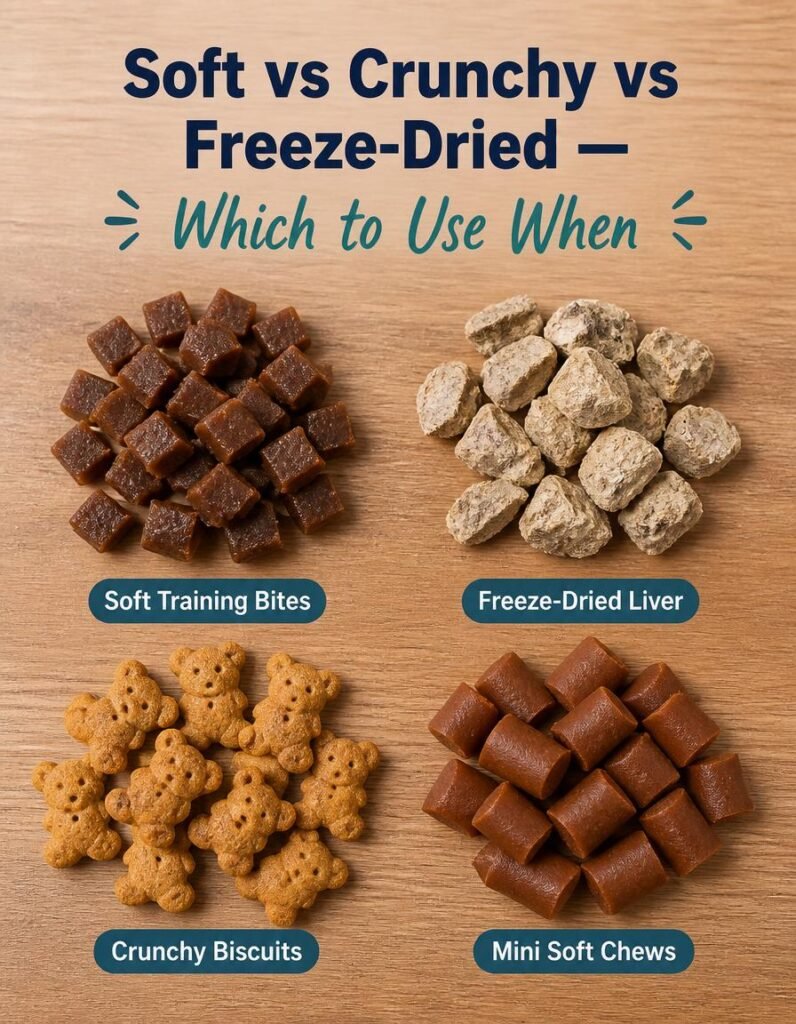
- Texture. Soft beats crunchy for training. Soft treats are swallowed instantly and keep momentum; crunchy ones mean chewing time, crumbs, and a dog whose focus has already wandered.
- Smell. Aroma is what makes a treat “high value.” Strongly-scented meat and liver treats hold attention when there are distractions around.
Get those four right and almost any decent brand works. Get them wrong, and even a premium treat fails.
The One Thing Most Owners Miss: You Need Two Tiers
Here’s the concept that separates people who train successfully from people who struggle — the best dog training treats aren’t one product; they’re two tiers.
Tier 1 — everyday treats. Low-calorie, mildly tasty, cheap. These are for known behaviors in easy environments: sit in the kitchen, down in the living room, high-repetition drills at home.
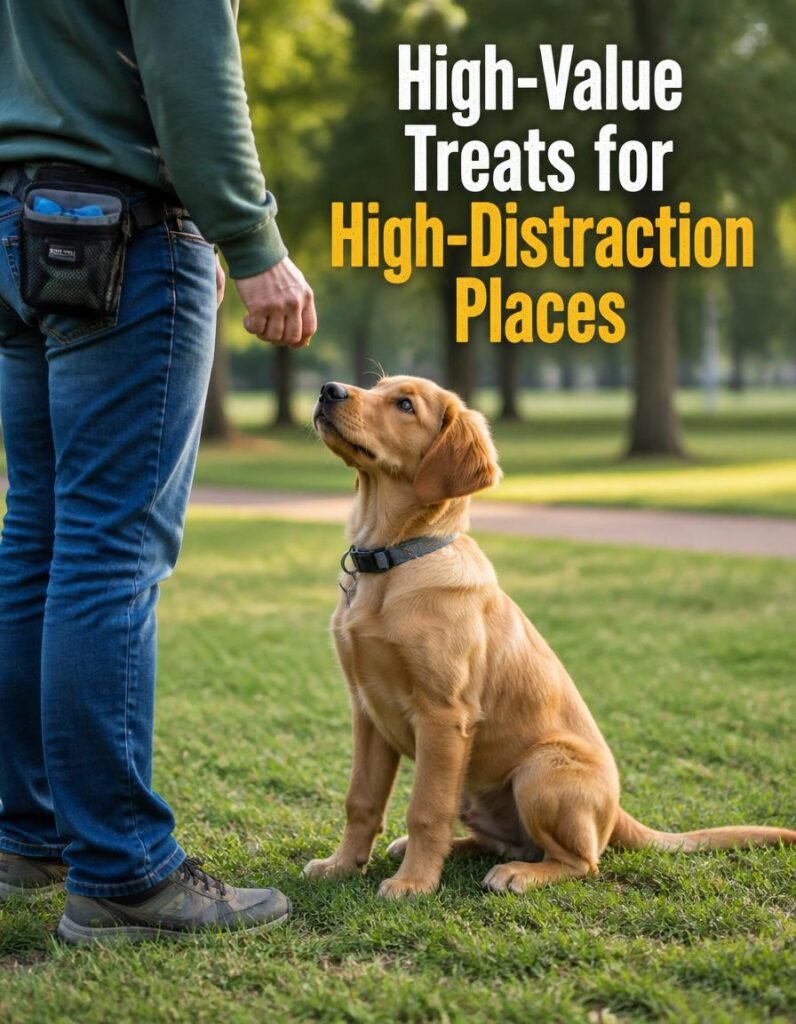
Tier 2 — high-value treats. Strong-smelling, meaty, irresistible. You save these for hard things: recall at the park, meeting strangers, working around distractions, or teaching something brand new.
If you use your best treat for everything, it stops being special and loses its power exactly when you need it most. Keep the good stuff rare, and it stays effective.
Trainers also recommend rotating flavors so your dog doesn’t get bored with one taste. Novelty itself is motivating.
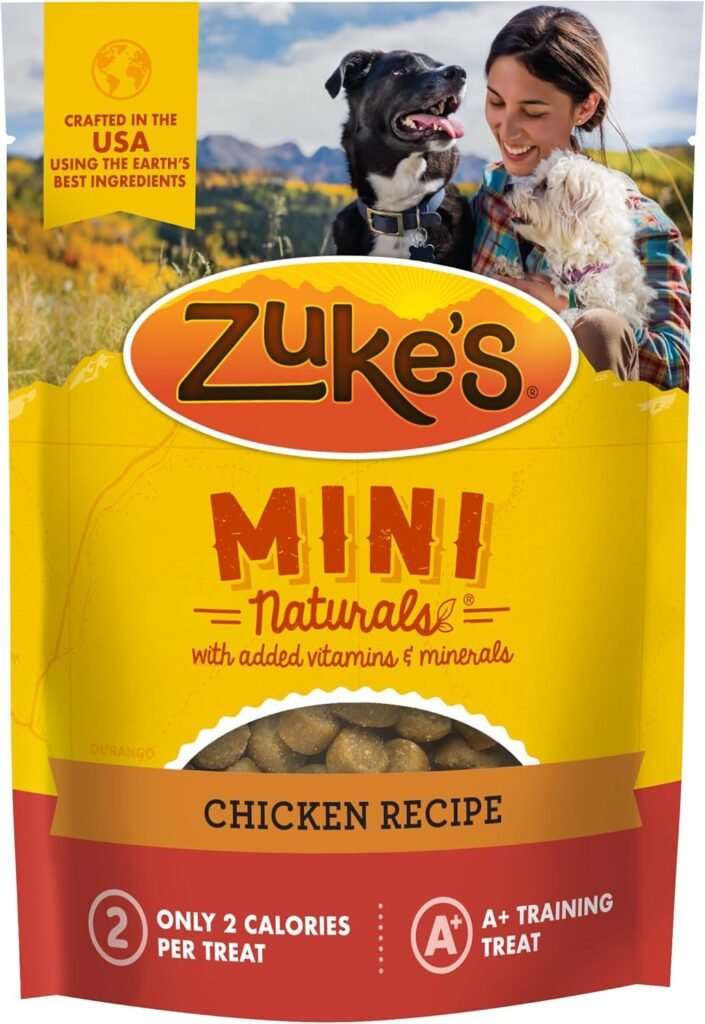
The Best Dog Training Treat Overall: Zuke’s Mini Naturals
If you buy one bag, buy this one. Zuke’s Mini Naturals have been the professional trainer default for over two decades, and they hit every requirement almost perfectly.
Why it wins:
- Pea-sized and only about 2 calories each — you can reward heavily through a long session without denting your dog’s daily calories.
- Real chicken as the first ingredient, so the value is in the meat rather than filler.
- Soft, quick-dissolving texture. Your dog swallows and immediately looks back at you for the next rep — that’s exactly the rhythm good training needs.
- Widely available in multiple flavors, which makes rotating easy.
The honest downsides:
- Not the highest-value option. For a seriously distracted dog outdoors, you may need something smellier.
- The soft texture means they can dry out if the bag isn’t sealed properly.
- Mid-range price rather than budget.
Best for: almost every dog and every stage — of all the best dog training treats here, this is the reliable everyday workhorse.
The Best High-Value Pick: Stewart Freeze-Dried Beef Liver
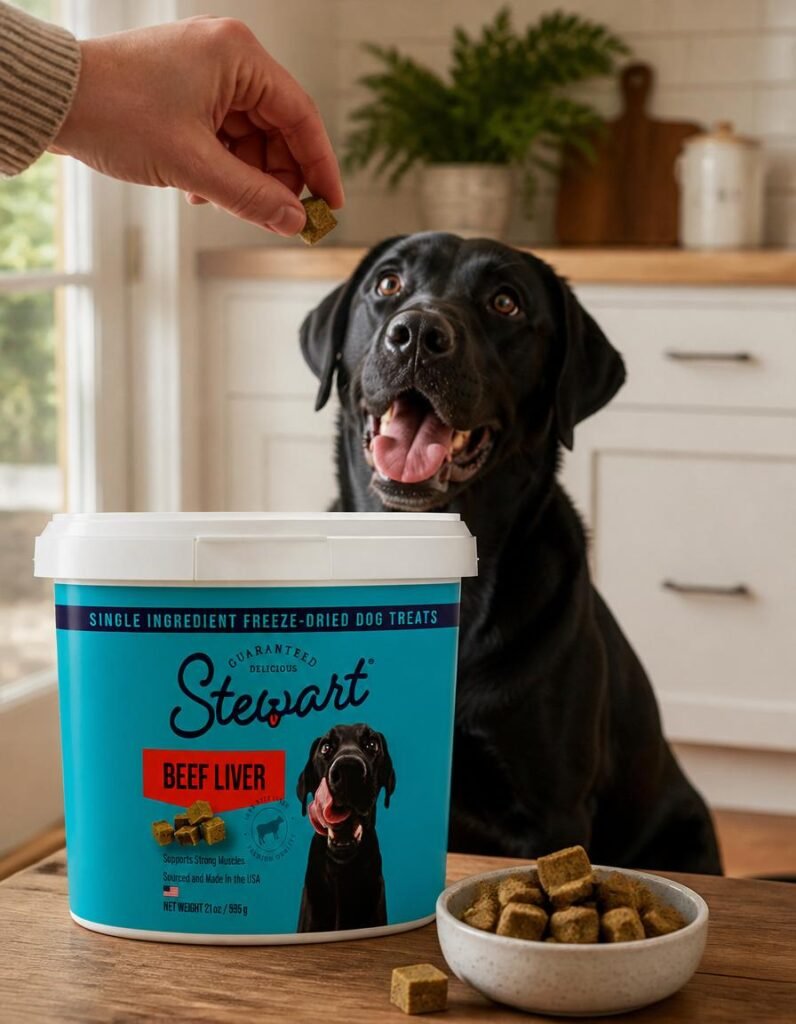
When your dog stops listening the moment you leave the house, this is the fix. Freeze-dried liver is about as high-value as a store-bought treat gets.
Why it’s a standout:
- Enormous aroma. Liver is the classic trainer’s secret weapon precisely because dogs can smell it from a distance and will work hard for it.
- Around 1 calorie per piece, so even heavy rewarding barely registers on the daily total.
- Three simple ingredients — it’s essentially pure protein, not a processed snack.
- Freeze-dried and mess-free. No grease in your pocket, which matters if you carry treats on every walk.
The honest downsides:
- Crumbly. The pieces break apart in a pouch, so you end up with liver dust at the bottom.
- Strong smell — great for your dog, less pleasant for you.
- Best saved for Tier 2 use; using it constantly wastes its power.
Best for: recall training, distraction work, nervous dogs, and anything genuinely difficult.
The Best for High-Repetition Training: Pet Botanics Minis
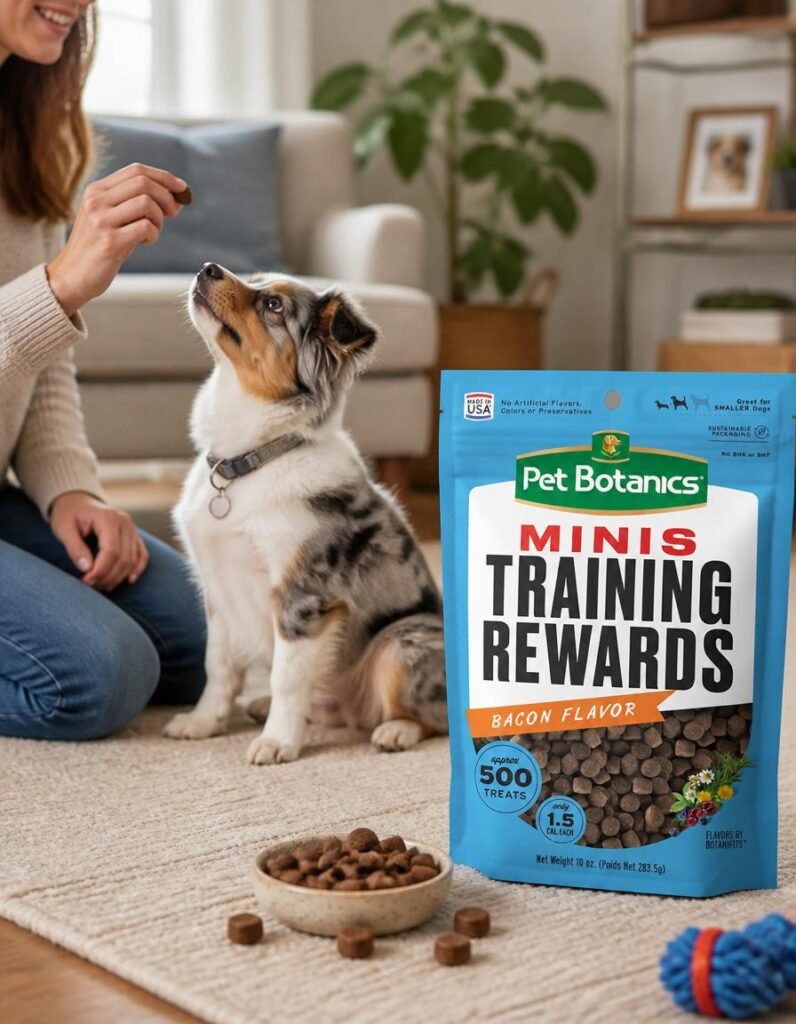
Some training is just volume — a hundred reps of the same behavior. These are built for exactly that.
Why it’s a standout:
- Pork liver as the first ingredient gives strong taste and aroma, so motivation stays high even at rep fifty.
- Genuinely mini-sized and very low calorie, which is the whole point for repetition-heavy work.
- Soft and chewy, so your dog swallows fast, and the session keeps moving rather than stalling on chewing.
- Large bags with a high piece count, so you’re not constantly rebuying.
The honest downsides:
- The soft texture means they can stick together in warm weather.
- The ingredient list is more processed than the premium picks — fine for most dogs, a dealbreaker for label purists.
Best for: puppy training, small dogs, and any drill where you need lots of quick rewards.
The Best Budget Pick: Charlee Bear Training Treats
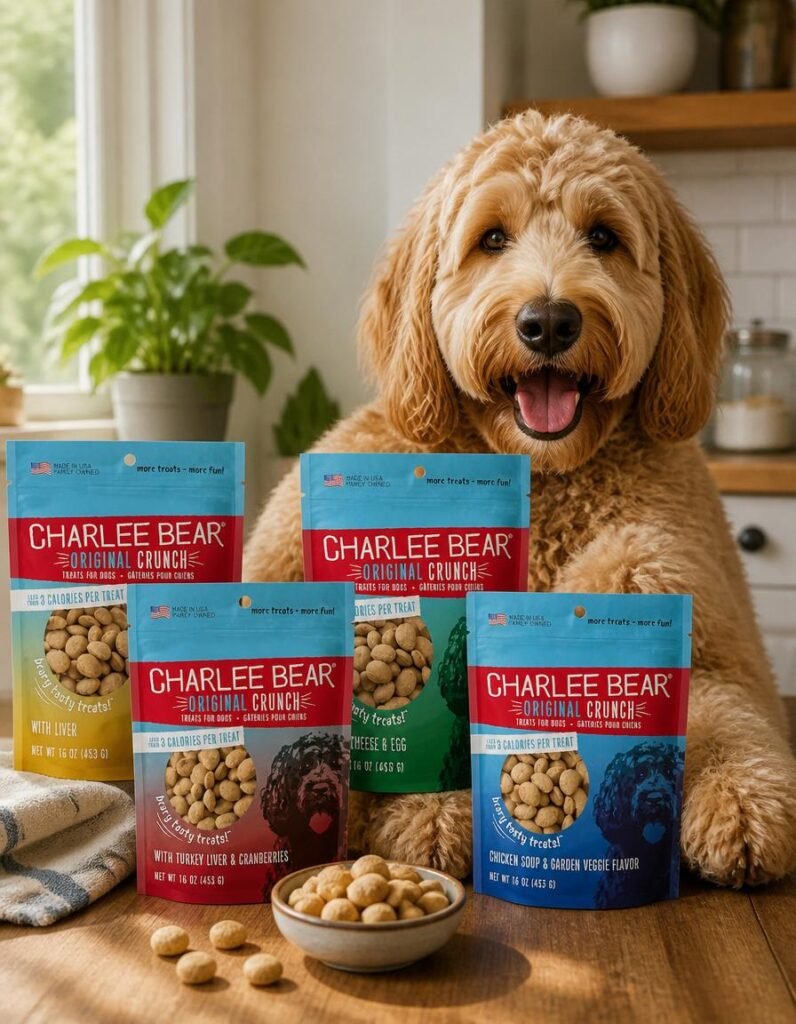
If you’re training daily and burning through bags, cost matters. Charlee Bear is the value option that still does the job.
Why it’s the value pick:
- Very cheap per treat with a high piece count — one of the most cost-effective options available.
- Around 3 calories each, still low enough for frequent rewarding.
- Crunchy and dry, which means no grease, no mess, and a long shelf life in a training pouch.
The honest downsides:
- Crunchy texture slows sessions. Your dog spends time chewing instead of looking back for the next cue — the main reason trainers usually prefer soft treats.
- Lower value than meat-first options, so it’s a Tier 1 treat only.
- Not ideal for puppies or senior dogs with dental issues.
Best for: budget-conscious owners doing easy, high-volume work at home.
The Best Clean-Ingredient Pick: The Honest Kitchen Meaty Littles
For owners who read every label, this is the pick among the best dog training treats for ingredient quality.
Why it’s a standout:
- Around 2 calories per treat in a small, soft format — genuinely usable for training, not just a fancy snack.
- Added DHA, which supports brain development — a real plus for puppies who are training and growing at the same time.
- No meat meals, no GMO ingredients, no artificial preservatives, and free of corn, wheat, and soy.
- Tender texture and strong flavor that keeps dogs motivated.
The honest downsides:
- Premium price — noticeably more expensive per treat than the workhorse options.
- Can be slightly crumbly if handled roughly.
Best for: puppies, dogs with sensitivities, and owners who prioritize ingredient quality.
[Check price on Amazon]
Quick Comparison
Here’s how the best dog training treats compare side by side:
| Treat | Calories (approx) | Texture | Tier | Best for |
|---|---|---|---|---|
| Zuke’s Mini Naturals | ~2 | Soft | 1–2 | Most dogs — the all-rounder |
| Stewart Freeze-Dried Liver | ~1 | Freeze-dried | 2 | Distractions, recall, hard work |
| Pet Botanics Minis | ~3 | Soft & chewy | 1–2 | High-repetition drills |
| Charlee Bear | ~3 | Crunchy | 1 | Budget, easy home training |
| Honest Kitchen Meaty Littles | ~2 | Soft | 1–2 | Puppies, clean ingredients |
The 10% Rule (Don’t Skip This)
Treats count as food. Veterinary guidance is consistent: no more than 10% of your dog’s daily calories should come from treats, with the other 90% from complete, balanced meals.
That’s easy to blow through during training. A dog needing 400 calories a day has only about 40 calories to spend on treats — which is roughly twenty 2-calorie treats, and a single training session can hit that.
Two practical fixes trainers use:
- Use tiny, low-calorie treats (which is why every pick above is 1–3 calories).
- Train with part of their dinner. Set aside a portion of your dog’s daily kibble and use it for Tier 1 rewards, so the calories are already accounted for.
The AKC’s guidance on how many treats a dog can have explains the calculation in more detail, and it’s worth reading before a heavy training week.
What to Skip
The best dog training treats are small, soft, and low-calorie. These are the ones that fail that test:
| What to skip | Why |
|---|---|
| Large biscuits and dental chews | Too big and too calorie-dense for repetition. A few and your dog is full and done training. |
| Anything you have to break up mid-session | Breaking treats kills your timing, and timing is what makes reward-based training work. |
| Hard, crunchy treats for fast-paced work | Chewing time breaks focus. Fine for casual rewards, poor for drilling. |
| Treats with vague “meat by-product” labels | Look for a named meat first. Palatability and quality both track with real meat content. |
| Using your highest-value treat for everything | Burns the novelty. Keep the smelly stuff rare so it works when you genuinely need it. |
Using Treats for Specific Training
Puppy basics. Puppies need constant, tiny, low-value rewards throughout the day — potty training especially runs on immediate rewards delivered within seconds of the behavior. Our guide on how to potty train a puppy covers the timing that makes it stick.
Redirecting bad habits. Treats aren’t just for teaching tricks — they’re how you reward the alternative behavior when you’re breaking a habit. If your dog destroys the house, see how to stop a dog from chewing everything for the redirection approach.
Recall and distractions. This is Tier 2 territory, where the best dog training treats earn their keep. Use freeze-dried liver or similar, and only outdoors where the competition for attention is real.
Frequently Asked Questions
What are the best dog training treats?
The best dog training treats are tiny, soft, and low in calories. Zuke’s Mini Naturals are the strongest all-round pick at about 2 calories each, Stewart Freeze-Dried Beef Liver is the high-value option for distractions, Pet Botanics Minis suit high-repetition work, and Charlee Bear is the budget choice.
How many training treats can I give my dog?
Follow the 10% rule — treats should make up no more than 10% of daily calories. With 1–3 calorie treats you can reward frequently, but a dog needing 400 calories daily only has about 40 calories of treat allowance.
Should training treats be soft or crunchy?
Soft is better for training. Soft treats are swallowed instantly so your dog re-engages immediately, while crunchy treats add chewing time and crumbs that break focus. Crunchy treats are fine for casual rewards.
What is a high-value treat?
A high-value treat is one your dog finds unusually exciting, usually because it’s strongly scented and meaty — freeze-dried liver is the classic example. Save these for difficult situations like recall or distraction training so they keep their power.
Can I use regular food as training treats?
Yes, and trainers often do. Setting aside part of your dog’s daily kibble for easy at-home repetitions keeps calories in check. Save purpose-made treats for harder work where you need more motivation.
The Bottom Line
The best dog training treats do one job: keep your dog motivated without filling them up. That means pea-sized, soft, and 1–3 calories a piece.
Buy Zuke’s Mini Naturals as your everyday workhorse, keep a bag of freeze-dried liver for the hard stuff, and choose Charlee Bear if budget is the priority. Run a two-tier system, follow the 10% rule, and rotate flavors so novelty stays on your side.
Get the treat right and training stops being a battle — your dog will work all session and come back tomorrow wanting more.
This post contains affiliate links. If you buy through them, we may earn a small commission at no extra cost to you. We only recommend products we believe are genuinely worth considering.