Learning how to potty train a puppy is the single most important thing you will teach your new dog. Get it right in the first few weeks, and you set the foundation for a clean house and a confident puppy. Get it wrong, and you can spend months cleaning up preventable accidents. This guide walks you through the exact routine that works, step by step.
Table of Contents
- How Long Does It Take to Potty Train a Puppy?
- When Can Puppies Control Their Bladder?
- How to Potty Train a Puppy: The Step-by-Step Method
- Why a Crate Makes Potty Training Easier
- What to Do When Accidents Happen
- Common Potty Training Mistakes
- Frequently Asked Questions
- Final Thoughts
How Long Does It Take to Potty Train a Puppy?
Most puppies are reliably potty trained within 4 to 6 months, though some catch on in a few weeks while others need longer. According to the American Kennel Club, the timeline depends on your puppy’s age, learning history, and above all, your consistency. A puppy that goes out on a predictable schedule with the same routine every single day learns dramatically faster than one whose potty breaks happen at random.
The key mindset shift when learning how to potty train a puppy: it is not something your puppy does. It is a schedule that you keep. If you are consistent, your puppy will be too.
When Can Puppies Control Their Bladder?
Puppies cannot fully control their bladder until they are around 16 weeks old. Before that age, when they need to go, they need to go right now. That is why accidents in the first weeks are completely normal and never the puppy’s fault. Understanding this timeline is the first real step in how to potty train a puppy without frustration.
A useful rule of thumb for how long a puppy can hold it: take their age in months and add one. That is the maximum number of hours between potty breaks. A 2-month-old puppy can manage about 3 hours. A 4-month-old can manage about 5. Plan your day, and your nights, around that number.
How to Potty Train a Puppy: The Step-by-Step Method
Step 1: Put the day on a schedule. Take your puppy out first thing in the morning, after every meal, after every nap, after play sessions, and last thing before bed. Meals at the same times each day make potty times predictable too. Most puppies need to go within 5 to 30 minutes of eating.
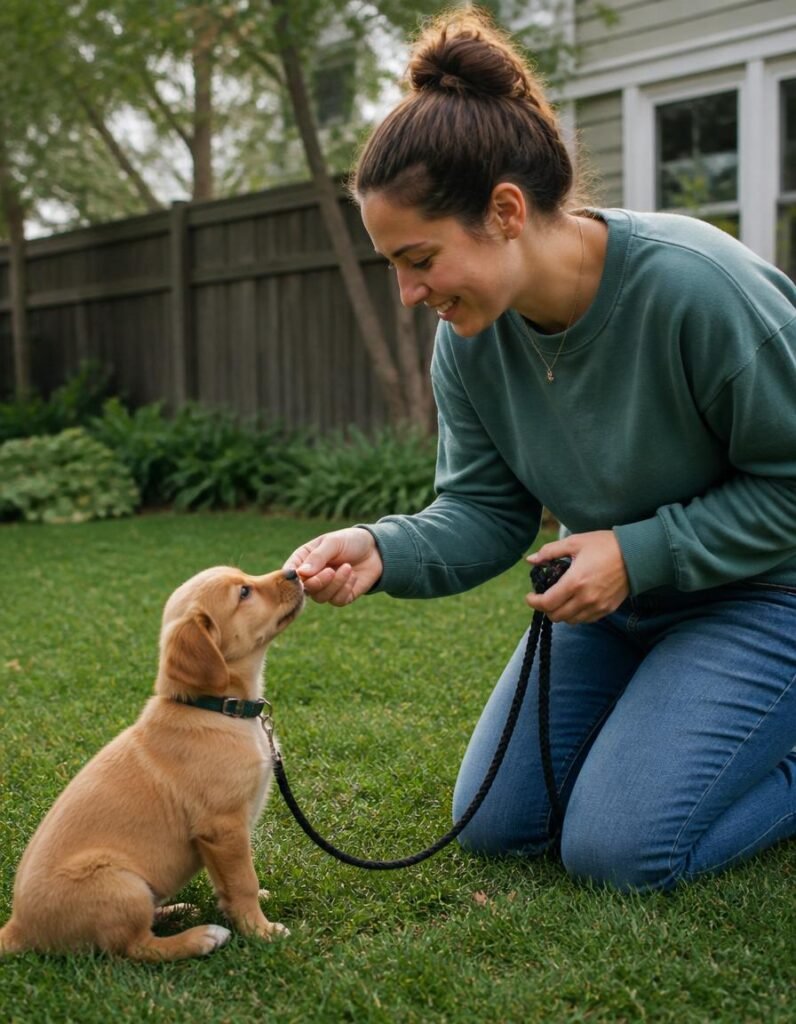
Step 2: Same door, same spot, on a leash. Walk your puppy out the same door to the same potty spot every time, even in a fenced yard. The scent of previous visits tells them exactly why they are there, and the leash keeps the trip about business instead of playtime.
Step 3: Reward within two seconds. The moment your puppy finishes going in the right spot, praise warmly and give a small treat. The reward has to land immediately so the puppy connects it to the act itself, not to walking back inside.
Step 4: Supervise or confine, always. A loose, unwatched puppy is an accident waiting to happen. When you cannot keep your eyes on them, use a crate or a playpen. Watch for the tell-tale signs they need to go: sniffing the floor, circling, whining, or suddenly heading for another room.
Step 5: Repeat until boring. That is genuinely the whole method for how to potty train a puppy. The routine feels repetitive to you, but repetition is exactly what teaches a puppy where the bathroom is.
Always keep a reliable stash of waste bags handy for these daily trips—check out our Earth Rated Poop Bags review to see why they are our top pick for preventing messy cleanups.
Why a Crate Makes Potty Training Easier
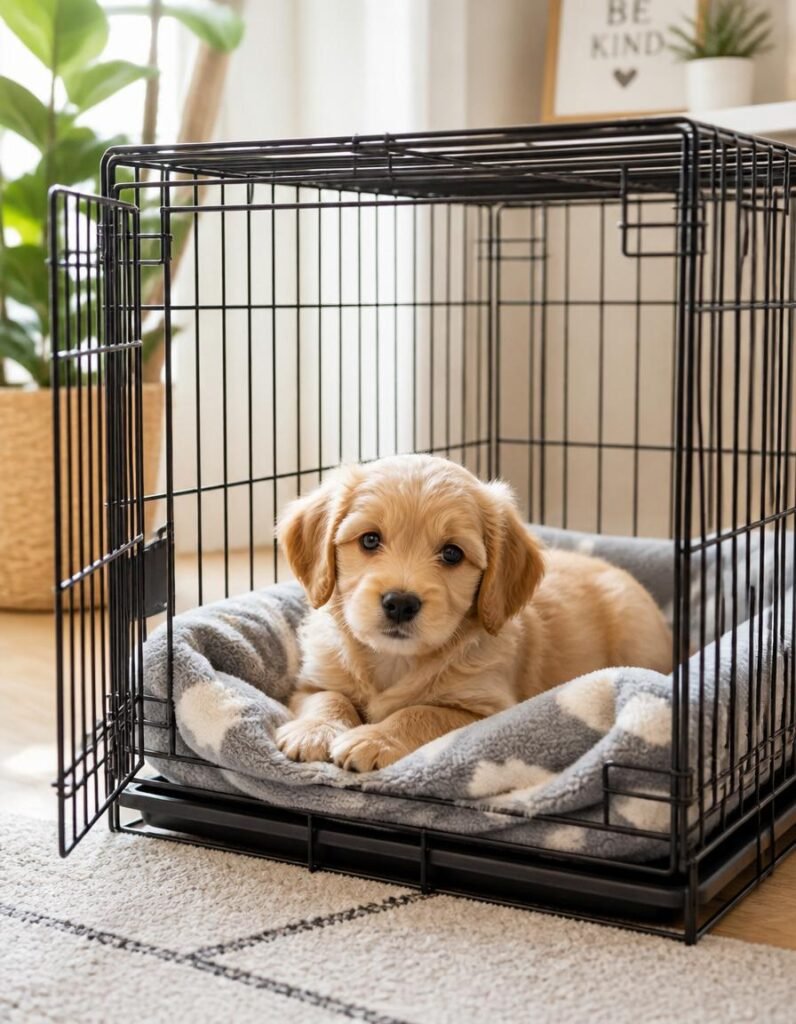
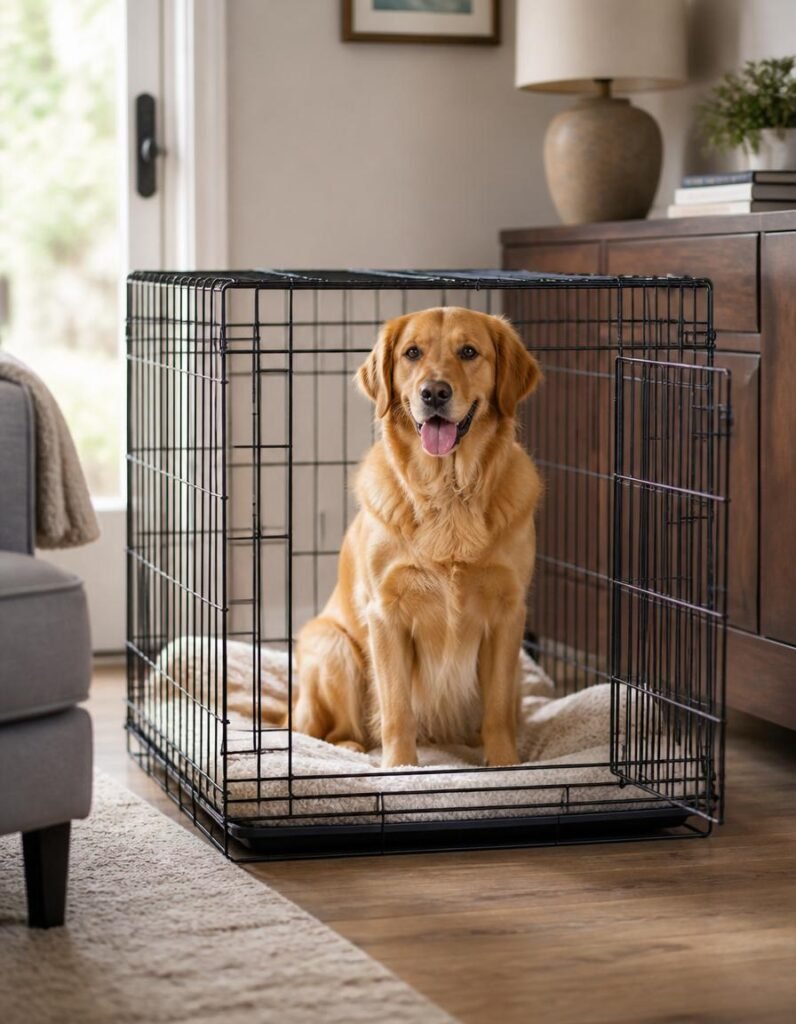
Ask any trainer how to potty train a puppy quickly, and the answer almost always includes a crate. Dogs instinctively avoid soiling the place where they sleep. A properly sized crate uses that instinct in your favor: when you cannot supervise, the crate keeps your puppy from sneaking off to have an accident, and it teaches them to hold it until the next scheduled break. If you have not set one up yet, our full guide on how to crate train a puppy covers the whole process from the first day.
Size matters here. The crate should be big enough for your puppy to stand up, turn around, and lie down comfortably, but not so large that they can sleep at one end and go potty at the other. Many crates come with a divider panel so the space can grow with your puppy.
What to Do When Accidents Happen
Knowing how to potty train a puppy also means knowing how to handle the misses. Accidents will happen; what you do next matters more than the accident itself. If you catch your puppy mid-act, interrupt with a gentle clap, then carry or lead them straight to their potty spot to finish, and praise if they do. Always clean accidents with an enzymatic cleaner rather than regular household products. Scolding a puppy after the fact teaches them nothing except to fear going in front of you, which makes training harder.
Always clean accidents with an enzymatic cleaner rather than regular household products. Dogs are drawn back to spots that smell like previous business, and only an enzyme cleaner fully removes that scent.
Common Potty Training Mistakes
Most advice on how to potty train a puppy fails at the same point: consistency. The mistakes that slow most owners down: waiting too long between breaks, punishing accidents, letting the puppy roam unsupervised, mixing pads and outdoor training without a plan, and giving up on the routine after a good week. One clean week does not mean the job is done. Keep the schedule going until your puppy has been accident-free for at least a month.
Related reading: dog doorbells for potty training, black lights that find old urine stains and pooper scoopers matched to your yard.
Gear That Makes Potty Training Easier
Two things make potty training smoother: a reliable backup spot indoors and a cleaner that removes the smell completely, so your puppy is not drawn back to the same place. Compare more options in our pee pad roundup and enzyme cleaner guide.
Amazon Basics Leak-Proof Pee Pads
Our top pee pad pick: a dependable indoor backup for overnight and for puppies who cannot hold it yet.
Rocco & Roxie Stain & Odor Eliminator
Our top enzyme cleaner. It breaks down urine odor rather than masking it, which helps stop repeat accidents in the same spot.
Nature’s Miracle Dog Urine Destroyer Plus
A well-known enzyme alternative and the runner-up in our cleaner roundup.
Frequently Asked Questions
How long can a puppy hold its pee? Roughly their age in months plus one, in hours. A 3-month-old puppy can hold it for about 4 hours at most. This applies overnight too, so plan on a nighttime potty break until your puppy is older.
Should I use puppy pads or train outside from the start? If your goal in how to potty train a puppy is a dog that only goes outdoors, train outdoors from day one. Pads teach a puppy that going inside is sometimes fine, which creates confusion you later have to untrain. Pads make sense mainly for apartment living, harsh winters, or schedules that make frequent trips outside impossible.
What if my puppy pees in the crate? First check the size: a crate that is too big lets a puppy potty in one corner and sleep in another. Then check the clock: if they were crated longer than they can physically hold it, the accident is on the schedule, not the puppy. Shrink the space with a divider, shorten the intervals, and restart the routine.
When will my puppy sleep through the night without a potty break? Most puppies can make it through the night by around 4 months old. Until then, take away water about 2 hours before bedtime, do one final potty trip right before lights out, and expect one overnight break.
Final Thoughts
That is how to potty train a puppy: a fixed schedule, one potty spot, instant rewards, constant supervision, and a crate for the moments you cannot watch. None of it is complicated. All of it depends on you keeping the routine even on busy days. Stay consistent for a few weeks, and you will have a puppy that asks to go out instead of leaving surprises, and a house that stays clean for good. If you just brought your puppy home, our new puppy checklist covers everything else you will need in the first month.
Disclosure: dailypetpicks.com is a participant in the Amazon Services LLC Associates Program, an affiliate advertising program designed to provide a means for sites to earn advertising fees by advertising and linking to Amazon.com. This means we may earn a small commission if you purchase through our links, at no extra cost to you.