Disclosure: dailypetpicks.com is a participant in the Amazon Services LLC Associates Program, an affiliate advertising program designed to provide a means for sites to earn advertising fees by advertising and linking to Amazon.com. This means we may earn a small commission if you purchase through our links, at no extra cost to you.
You buy a dog food storage container to keep kibble fresh. Then you tip thirty pounds of food into it, fold up the empty bag, and drop the bag in the trash. That last step is the one the FDA specifically tells you not to take.
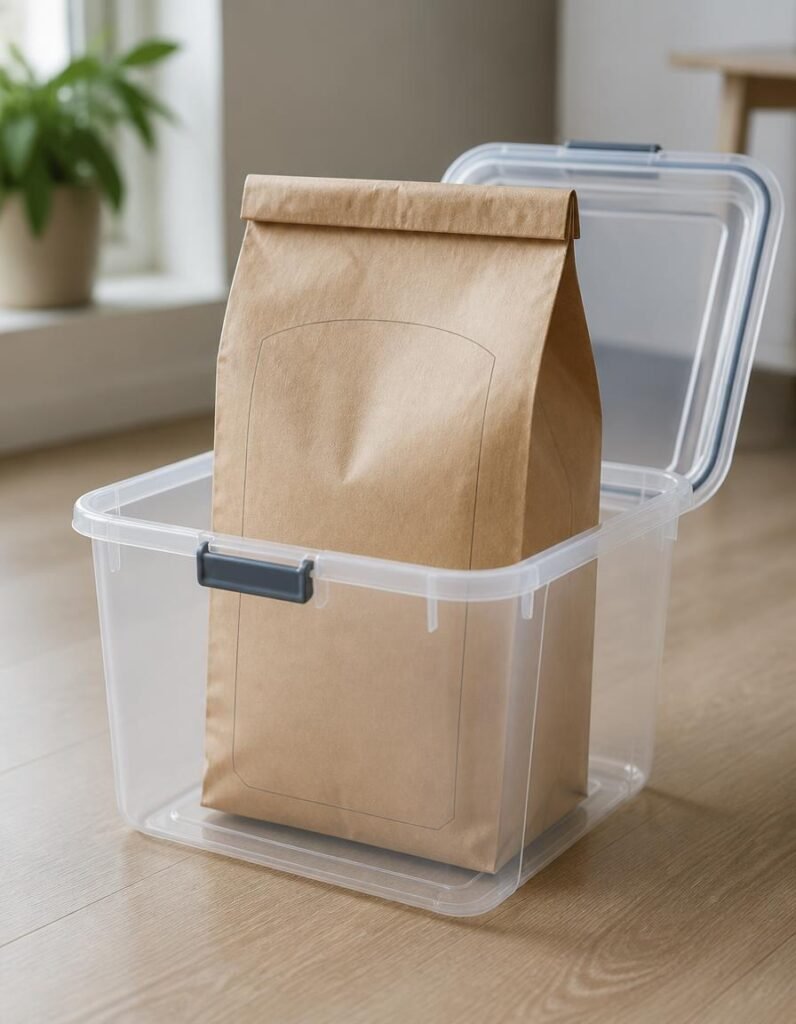
Its guidance on storing pet food is unusually direct: if you want to use a bin, put the whole bag inside it rather than pouring the kibble in loose. The bag carries the lot number, the best-by date, and the exact product name — the three pieces of information you need if that food is ever recalled or if your dog gets sick on it. The FDA notes that fewer than half of the pet food complaints it receives include a lot number, which is precisely what happens when everyone throws the bag away.
That single instruction changes what you should be shopping for. A bagged bag is bulkier and more awkward than loose kibble, so the right dog food storage container needs a wide rectangular opening, a bit more room than the label suggests, and a lid that still closes over a folded bag top. Most buying guides skip all of this and rank bins by how many pounds the box claims to hold — a number that, as you will see below, is not standardised in any meaningful way.
Below are five picks that work for the way food is actually supposed to be stored, plus one honest exception where the rule has to bend.
The mistake almost everyone makes
Pouring kibble loose into a bin feels like the whole point of buying one. It looks tidier, the scoop moves more freely, and the food is easier to see. But it quietly costs you two things.
The first is traceability. The FDA’s guidance on proper storage of pet food and treats asks owners to keep food in its original packaging so the UPC code, lot number, product name, and best-by date stay with the food. If you must decant, it says to save that information separately. Recalls almost never cover an entire brand — they target specific lot numbers from specific production runs — so without the code, you are guessing.
The second is the container itself. Kibble is coated in fat. Pour it straight into plastic month after month, and that fat builds up on the walls of the bin, and old residue goes rancid against fresh food. Keeping the bag in place means the plastic barely touches the food at all, so a dog food storage container used this way stays clean for far longer.
The American Veterinary Medical Association gives the same advice and adds the fallback: if you do not use the original bag, cut out and keep the panel showing the full product name, date of manufacture, lot number, and expiration date. It takes ten seconds, and it is the difference between checking a recall notice and panicking about one.
So the shopping brief is not “which bin is prettiest”. It is: which one swallows a full bag with the bag still on.
Why is the weight on the label not a real number
Every dog food storage container is sold by pounds of kibble. Those ratings are estimates, and manufacturers do not even agree with each other on them.
Here is a concrete example from the listings that you can check yourself. IRIS sells a 33-quart bin rated for 30 pounds. Amazon Basics sells a 33-quart bin in a two-piece combo and rates the same volume at 25 pounds — while a different Amazon Basics set describes its 33-quart container as holding 30 pounds. Same volume, three different claims. The smaller bins tell the same story: IRIS calls 12 quarts an 11-pound bin; Amazon Basics calls it a 10-pound bin.
Nobody is lying. Kibble density varies enormously. A dense, small-pellet adult formula packs into a bin far more efficiently than a large, airy, air-dried, or grain-free kibble with big, chunky pieces. Gamma2, which makes the Vittles Vault line, says so in its own product copy: choose your size based on the shape and density of your kibble, and when in doubt, go up a size.
Now add the bag back in. A bag holds air, has folded seams, and will not settle into the corners of a rectangular bin the way loose kibble does. Between density variation and the bag itself, a realistic rule is to buy a dog food storage container rated for roughly one and a half times the bag you actually buy. If you feed a 20-pound bag, shop the 30-pound bins.
How to size and place one properly
- Buy up, not across. Choose a dog food storage container rated for about one and a half times your bag weight. Undersized is the single most common complaint about these products.
- Prefer a wide rectangular opening. Round bins with narrow throats are sealed beautifully but fight you when there is a bag inside.
- Measure the height with the lid open. A stacked pair can run past 24 inches, which will not clear a pantry shelf.
- Keep it cool. The FDA sets the ceiling at under 80°F and asks for a dry spot. A garage in July fails that test in most of the US, and heat is what drives the fats in kibble to break down.
- Wheels matter more than they sound. A full 30-pound bin is genuinely heavy. If it lives in a pantry and gets dragged out daily, casters are the feature you will notice.
- Use a dedicated scoop. The FDA’s safe handling tips ask you not to use the food bowl as a scoop and to wash the scoop with hot, soapy water after use.
The 5 best dog food storage container picks
Every pick below is judged on whether it takes a bagged bag, how well it seals, and whether it survives daily handling.
1. IRIS USA Airtight 30 lb with Wheels — best overall
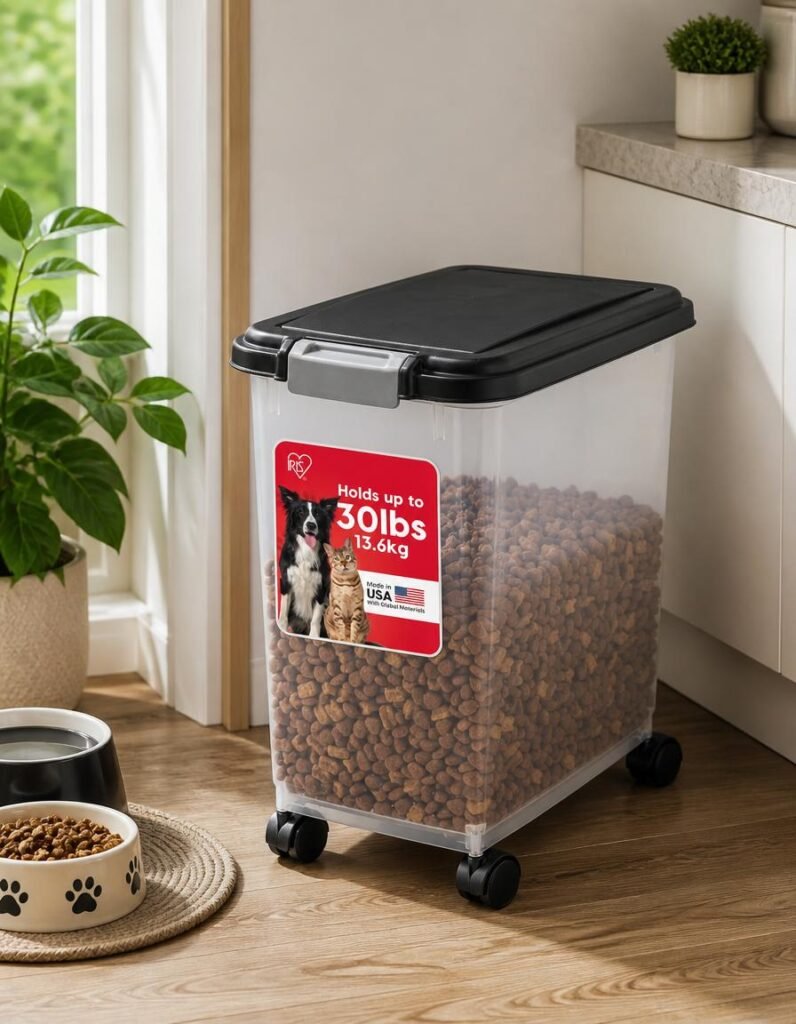
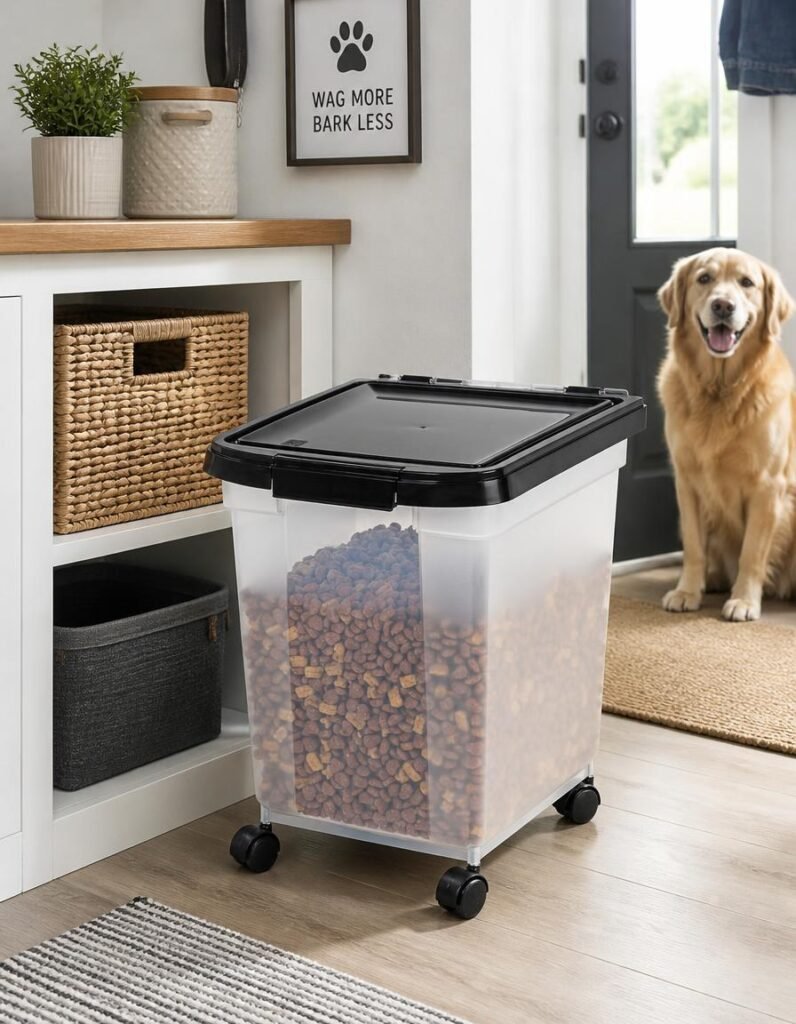
This is Amazon’s best-selling dog food storage container, and it earns the spot on shape alone. The 33-quart body is a wide rectangle roughly 16.4 inches long by 10.9 inches wide, which is the geometry you want when a bag is going in whole. A foam gasket and snap-lock latches close it; the translucent body lets you see the level without opening the lid, and the casters attach or come off depending on where it lives.
Treat the 30-pound rating as a loose-kibble number. With a bag inside, plan on a comfortable 20 to 24 pounds. If you buy the big bags, size up to the 40- or 50-pound version in the same family rather than fighting the lid.
2. Amazon Basics 3-Piece Airtight Combo — best two-bin setup
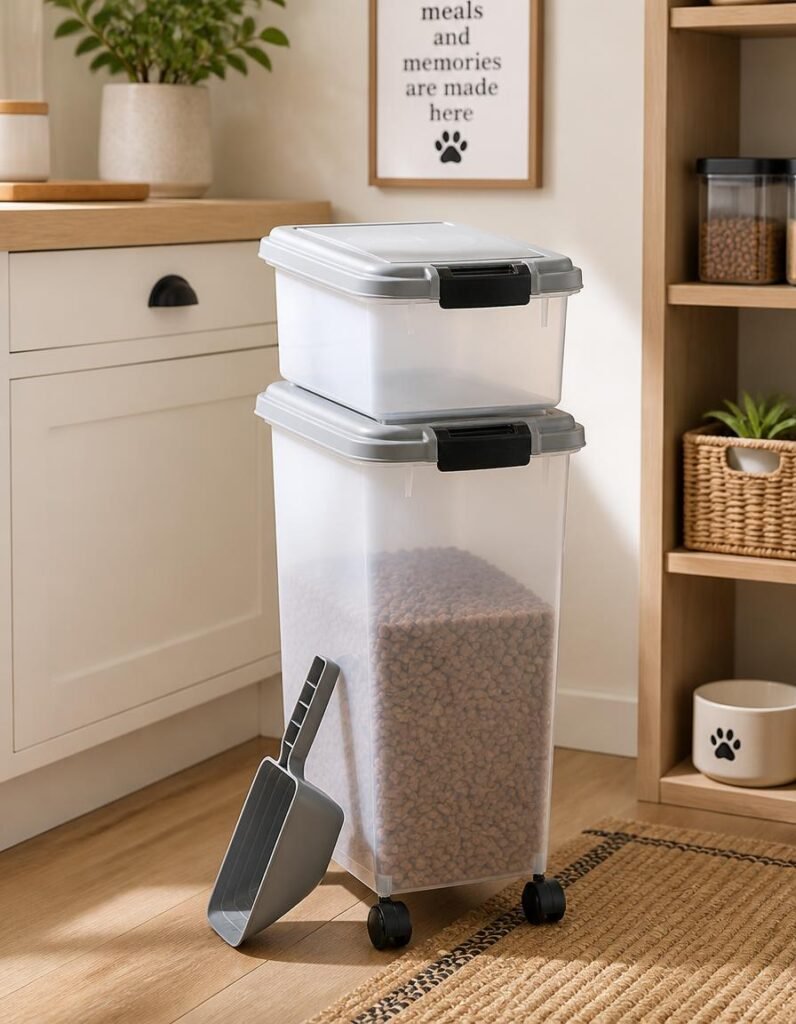
This dog food storage container arrives as a set: a 33-quart bin, a 12-quart bin that stacks on top, a 2-cup scoop, and removable 360-degree wheels. The reason to want two containers rather than one bigger one is workflow: the large bin holds the sealed bag you are working through, and the small one holds treats, a topper, or the second dog’s food, so you are not opening the main bin four times a day.
Stacked, it stands about 24.5 inches tall, so measure before you commit to a pantry shelf. This is also the listing that rates 33 quarts at 25 pounds rather than 30 — a useful reminder that the number on the box is a guide, not a spec.
3. Gamma2 Vittles Vault Outback 25 lb — best seal, with one caveat
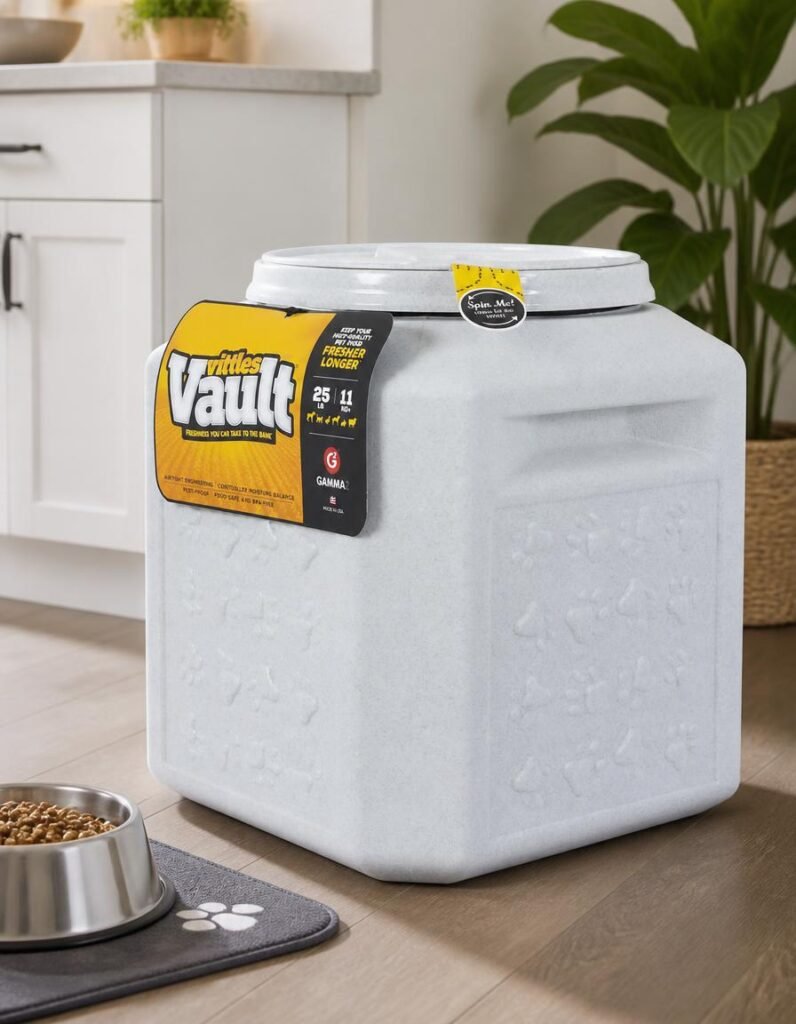
This dog food storage container does not use a snap lid. It uses a threaded locking ring with double gaskets — the same Gamma Seal system Gamma2 sells for utility buckets — and it is a noticeably better seal than any latch-and-foam design. Food-grade HDPE, made in the USA, and rated for indoor or covered outdoor use, which makes it the pick if the food lives somewhere pests can find it.
Here is the honest caveat, because it cuts against everything above: the Outback is a tall, tapered bin with a round opening about 12 inches across, and posting a full bag down it is genuinely awkward. This is the one pick where pouring loose is the practical answer. If you go that way, cut the panel with the lot number and best-by date off the bag and drop it inside — the AVMA fallback exists for exactly this situation. A better seal is worth that trade for a lot of people; just make the trade deliberately.
4. Gamma2 Gamma Seal Lid — the cheapest real seal you can buy
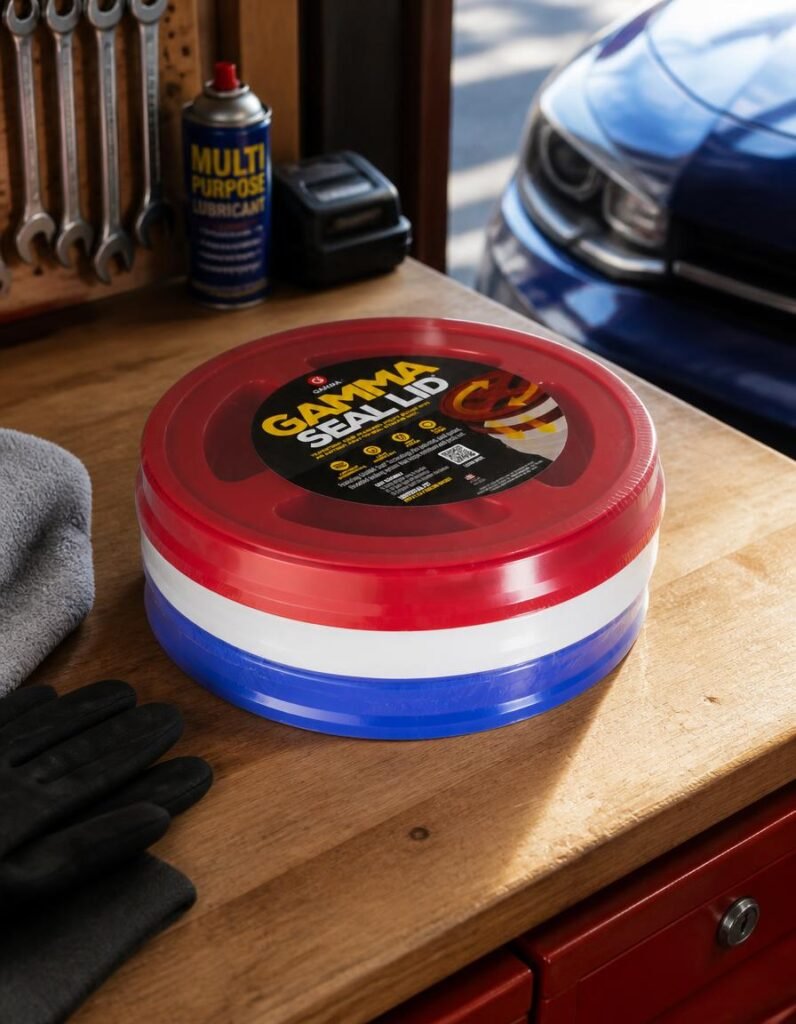
This is not a bin. It is a lid, and it is the best-value item in the category. Snap the adapter ring onto any standard 3.5- to 7-gallon utility bucket, spin the lid on, and you have converted it into an airtight dog food storage container with the same double-gasket seal as the Vittles Vault. It costs a fraction of a purpose-built bin.
Two conditions. Use a food-grade bucket, not one that previously held paint or driveway sealer. And accept that it looks like a bucket in your kitchen — this is a garage, mudroom, or basement solution, not a countertop one. If you already own the bucket, nothing else here comes close on price.
5. IRIS USA WeatherPro 10 lb — best for small dogs
If you have a small dog and buy small bags, a 33-quart dog food storage container is a mistake in the other direction. A half-empty bin holds a lot of air, and air is what stales kibble. This is the small end of the same IRIS family as the top pick: a tapered rectangular bin with a snap-tight latch and a translucent body, rated at around 10 pounds of dry food and small enough to live on a shelf rather than the floor.
Because it is rectangular with a wide opening, it takes a bagged bag the way the big bins do — but apply the sizing rule honestly. Ten pounds is the loose-kibble figure, so with the bag left on this comfortably suits a 5- to 7-pound bag. If you buy 10-pound bags, step up to the 13-pound version in the same range, which also includes a 2-cup scoop. This one does not, so budget for a dedicated scoop rather than using the bowl.
What to skip
Decorative canisters with loose-fitting lids. Ceramic and metal jars with a bamboo lid and no gasket look wonderful on a counter and do almost nothing. A lid that merely rests in place is a dust cover.
Gravity dispensers. The hopper style that trickles kibble into a tray keeps a permanent column of food exposed to air, and the reservoir is difficult to empty and wash. If you want hands-off feeding, a properly portioned feeder is the better tool — our PETLIBRO automatic feeder review covers what that actually looks like.
Anything you cannot lift when full. A 50-pound dog food storage container without wheels is a two-person job. Either buy the wheels or buy smaller and refill more often.
Buying one before you have sorted the rest of the feeding setup. If you are still assembling the basics, our new puppy checklist and our guide to elevated dog bowls are the better starting points.
Keeping it clean
If the bag stays in, cleaning is mostly a non-event — wipe the bin out between bags, and you are done. If you pour loose, wash the container with hot soapy water and dry it completely before every refill, and never top up fresh kibble onto the old layer at the bottom. That bottom layer is the oldest, oiliest food in the house, and it will taint everything above it.
Dry it thoroughly. Moisture trapped under a sealed lid is worse than no lid at all, and it is one of the few ways a dog food storage container can actively make food go off faster than the bag would have. Buying in bulk to save money only works if the last third of the bag is still good — see our roundup of dog care hacks that save time and money for more on where bulk buying pays off.
Frequently asked questions
Should I really leave the kibble in the bag?
Yes, where the container allows it. Both the FDA and the AVMA recommend keeping dry food in its original bag inside a clean, dedicated, airtight bin. If your dog food storage container has a narrow opening that makes it impractical, save the section of the bag carrying the product name, lot number, and best-by date instead.
How long does kibble stay good once the bag is open?
Go by the best-by date on the bag, and store below 80°F in a dry place as the FDA advises. Heat and moisture are what break the nutrients down. A sealed bin slows that process; it does not pause it, so buying a bag your dog can finish in about a month is sensible.
Is plastic safe for storing dog food?
Every dog food storage container here is BPA-free and made from food-grade plastic, which is what to look for. Keeping the bag in place adds a further layer between the food and the container. Avoid repurposing storage tubs that were never intended for food.
Can I keep it in the garage?
Only if the garage stays under 80°F and dry, which rules out most garages in summer. No dog food storage container fixes heat. The Vittles Vault and Gamma Seal designs are rated for covered outdoor use and handle pests well, but temperature is the limit, not the container.
What size should I buy?
Roughly one and a half times the weight of the bag you buy. Ratings are not standardised between brands; large or airy kibble takes more room than the label assumes, and a bag inside the bin needs slack. Going one size up costs a few dollars; going one size down means the lid will not shut.
The bottom line
Buy the IRIS 30-pound bin with wheels if you want one thing that works, size it up if your bags are large, and keep the bag inside it. If pests or a damp garage are the problem, the Vittles Vault seals better, and you accept pouring loose with the lot code saved. If you have a bucket already, the Gamma Seal Lid gets you a genuinely airtight dog food storage container for the price of a bag of treats.
Whichever you choose, the container is the easy part. Keeping the bag with the food is the habit that actually matters.
Prices and availability on Amazon change frequently. Check the current listing before buying.