
Raised feeders look like an obvious upgrade. Your dog eats without craning their neck, food stays off the floor, and the whole feeding station looks tidier.
But elevated bowls come with a genuine debate attached — one that most roundups quietly skip because it complicates the sale. Before recommending anything, this guide covers what the veterinary research actually says about raised feeders and bloat.
Then we get to the products. Below are the best elevated dog bowls worth buying in 2026, who they suit, and who should think twice.
First: The Bloat Question Nobody Wants to Explain
Gastric dilatation-volvulus (GDV), commonly called bloat, is when a dog’s stomach fills with gas and twists. It’s a genuine emergency — even with treatment, a quarter or more of affected dogs die.
Here’s where elevated feeders come in, and the evidence is genuinely mixed.
The study that raised the alarm. In 2000, a Purdue University team led by Dr. Larry Glickman followed 1,914 large and giant breed dogs. They found that roughly 20% of GDV cases in large breeds and 52% in giant breeds were attributed to using a raised feeder — suggesting elevated bowls roughly doubled the risk in those dogs.
The proposed mechanism. Raised bowls may let dogs eat faster, and fast eating is independently linked to higher GDV risk. Floor-level eating seems to naturally slow a dog down.
The study that pushed back. In 2012, a University of Pennsylvania team led by Dr. Marko Pipan studied more than 2,500 dogs and did not find feeder height to be a significant risk factor.
So the honest position is: two studies, conflicting results, no definitive answer. The Veterinary Evidence review from RCVS Knowledge summarizes it well — no study has found that raised feeders reduce GDV risk, and the height findings differ between large and giant breeds.
What That Means For Your Purchase
Here’s what the research means when you’re choosing between the best elevated dog bowls, without overclaiming:
- Large or giant deep-chested breed (Great Dane, Standard Poodle, Weimaraner, Setter, Boxer and similar)? Talk to your vet before switching to a raised feeder. The risk signal is real enough that many vets have changed their advice.
- Small or medium breed? GDV risk is far lower, and the research above focused on large and giant breeds.
- Dog with a medical reason — megaesophagus, severe arthritis, neck or spinal pain, limited mobility? Elevated feeding is often genuinely recommended. Follow your vet’s guidance.
- Fast eater of any size? Address the eating speed itself. Our roundup of the best slow feeder dog bowls covers bowls designed specifically to slow a gulper down.
One more honest note: outside of specific medical conditions, there isn’t strong scientific evidence that raised bowls “improve digestion.” Treat that marketing claim with skepticism. The proven wins are comfort, mobility, and mess control — which are real reasons to buy, just not medical ones.
What to Look For in the Best Elevated Dog Bowls
If a raised feeder is right for your dog, these are the features that actually matter:
- Correct height. As a rough guide, the bowl rim should sit around your dog’s lower chest height so they aren’t reaching up or stooping down.
- Adjustability. Puppies grow, and multi-dog homes vary. Adjustable stands avoid rebuying.
- Stainless steel bowls. Hygienic, durable, dishwasher-safe. Plastic scratches and harbors bacteria; ceramic breaks.
- Genuine stability. Non-slip feet and a wide base stop the whole thing from sliding across the floor mid-meal.
- Easy cleaning. Removable bowls, ideally dishwasher-safe.
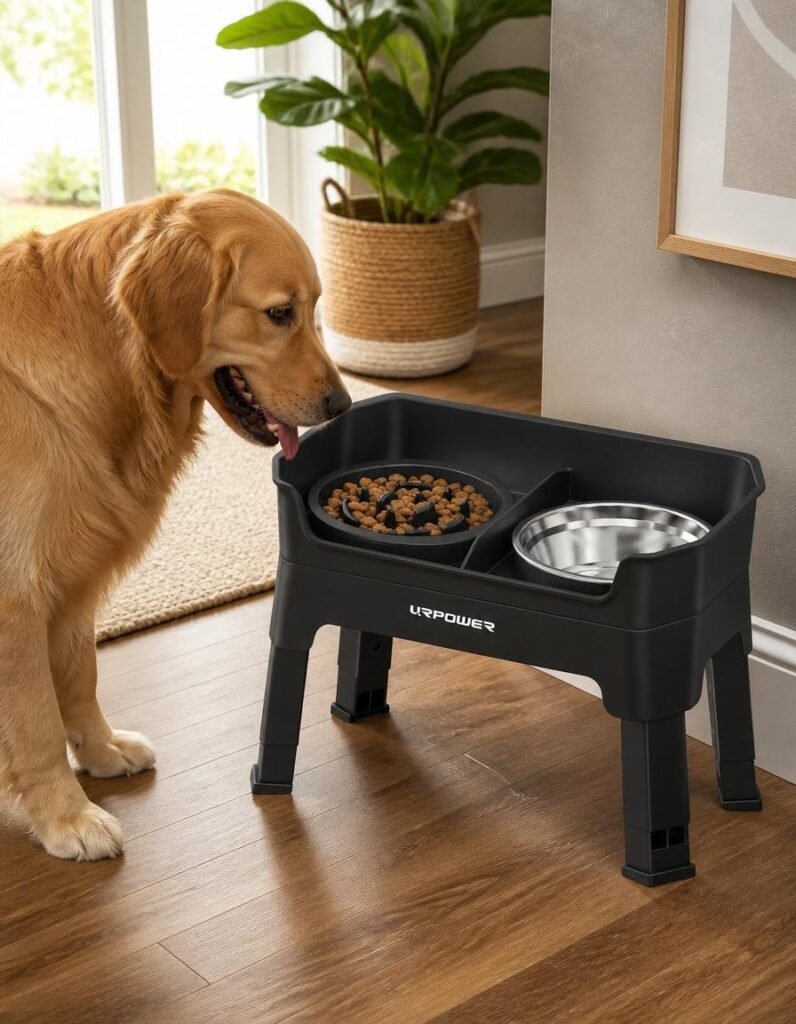
The Best Elevated Dog Bowl Overall: URPOWER 3-in-1
This is the pick that solves the most problems at once, and it directly addresses the fast-eating concern raised above.
Why it wins:
- Adjustable height across multiple settings, so it works from puppy through adult and adapts to different dogs.
- Includes a slow-feeder licking plate — a genuinely thoughtful inclusion given that eating speed is a recognized GDV risk factor, and one most raised feeders ignore.
- Anti-spill design keeps food and water contained rather than redecorating your floor.
- Stainless steel bowls that lift out for easy cleaning.
The honest downsides:
- Requires assembly, and it’s pricier than basic stands.
- Not suited to very small toy breeds — the height range starts too tall for the tiniest dogs.
- The extra features mean more parts to clean.
Best for: most dogs — the most complete option among the best elevated dog bowls, especially if your dog eats quickly.
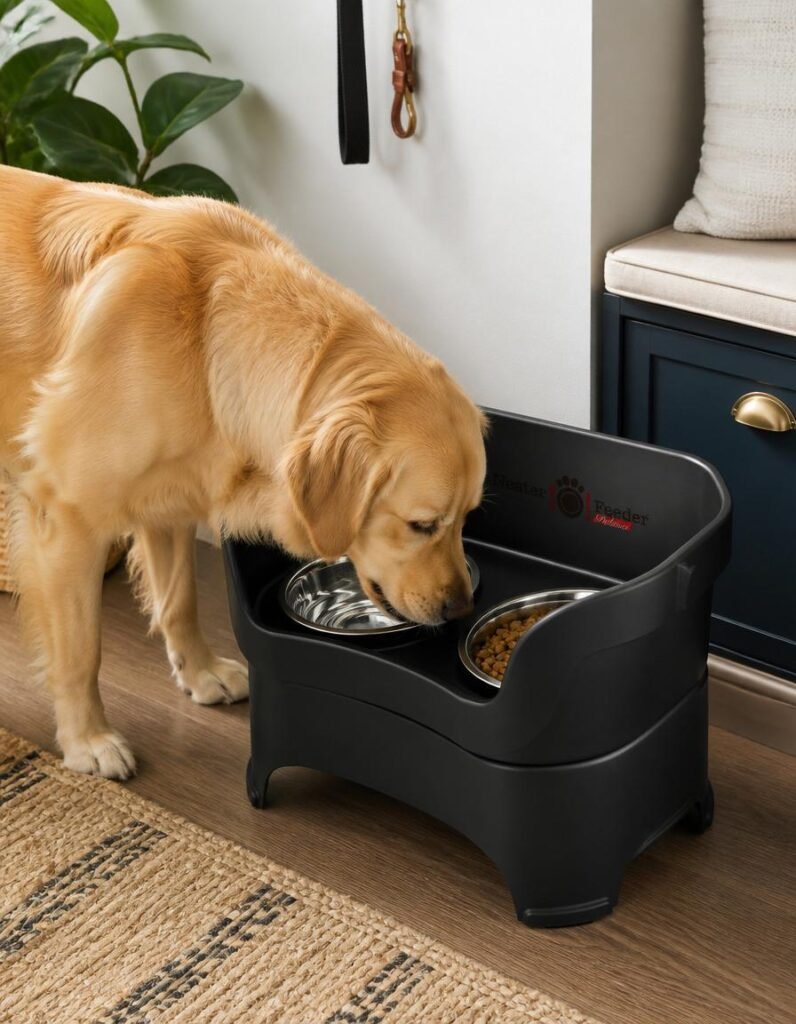
The Best for Messy Eaters: Neater Feeder Deluxe
If your dog treats mealtime like a water park, this is the fix. It’s built around containment rather than just elevation.
Why it’s a standout:
- Two-tier containment system separates spilled food from water overflow, so splashes and dropped kibble stay in the unit instead of on your floor.
- Genuinely stable — the design limits bowl movement while your dog eats, reducing sliding and tipping.
- Made in the United States, which is unusual in this category and comes with more controlled materials and assembly.
- Stainless steel bowls that hold up to repeated washing.
The honest downsides:
- Bulkier than a simple stand, and it takes up more floor space.
- Premium price compared with basic adjustable stands.
- The containment design means slightly more cleaning surfaces.
Best for: sloppy drinkers and enthusiastic eaters — of the best elevated dog bowls here, this is the one that keeps your floor cleanest.
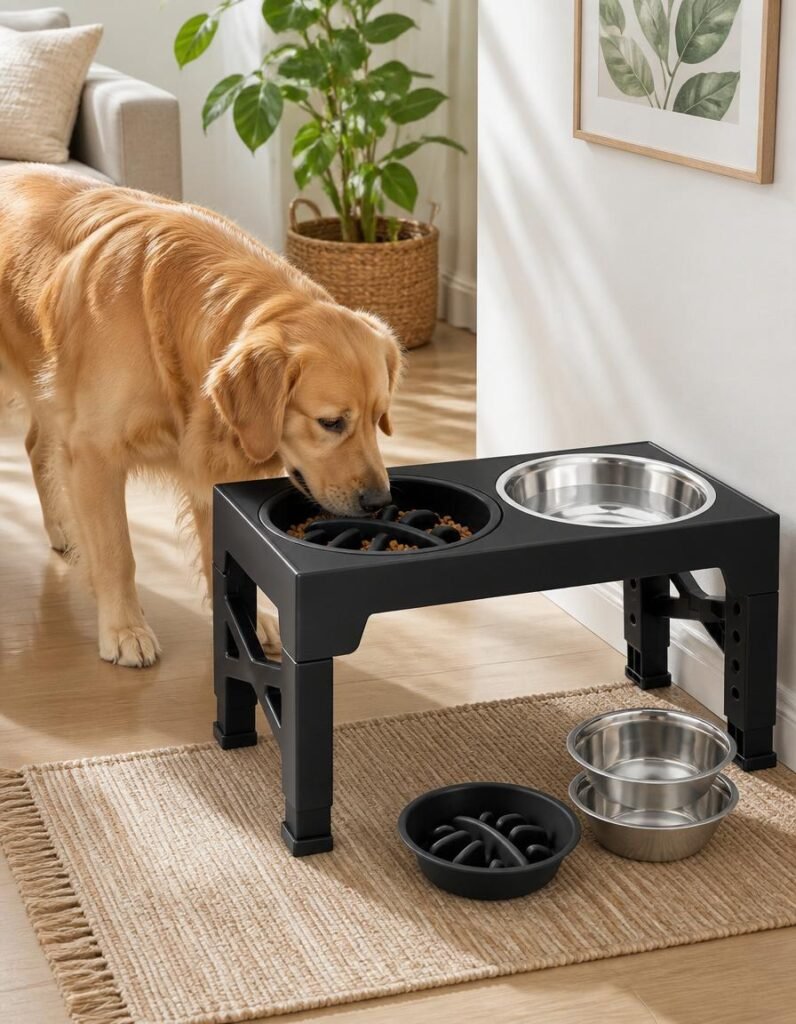
The Best Height Range: Heeyoo Elevated Dog Bowl Set
For growing puppies or homes with several different-sized dogs, adjustability range is the deciding feature — and this one has the widest.
Why it’s a standout:
- Five height settings from about 3.2 to 12.2 inches, which covers everything from a small dog to a large breed on one stand.
- No tools needed to change the height, so adjusting as a puppy grows takes seconds.
- Two 40-ounce stainless steel bowls plus a bonus slow-feeder bowl — useful given the fast-eating concern.
- Rubber anti-skid pads keep it steady on hard floors even at full height, and the bowls are dishwasher safe.
The honest downsides:
- The stand is ABS plastic rather than metal or wood — sturdier than it looks, but not premium material.
- At the tallest setting, it’s less stable than a heavy wooden base if a big dog leans into it.
Best for: growing puppies and multi-dog households — the most flexible of the best elevated dog bowls on this list.
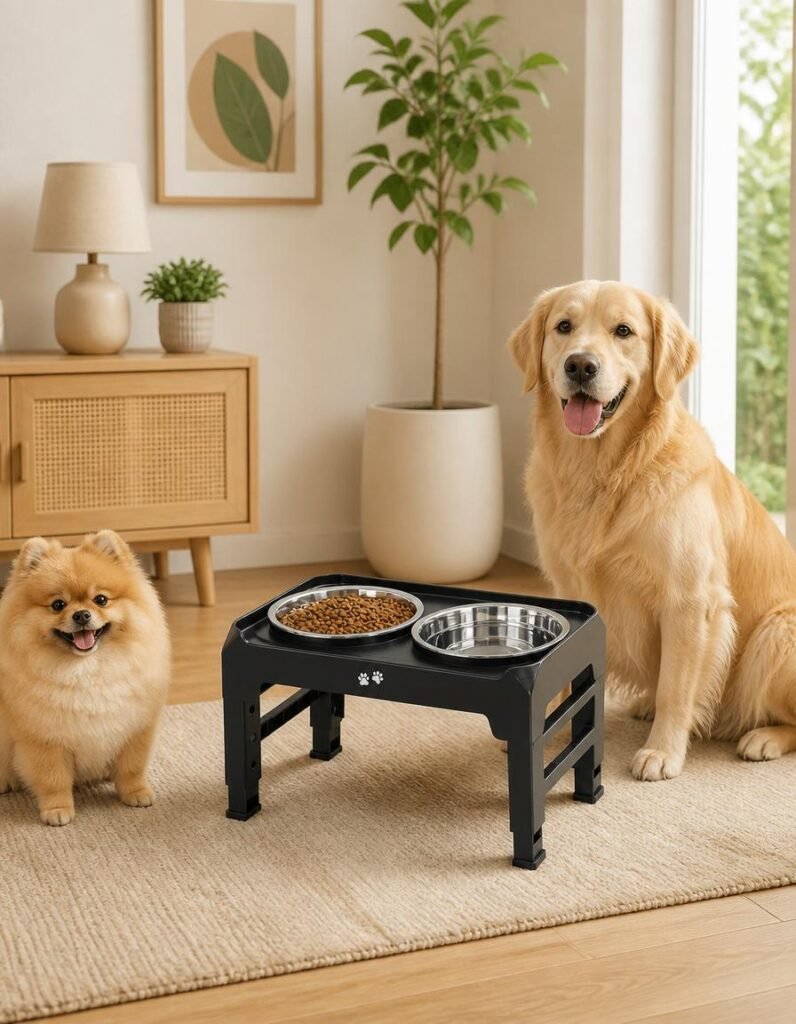
The Best Budget Pick: COMESOON Elevated Dog Bowls
You don’t need to spend much to raise a bowl properly, and this is the value option that covers the basics well.
Why it’s the value pick:
- Height-adjustable across several settings, so it still grows with your dog despite the low price.
- Stainless steel bowls included — not a corner they cut.
- Foldable design makes it easy to store or take on trips.
- Non-slip feet and a sturdy frame keep it steady during meals.
The honest downsides:
- Bowl capacity is modest, so extra-large breeds eating big portions may find it limiting.
- Basic build — it does the job, but it won’t feel as solid as premium stands.
Best for: budget-conscious owners, smaller dogs, and travel use.
The Best Looking: Piskyet Elevated Dog Bowls
If the feeder is going to live in your kitchen or living room permanently, appearance matters more than people admit.
Why it’s a standout:
- Solid wood construction with a clean, furniture-like look that blends into a home rather than shouting “pet product.”
- Genuinely sturdy — the wooden frame limits movement while your dog eats.
- Removable stainless steel bowls for straightforward cleaning.
The honest downsides:
- Fixed or limited height adjustment compared with the adjustable stands above — measure carefully before buying.
- Wood needs more care than plastic or metal around a sloppy drinker; standing water isn’t its friend.
- Quality control on wooden feeders in this category can vary, so inspect on arrival.
Best for: owners who want a permanent feeding station that looks like furniture.
[Check price on Amazon]
Quick Comparison
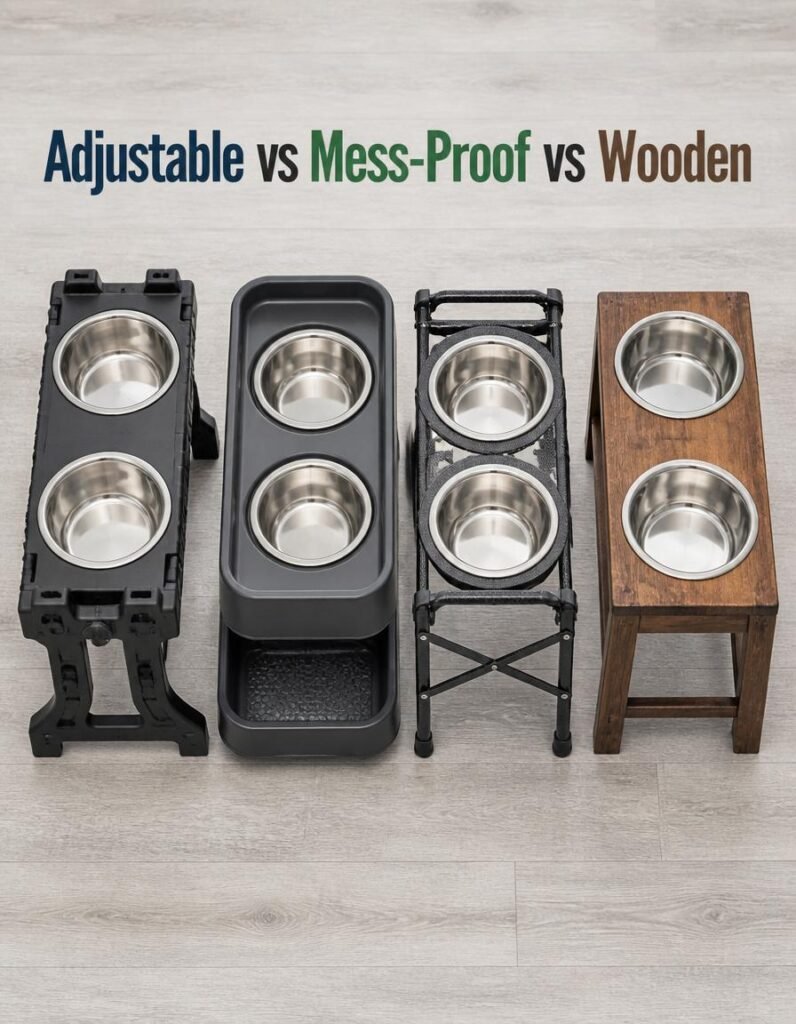
Here’s how the best elevated dog bowls compare side by side:
| Feeder | Adjustable | Material | Standout feature | Best for |
|---|---|---|---|---|
| URPOWER 3-in-1 | Yes | Plastic + steel bowls | Slow-feeder plate | Most dogs — the all-rounder |
| Neater Feeder Deluxe | Limited | Plastic + steel bowls | Two-tier spill containment | Messy eaters, water sloppers |
| Heeyoo Set | Yes (5 heights) | ABS + steel bowls | Widest height range | Growing puppies, multi-dog homes |
| COMESOON | Yes | Metal/plastic + steel bowls | Foldable, cheap | Budget, travel |
| Piskyet | Limited | Solid wood + steel bowls | Furniture-style looks | Permanent feeding station |
What to Skip
The best elevated dog bowls are stable, cleanable, and correctly sized. These fail on at least one:
| What to skip | Why |
|---|---|
| A raised feeder for a large/giant deep-chested breed, without vet input | The GDV research is genuinely conflicting. Ask your vet before switching — the stakes are too high to guess. |
| Plastic bowls | They scratch, and scratches harbor bacteria. Stainless steel is the standard for a reason. |
| Stands with no non-slip feet | A feeder that slides across the floor during meals is worse than no feeder. |
| Anything sold on “improves digestion” claims | Outside specific medical conditions, that benefit isn’t scientifically established. Buy for comfort and mess control instead. |
| A height you guessed at | Too tall is uncomfortable and may encourage gulping. Measure your dog’s lower chest first. |
Mealtime Beyond the Bowl
Even the best elevated dog bowls only solve part of mealtime. If your goal is a calmer, slower, more enriching meal, the bowl is one lever of several.
Slowing a fast eater is worth doing regardless of feeder height, since eating speed is one of the more consistent risk factors across bloat studies.
Feeding part of a meal through a stuffed toy also stretches mealtime and adds mental work — our KONG Extreme review covers the toughest version for determined chewers.
Related reading: our PETLIBRO automatic feeder review and dog food storage containers.
Frequently Asked Questions
What are the best elevated dog bowls?
For most dogs, the URPOWER 3-in-1 is the strongest pick among the best elevated dog bowls — it’s adjustable, contains spills, and includes a slow-feeder plate. The Neater Feeder Deluxe suits messy eaters, Heeyoo offers the widest height range, and COMESOON is the budget choice.
Do elevated dog bowls cause bloat?
The evidence is genuinely mixed. A 2000 Purdue study found raised feeders roughly doubled GDV risk in large and giant breeds, while a 2012 University of Pennsylvania study found no significant link. If you have a large or giant deep-chested breed, discuss it with your vet before switching.
How high should the best elevated dog bowls sit?
As a general guide, the bowl rim should sit at roughly your dog’s lower chest height, so they can eat without reaching up or stooping. Measure your dog rather than guessing, and choose an adjustable stand if they’re still growing.
Are elevated bowls better for senior dogs?
Often yes. Dogs with arthritis, neck or spinal pain, or limited mobility frequently find raised feeding more comfortable, and it’s a common veterinary recommendation for those conditions. Follow your vet’s advice for your specific dog.
Do elevated bowls improve digestion?
There’s no strong scientific evidence for that claim outside specific medical conditions like megaesophagus. The well-supported benefits are comfort for dogs with joint or mobility issues, and better mess control.
The Bottom Line
The best elevated dog bowls solve real problems — comfort for stiff or tall dogs, and a much cleaner floor. What they don’t reliably do is improve digestion, and for large and giant deep-chested breeds the bloat research is unsettled enough to warrant a conversation with your vet.
If a raised feeder suits your dog, the URPOWER 3-in-1 is the most complete pick, the Neater Feeder Deluxe wins for mess, Heeyoo offers the widest adjustment, and COMESOON delivers the basics cheaply.
Measure your dog, choose stainless steel, insist on non-slip feet — and if your dog inhales their food, fix the speed as well as the height.
This post contains affiliate links. If you buy through them, we may earn a small commission at no extra cost to you. We only recommend products we believe are genuinely worth considering.