Disclosure: dailypetpicks.com is a participant in the Amazon Services LLC Associates Program, an affiliate advertising program designed to provide a means for sites to earn advertising fees by advertising and linking to Amazon.com. This means we may earn a small commission if you purchase through our links, at no extra cost to you.
Most people shop for a dog collar the way they shop for a watch strap — colour, width, whether it looks good against the coat. Fair enough. But a dog collar is the one piece of equipment your dog wears when nobody is watching, and that is where it does its real work and its real damage.
Two things follow from that, and they shape every pick below. The first is that the collar’s job is identification, not restraint. The second is that the failure mode worth designing around is not a snapped buckle on a walk — it is a collar caught on something while you are in another room.
A Collar Is an ID Carrier, Not an Anchor
Ask what a collar is for, and most owners answer “to attach the lead”. That answer is the source of a lot of avoidable injury. Every hard stop on a walk — a squirrel, a door, a bike — puts the entire force of that stop into a narrow band across the throat, and a dog collar is simply not the right structure to absorb it. A harness spreads the same load across the chest, which is why it is the better anchor for any dog that lunges, startles, or has not yet learned to walk on a loose line. Our no-pull harness roundup covers those under thirty dollars.
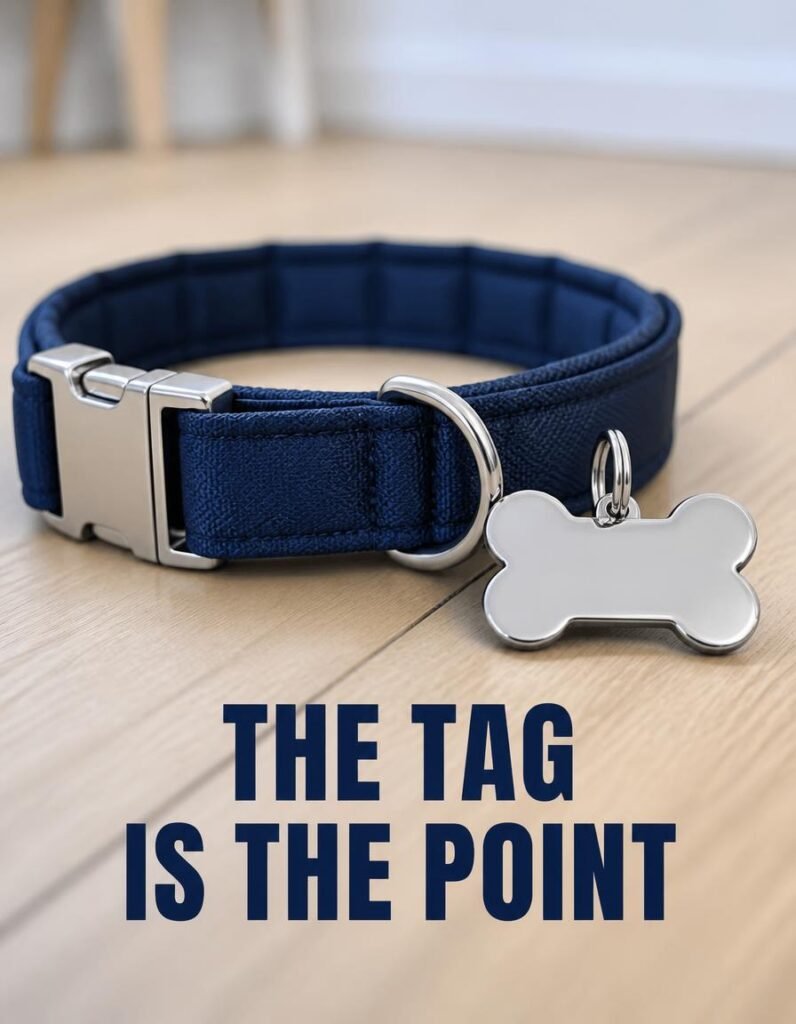
What a dog collar does brilliantly is carry a phone number and give you something to take hold of in a hurry. A microchip is permanent but invisible; the neighbour who finds your dog on the next street cannot scan it. A tag gets your dog home the same afternoon. That is the job, and it means the two specifications that matter most are how the collar behaves when it snags and how readable the tag on it is.
The Hazard Nobody Prices In
Dog collar strangulation is more common than the retail category lets on, and the mechanism is unglamorous. Two dogs play, one grabs at the other’s neck in the way dogs do, and a lower jaw slips under the collar and twists. Now one dog is choking, and the other has a jaw trapped in a loop of nylon; both are panicking, and the collar is wound too tight to unbuckle.
The numbers that circulate are worth quoting carefully rather than dramatically. Petful cites a 2003 survey from the North American Veterinary Conference in which 91% of responding vets said they had seen or heard of at least one dog injured or strangled by a collar in the previous year. A frequently repeated figure of around 26,000 incidents a year comes from a similar survey of veterinary professionals. Both are old, and neither is a rigorous count — but the direction is consistent, and the mechanism is not in dispute.
Play is only the most common case. Dog collar safety campaigners list the rest: crate bars, floor and heating vents, deck slats, fence posts and latches, cabinet knobs and branches. Dangling tags are part of it — a tag can drop between deck boards or into a vent and hold a dog by the neck. This is the whole reason a breakaway buckle exists, and the reason slide-on tags are worth considering over hanging ones.
Fit: The Two-Finger Rule, and When It Stops Being True
Measure around the base of the neck where the dog collar sits, keep the tape snug but not tight, and leave two fingers of space. The AKC’s guide to measuring for gear adds two details worth having: if your dog is between sizes, go up, and for long-necked breeds, still measure low on the neck even though the collar will ride higher.
Once fitted, two fingers should slide flat between the dog collar and the neck without forcing. Too tight and it compresses the coat and rubs; too loose and it rotates, slides down, and can come off over the head during play — which is exactly when you need it on.
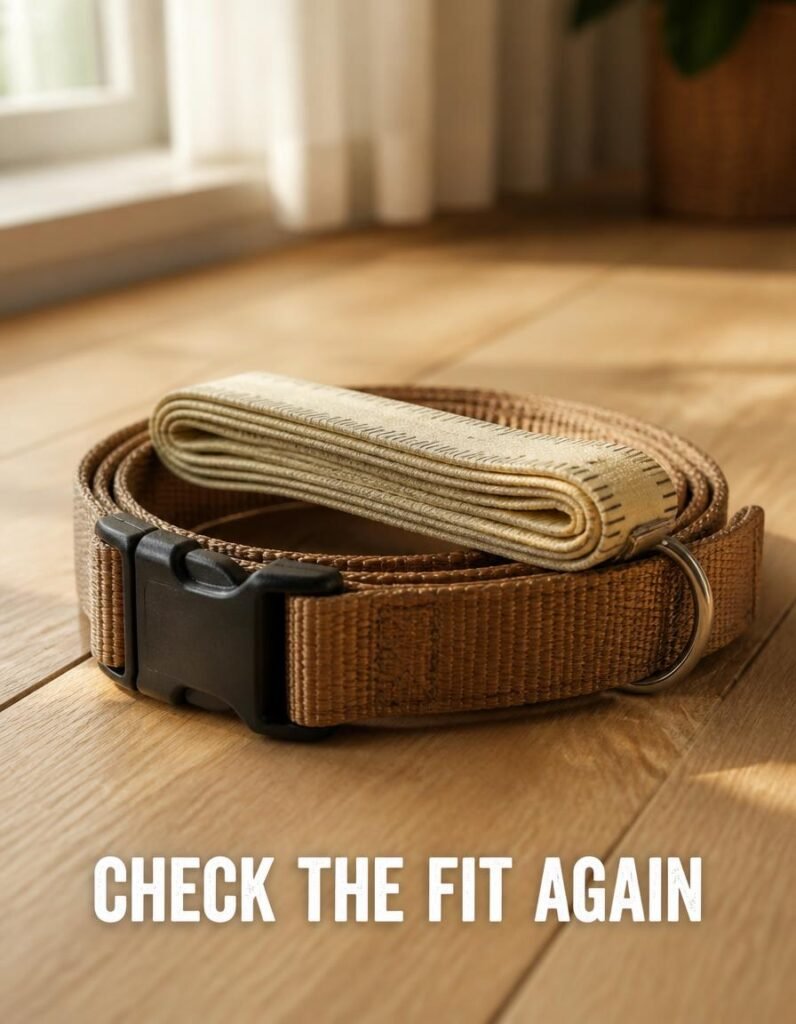
The part people miss is that fitness is not a one-time check. Puppies need it checked weekly, and every adult dog needs a re-check after a groom, a coat change between seasons, or any weight change. A collar that fit in July on a clipped coat can be tight in December, and a collar left unchecked on a growing puppy is how collars end up embedded in skin.
Four Types, Four Jobs
- Quick-release (side-release plastic buckle). The default. Adjustable, easy on and off, and the buckle can be popped one-handed in an emergency — which genuinely matters if you ever need to get a dog collar off fast.
- Metal buckle. A stronger and better-looking dog collar, adjustable only to the punched holes, and slow to undo under tension. Better on an adult dog whose size has settled.
- Martingale. Two loops: the smaller one tightens to a set limit when the dog pulls and releases when they stop. Built for dogs whose head is narrower than their neck — greyhounds, whippets, plenty of nervous rescues — that back out of a flat collar. It is a limited-slip design, not a choke: fitted properly, it cannot close past the collar’s adjusted size.
- Breakaway. A buckle designed to release under load if the collar snags, then snap back together. Two D-rings that can be joined to override the release for lead use.
The 5 Best Dog Collars and Tags
1. Joytale Reflective Neoprene-Padded Collar — Best Overall
Breathable nylon webbing lined with neoprene padding, reflective threads woven through both sides, and a zinc alloy D-ring chosen to be light rather than beefy. That last choice is the one to notice — a heavy ring is dead weight hanging off the neck every hour the collar is worn, and this is a dog collar designed to be worn all day.
The sizing is unusually clear, which matters when you are buying blind: XS is 5/8 inch wide and adjusts 8–11 inches, S is 3/4 inch at 11–15, M is 1 inch at 14–18, L is 1 inch at 16–24, XL is 1 1/4 inches at 18–27. Measure first, then pick from that, rather than guessing from your dog’s weight.
2. PetSafe KeepSafe Break-Away Collar — Best for Unsupervised Wear
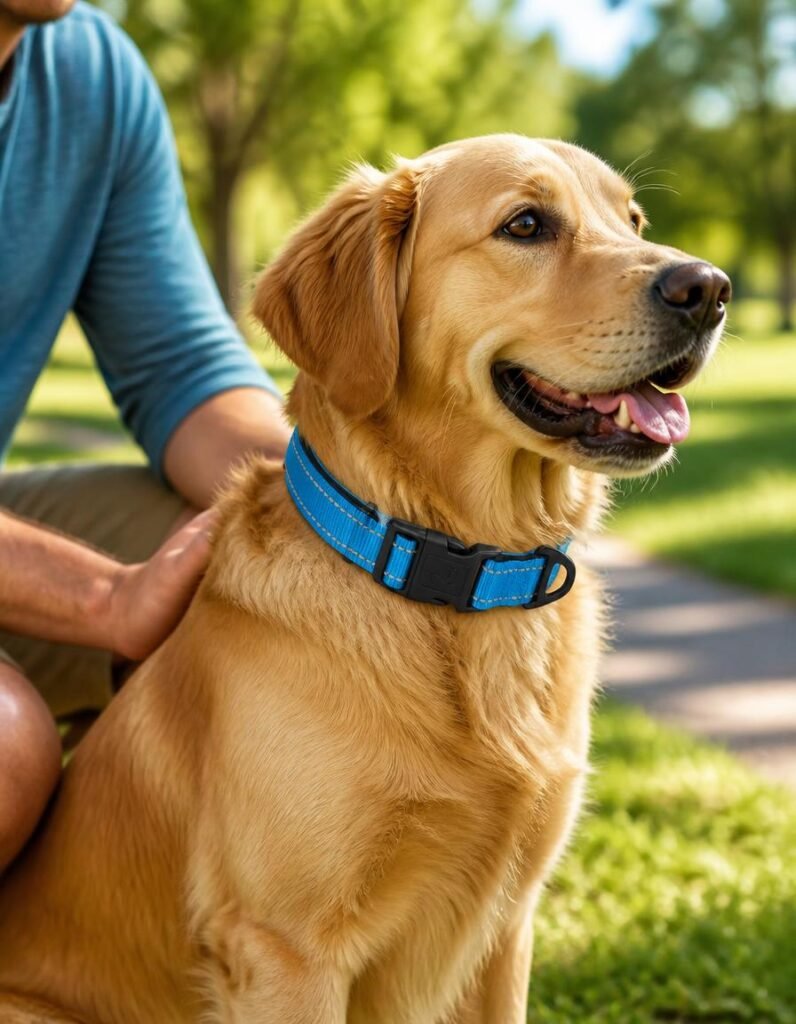
This is the dog collar that follows directly from the hazard section. The KeepSafe uses a patented safety buckle that releases when the collar is pulled against a snag, so a dog caught on a crate bar, a vent, or another dog’s jaw comes free instead of hanging there. The buckle clicks back together afterwards and is reusable.
The clever part is that it does not force you to choose between safety and a lead. Connecting the two D-rings overrides the breakaway function, so it holds normally on a walk and reverts to releasing the moment you unclip. It also has a separate attachment point for tags, keeping them off the rings.
Worth being straight about the limit: a breakaway collar reduces the risk of a snag becoming fatal; it does not eliminate it, and it is still not a reason to leave a collar on a crated dog. If your dog is in a crate, the collar comes off — see our crate training guide for how to build a routine where that is automatic.
3. PetSafe Martingale Collar with Quick-Snap Buckle — Best for Escape Artists
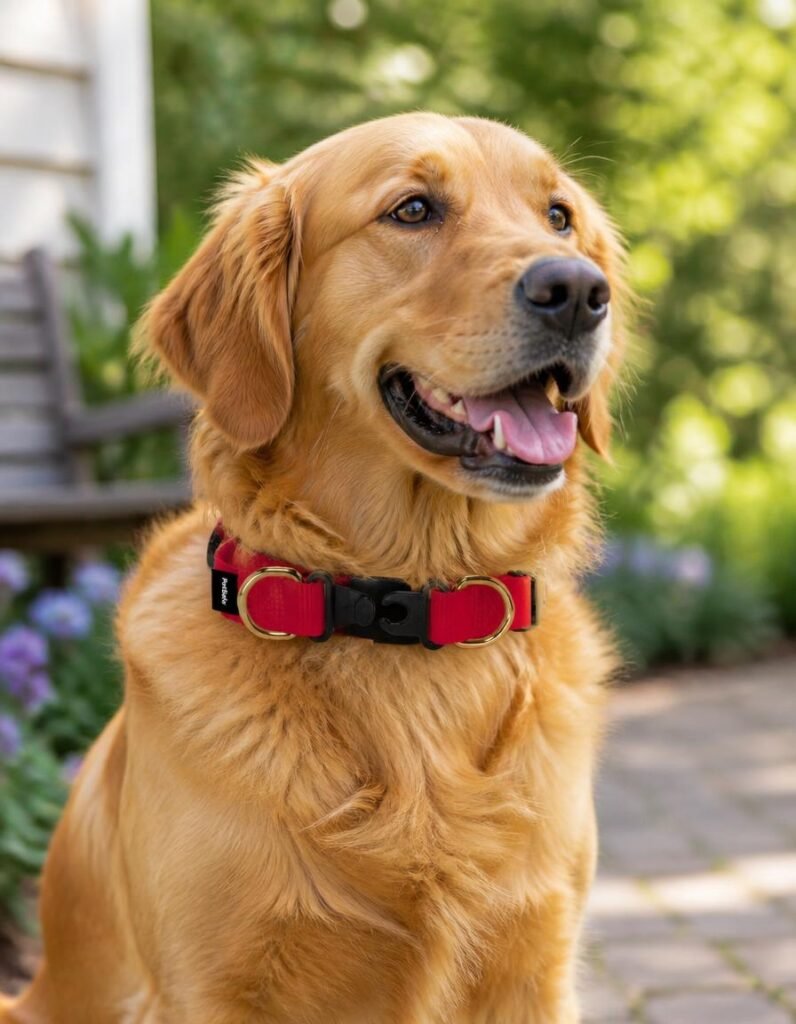
If your dog has ever reversed out of a collar on the pavement, this is the fix. The dual-loop design tightens gently when they pull and loosens the moment they stop, so it cannot be backed out of, and the quick-snap buckle means you are not wrestling it over the head every time.
Sizing works differently here, and it trips people up: measure around the top of the neck directly behind the ears, because that measurement corresponds to the collar at its closed position. At rest, it will look loose. That is correct, not a fault.
One caveat consistent with everything above: a martingale is a walking tool, not an all-day dog collar. The loop that makes it escape-proof is also a loop that can catch, so it comes off at home.
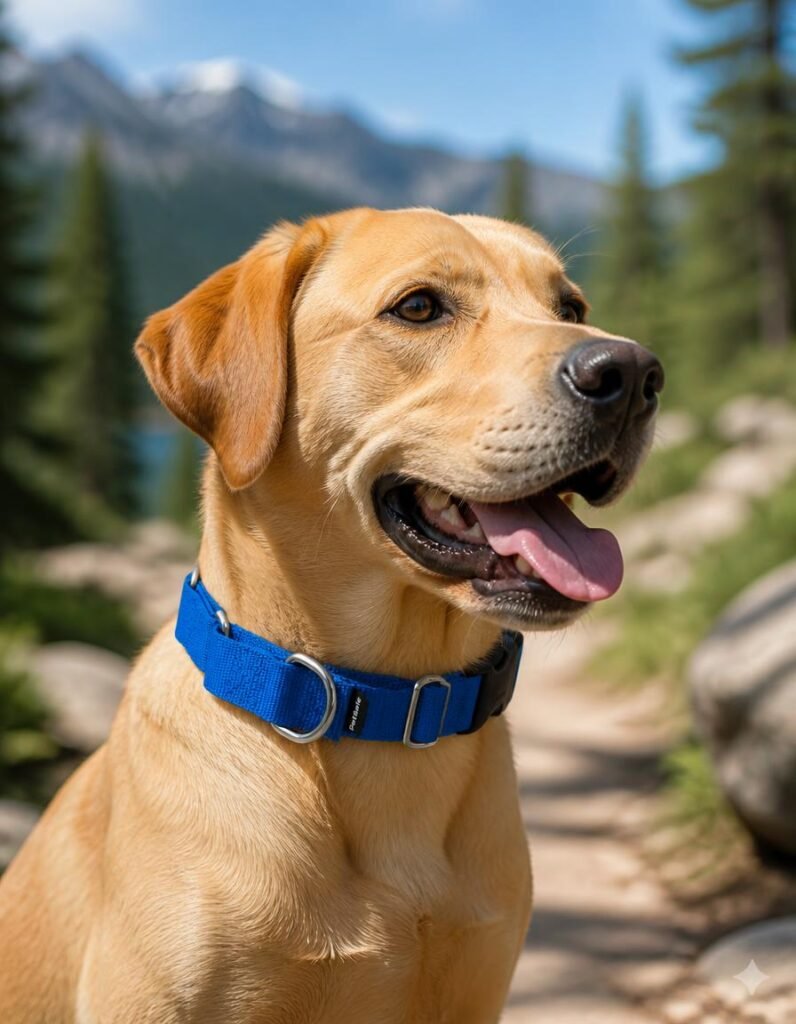
4. GoTags Slide-On Silent ID Tag — Best Tag for Everyday Wear
A curved stainless steel nameplate that threads onto the dog collar webbing itself instead of hanging from a ring. Nothing dangles, so nothing jingles at three in the morning, and nothing drops into a floor vent or between deck boards.
Buy it to match your collar width, not your dog’s size: large fits 1-inch collars, medium 3/4 inch, small 5/8 inch, extra small 3/8 inch. The open-ended design suits snap-closure collars, and the solid one suits belt-buckle collars, so check which one you have before ordering. Four lines of laser engraving which is enough for a name and two numbers.
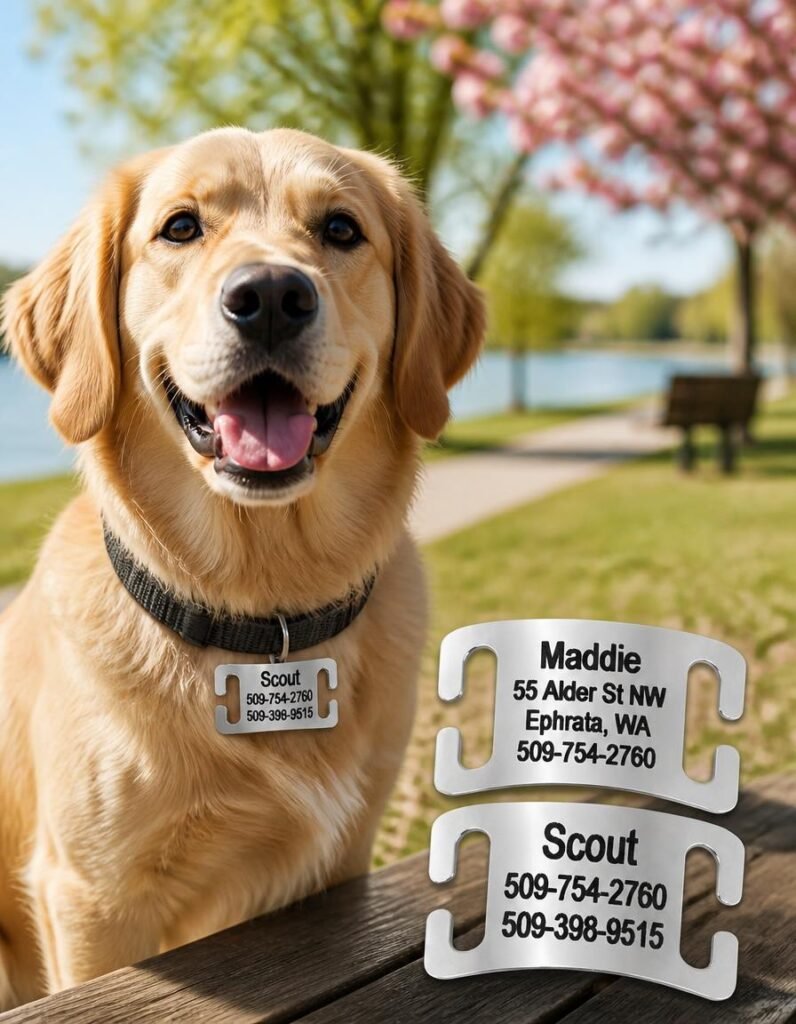
5. GoTags Stainless Steel Engraved Tag — Best If You Need More on It
The conventional hanging tag, done properly. Stainless steel rather than aluminium, which matters because thin aluminium tags wear smooth and become unreadable in a couple of years — a blank tag is the same as no tag. Laser engraving on a mirror finish, up to eight lines across both sides, so there is room for a name, two numbers, and a line like “microchipped” or a medication note.
This is the pick when information matters more than silence: multiple contact numbers, or a dog with a condition a finder should know about. The trade-off is the one named above — it hangs, so it jingles and it can catch. If your dog is mostly indoors and unsupervised, the slide-on is the safer of the two.
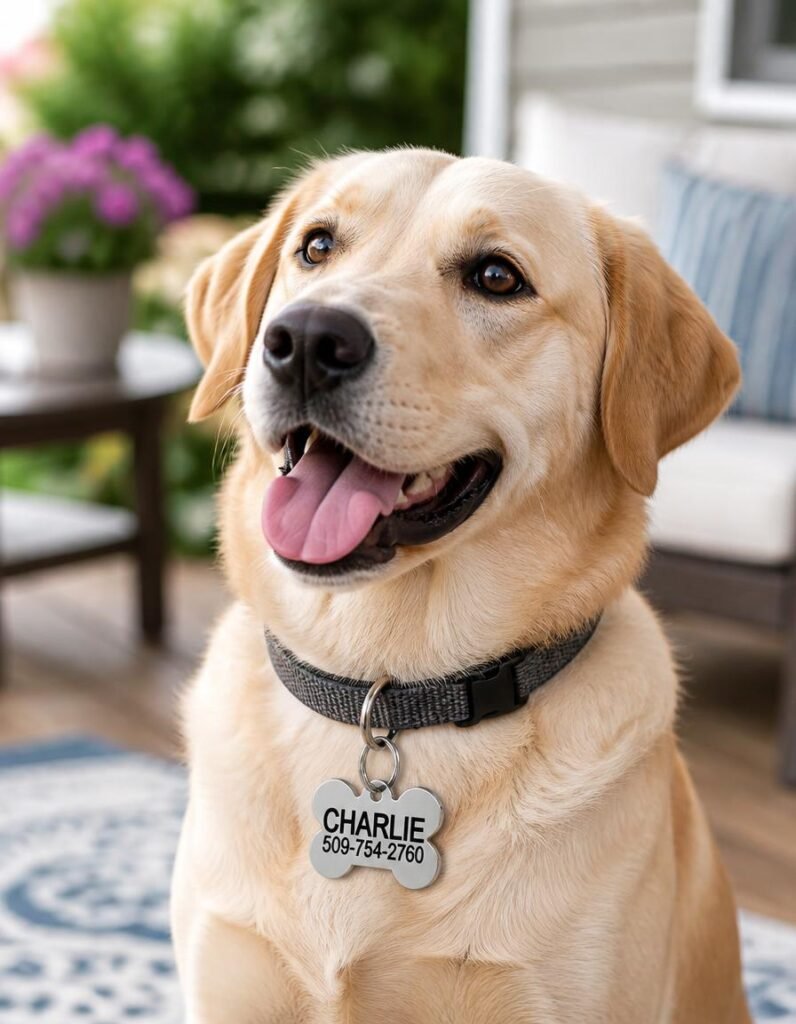
Collar Rules Worth Following
- No dog collar in the crate. Bars and collars are the classic combination, and a dog alone in a crate has nobody to free it. Off before the door closes.
- Off during rough play with another dog, or on breakaways for both dogs if they wear them.
- Chip and tag, not chip or tag. The chip proves ownership; the tag is what actually gets your dog home from two streets away.
- Re-check the fit weekly on a puppy, and after every groom or seasonal coat change on an adult.
- Update the tag when your number changes. An out-of-date number is the most common reason a found dog is not reunited, and re-engraving costs less than a bag of treats.
What to Skip
Choke chains and prong collars work by causing discomfort, and there are better-evidenced ways to teach loose-lead walking that do not put pressure on a throat. Skip them. Skip heavy tactical hardware on a small dog too — a chunky alloy buckle on a ten-pound terrier is weight they carry all day for a strength margin they will never need.
Be wary of the very cheap multipacks as well. The webbing is usually fine; the buckle is where the saving is made, and a side-release buckle that has gone brittle fails when the dog lunges. And skip aluminium tags for anything but a temporary fix, for the reason above.
Related reading: dog safety lights for night walks.
Frequently Asked Questions
Should my dog wear a collar all the time? Awake and supervised, yes — that is when ID is worth having on. Crated, unsupervised for long periods, or during rough play with another dog, no, or use a breakaway.
Is a martingale cruel? No, provided it is adjusted correctly. It is limited-slip: it closes only to the size you set, and it does not keep tightening the way a choke chain does. Adjusted too large, it stops working; adjusted too small, it stops being humane.
Can I walk my dog on a breakaway collar? Yes — join the two D-rings, and the release is overridden while the lead is attached. Unclip and it reverts.
What width should I buy? Roughly 5/8 inch for very small dogs, 3/4 inch for small to medium, and 1 inch for medium to large. Wider spreads pressure better but adds weight, so match it to the dog rather than going as wide as the size chart allows.
My dog’s fur is going bald under the dog collar. Usually, friction from a collar that rotates because it is slightly loose, or one worn constantly with no break. Try a padded collar, check the fit, and take it off overnight.
Do I still need a tag if my dog is microchipped? Yes. A chip needs a scanner and a vet or shelter; a tag needs a stranger with a phone. They solve different halves of the same problem.
The Short Version
Buy the Joytale as the everyday dog collar, put a slide-on GoTags nameplate on it, and attach the lead to a harness rather than the collar. If your dog plays rough with another dog or spends time unsupervised in a collar, make it the KeepSafe breakaway. If they slip out of collars, the PetSafe martingale solves that specific problem and comes off at home. Then check the fit more often than you think you need to — the collar that fits today is the one that has to still fit in six months.
New dog in the house? Our new puppy checklist covers the rest of the day-one kit.
Note: Collars and tags are sold in multiple sizes, widths, and finishes on the same listing. Confirm the size and closure type you are ordering before you complete the purchase, and double-check the engraving text before submitting it.