Disclosure: dailypetpicks.com is a participant in the Amazon Services LLC Associates Program, an affiliate advertising program designed to provide a means for sites to earn advertising fees by advertising and linking to Amazon.com. This means we may earn a small commission if you purchase through our links, at no extra cost to you.
A dog leash is a strap with a clip on it. There is not much to get wrong, which is why the marketing has to invent things to sell you: tactical webbing, reflective threading, ergonomic neoprene. All fine, none of it decisive. The two things that actually change how your walks go are how long the leash is and what it attaches to — and both are decisions most people make by accident.
Below are five picks for five genuinely different jobs, plus a straight look at the one type of dog leash that vets and shelters keep asking people to stop using.
Length Is a Behaviour Decision, Not a Preference
Six feet is the standard length for a dog leash for a reason: it is long enough for a dog to walk beside you with slack in the line and short enough that you can gather it in one motion. Slack is the point. A loose line tells your dog nothing is happening; a tight one is a constant, low-level signal to lean into.
What people do next is buy a shorter dog leash for control, which is the wrong fix. A six-foot lead held with two feet of slack already is a four-foot lead — you just cannot grip it there comfortably. That is what a traffic handle solves: a second padded loop set low near the clip, so you can shorten the line to a foot in a crowd and let it back out when the pavement clears, without buying a second product or wrapping webbing around your fist.
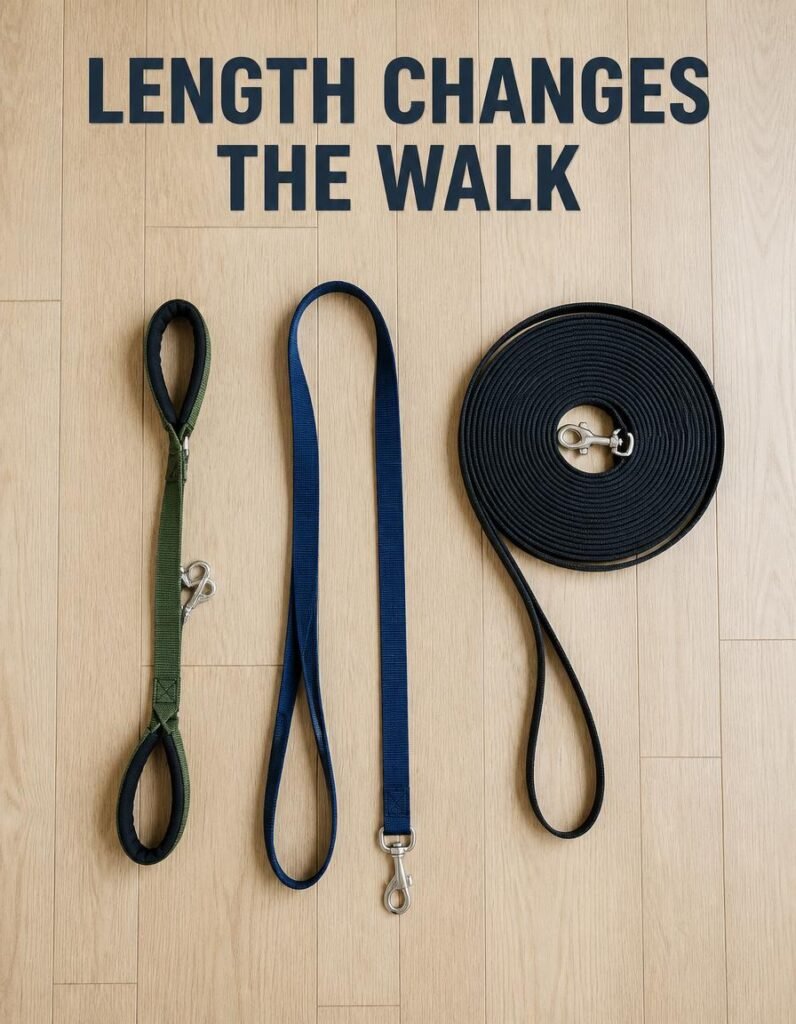
The other direction is a long line — fifteen to thirty feet of flat webbing, used for recall practice in open space. It is not a walking leash and should never be used as one. It exists so a dog can be thirty feet away and still be a dog you can get back.
The Retractable Problem
The retractable dog leash is the best-selling category and the one most likely to be banned where dogs gather. That is not squeamishness. The Animal Hospital of North Asheville states plainly that it permits only standard six-foot non-retractable leashes in the building, because a thin cord under tension can cause burns, deep cuts, and entanglement, and hands and legs take the worst of it.
Bowman Veterinary Hospital’s rundown of the risks to the dog is what owners rarely hear: a sudden stop at the end of the line can injure the neck, and if the cord snaps or the hook fails, the handle is under load and comes back toward your face. Broken teeth and eye injuries are on that list.
The training objection is quieter and, for most owners, the more relevant one. A retractable dog leash only pays out line against spring tension, which means the line is never slack. Your dog learns, correctly, that leaning into the harness produces more freedom. If you are also trying to teach loose-lead walking, you have bought a device that rewards the exact behaviour you are working to remove.
None of that makes them useless. It makes them a tool for open ground with no traffic, no other dogs, and no children — and a bad choice for pavement. There is a pick below for people who want one anyway, with the rules that make it survivable.
What It Clips To Matters as Much as the Leash
You can spend forty dollars on webbing and undo it entirely at the other end. Every sudden stop — a squirrel, a door, a dog across the road — sends the whole force of that stop into whatever the clip is fastened to. On a flat collar, that is a narrow band across the throat. Veterinary write-ups on leash injuries list neck wounds and tracheal damage among the results, and small breeds and flat-faced dogs are the least able to absorb it.
A harness spreads that load across the chest. If your dog lunges, startles, or simply has not learned to walk on a loose line yet, the attachment point is a bigger safety decision than the dog leash itself — our no-pull harness roundup covers the options under thirty dollars. Collars are fine for a dog that walks calmly and for carrying ID; they are not a good anchor for force.
Hardware: The Bit That Actually Fails
- The clip. This is the part of a dog leash that actually fails. A bolt snap — the spring-loaded sleeve you push with your thumb — is the standard for a reason: one-handed, hard to open by accident. Whatever style you get, it should swivel. A clip that cannot rotate turns every circle your dog walks into a twist in the webbing.
- Clip weight. Heavy-duty hardware is sold as reassurance, but on a ten-pound dog, a chunky alloy snap is dead weight hanging off the neck all walk. Match the hardware to the dog, not to your anxiety.
- Width. Roughly 3/8 inch for small dogs, 3/4 inch for medium, and a full inch for large or strong dogs. Wider is stronger and also heavier and stiffer, so it is not a free upgrade.
- Stitching, not knots. Look at where the handle loop closes. Bar-tacked stitching is what holds under load; that seam is the part that eventually goes.
- Padding where your hand is. Not a luxury if your dog pulls at all. Bare nylon under load is how people let go.
The 5 Best Dog Leashes
1. PetSafe Nylon Leash, 6 ft — Best Overall
Nylon webbing, a loop handle, a swivelling bolt snap in nickel-plated zinc alloy, one-piece construction. That is the entire dog leash, and for a dog that walks reasonably, it is the right one. PetSafe has been making pet behaviour and containment gear since the nineties, and the webbing is matched to their Easy Walk harnesses and Gentle Leader headcollars if you are already using one.
Buy the width, not the brand: the 1-inch is the sensible default for medium and large dogs, and there is a 3/8 inch version for small dogs that keeps the clip weight off a delicate neck. What you do not get is padding on the handle, so if your dog pulls hard, skip to the next pick rather than buying this one and regretting it in the rain.
2. Fida Heavy Duty Dog Leash, 4 ft, Dual Padded Handles — Best for Pullers and Busy Streets
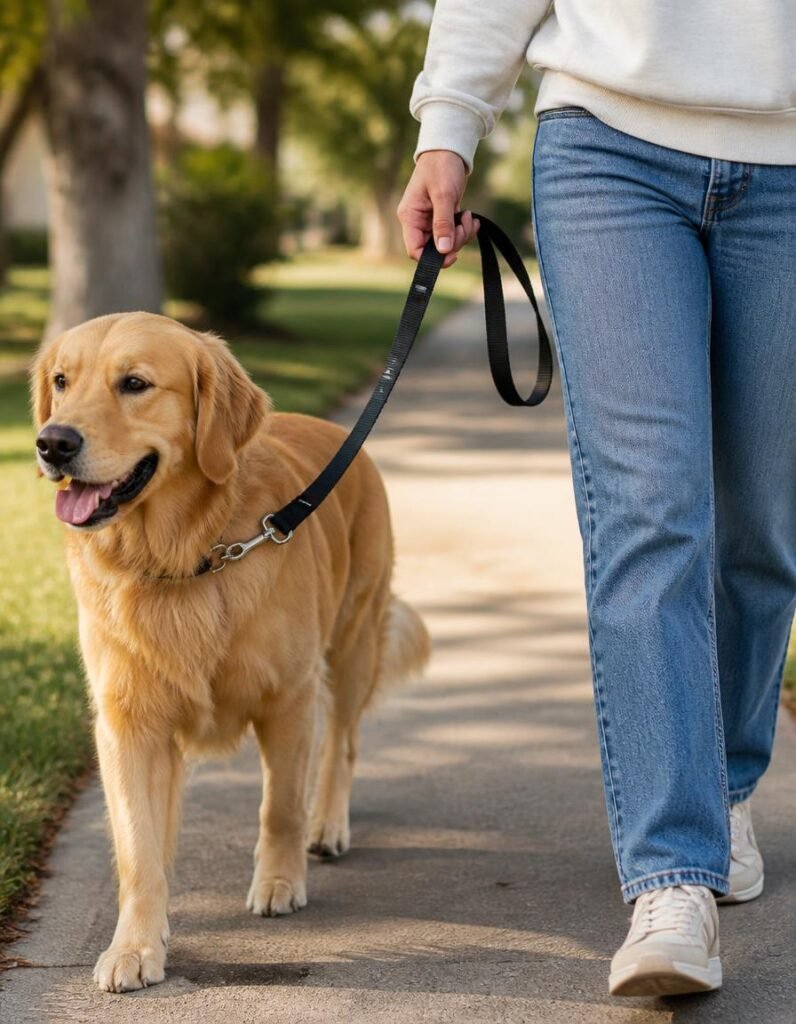
This is the traffic-handling design done properly. One inch of high-strength nylon, a neoprene-padded main grip, and a second padded handle low near the clip so you can bring your dog to your leg instantly without winding webbing around your hand. The snap hook locks automatically over a D-ring and swivels a full 360 degrees.
Four feet sounds short until you use it. On a pavement with cars, other dogs, and doorways, four feet plus a traffic grip gives you two working lengths in one dog leash. The trade-off is real, though: this is not the leash for a quiet park where you want your dog to potter. Keep the six-foot one for that.
3. Hi Kiss Long Training Lead, 30 ft — Best for Recall Practice
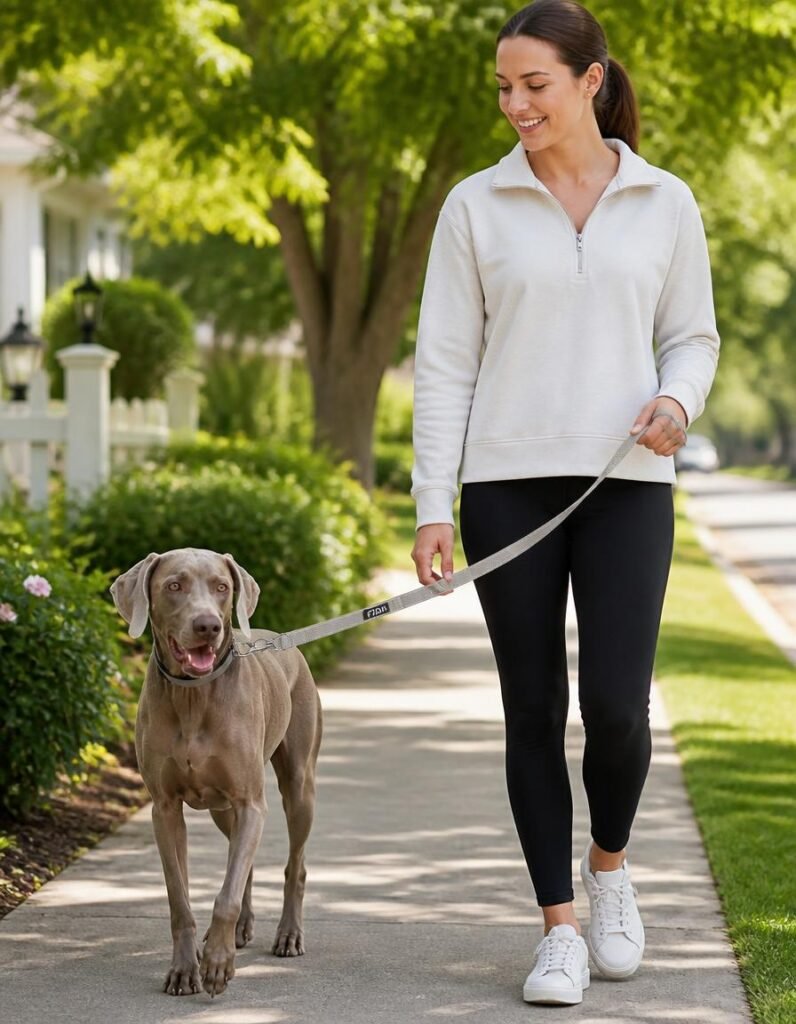
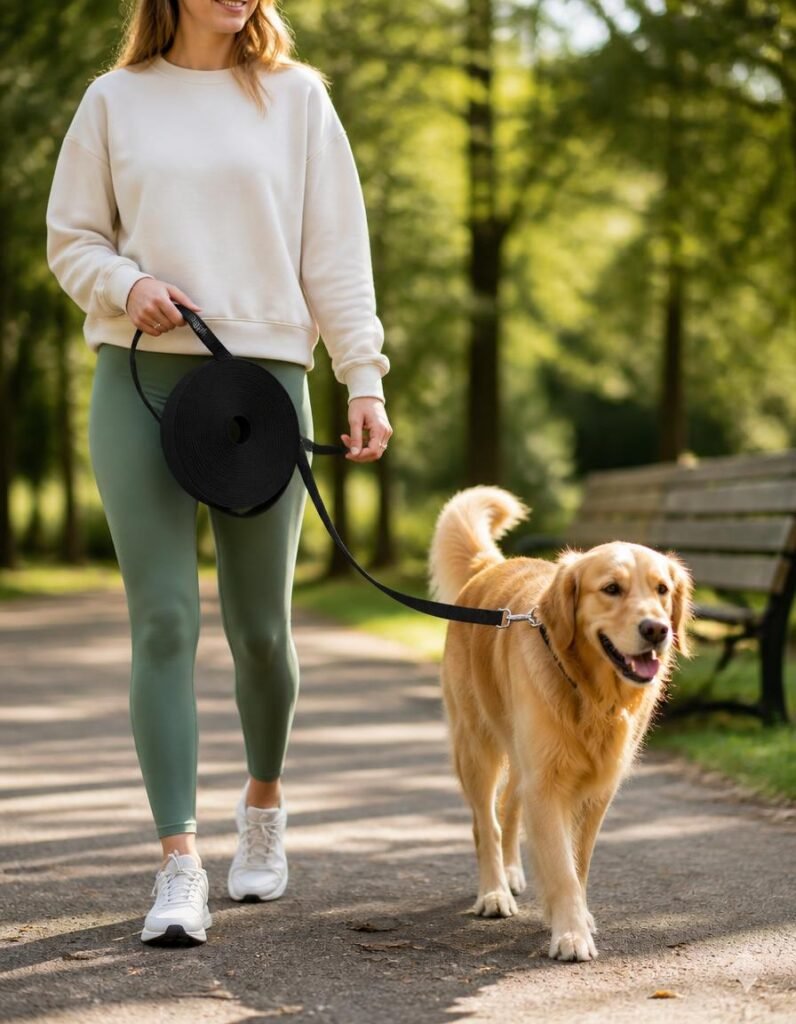
Thirty feet of 3/4 inch nylon with a swivel bolt snap and reinforced stitching. This is the tool that closes the gap between a six-foot walk and off-lead freedom: your dog gets real distance, you keep a physical connection, and recall gets practised at a range where it actually needs to work.
Use it in open space, on a harness, and let it drag rather than holding it taut. Two warnings that come with every long line and are usually learned the hard way: never let it run through a closed hand, because thirty feet of nylon moving fast will take skin off, and never leave it on an unsupervised dog, because it will find something to wrap around. Available in shorter lengths too — fifteen feet is easier to manage if you are new to it.
4. iYoShop Hands Free Bungee Leash with Zipper Pouch — Best for Running
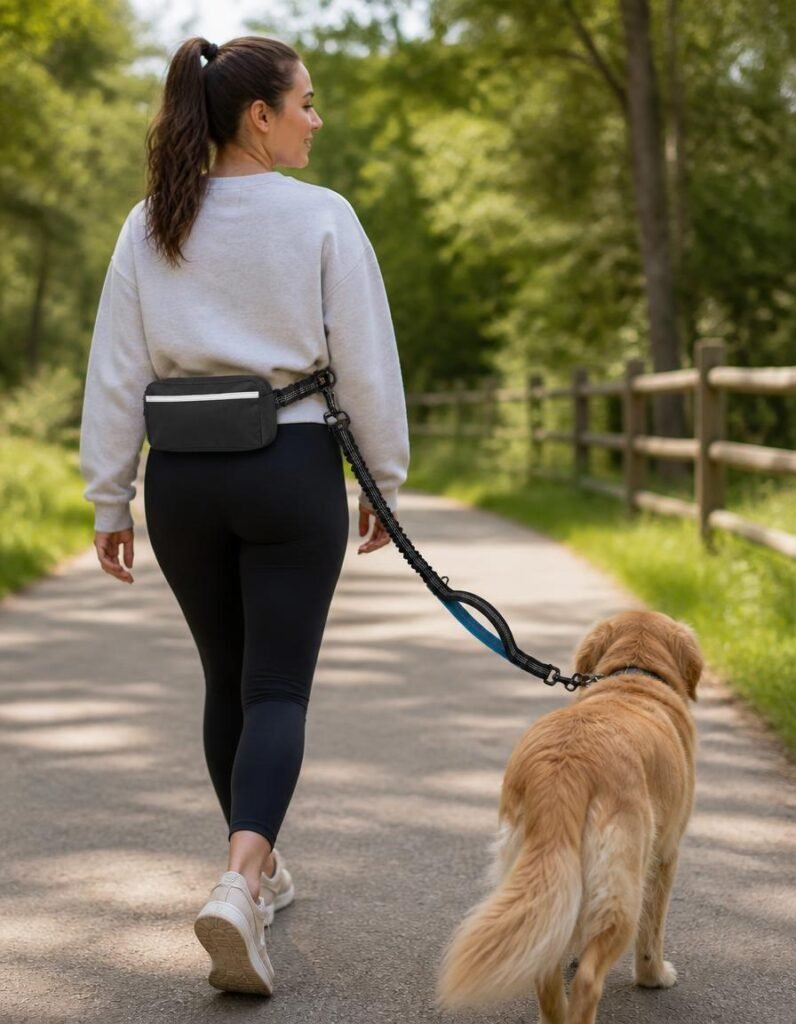
An adjustable waist belt with a bungee section in the line and two handles built into the leash itself. The bungee is the part that matters: it absorbs the jolt when your dog changes pace, which is what saves your lower back over a few miles. The clip slides around the belt so your dog can run on either side, and the removable zip pouch takes a phone, keys, and bags.
Sized for dogs from roughly 25 to 120 lbs, and that lower bound is not decoration — a hands-free belt on a very small dog gives you no ability to lift them out of trouble. The honest limit is that going hands-free means giving up instant control, so this belongs on routes you know, with a dog whose reactions you know. The built-in handles are there for exactly the moments when the belt is the wrong answer.
5. FLEXI New Classic Tape, 16 ft — Best Retractable, If You Are Buying One
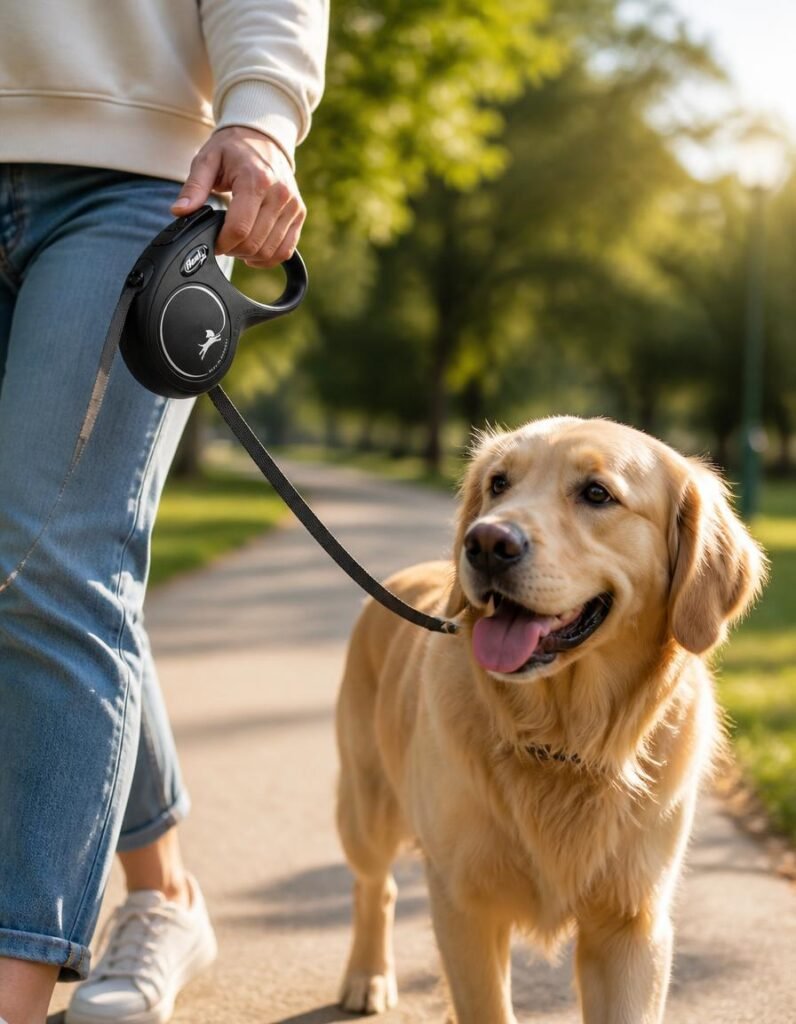
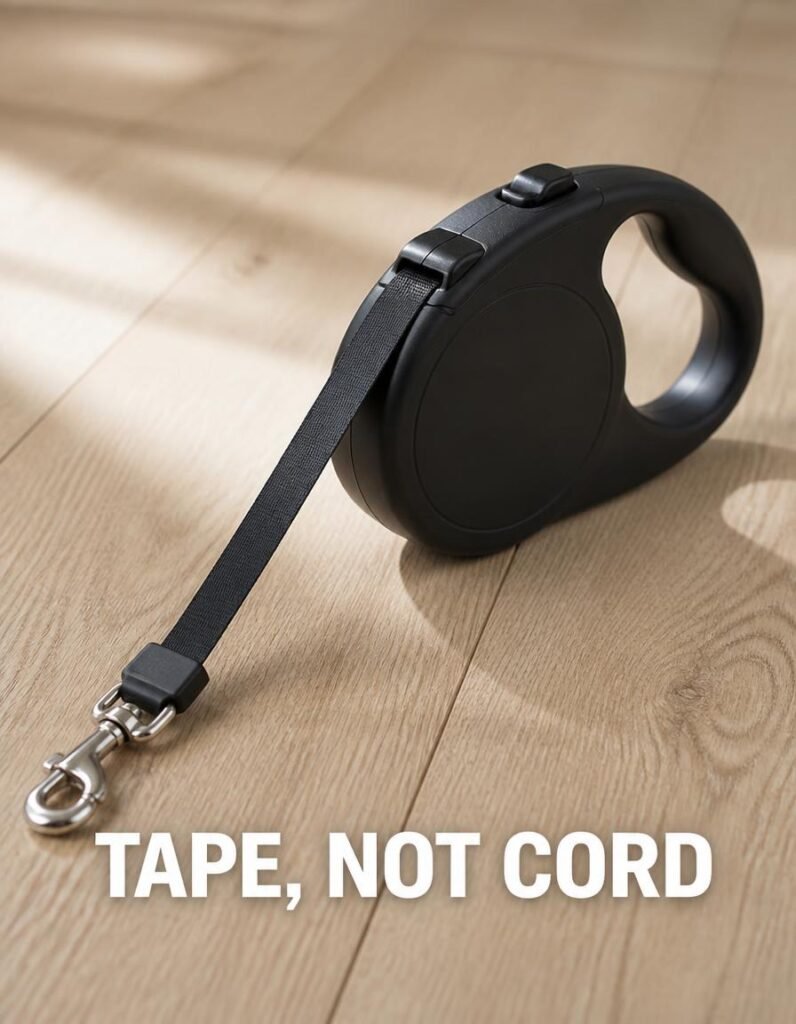
Given everything above, this pick comes with conditions. If you are going to use a retractable dog leash, use the original: Flexi has been making them in Germany for over fifty years, and this is the tape version rather than cord. That distinction is the whole reason it is here. Flat tape spreads load across skin instead of concentrating it in a line, which is what makes thin-cord retractables the ones that cut. The braking system is one-handed, with a lock, and the medium/large model is rated to 110 lbs.
Flexi’s own packaging tells you to read the handling and safety instructions before use, which is more candour than the category usually offers. Read them.
If You Use a Retractable, These Are the Rules
- Never grab the extended tape or cord. This is how fingers get burned, cut, and, in the cases humane societies keep writing about, worse than cut. Use the brake, then reel in.
- Clip it to a harness, never a flat collar. The whole failure mode is a sudden stop at speed.
- Lock it short in any shared space. Pavements, car parks, vet waiting rooms, lifts. Sixteen feet of dog across a doorway is how strangers get hurt.
- Keep it out of small hands. The handle is bulky and easy to drop, and a dropped handle chases the dog.
- Retire the dog leash when the tape frays. There is no partial failure here — it holds, or it does not.
What to Skip
Chain leashes are sold as the answer to chewing. They are heavy, they are unpleasant to hold, and they do not address why the dog is chewing the lead in the first place — that is a training problem, and a bored puppy will simply chew something else. Bungee-only walking leashes, as opposed to the bungee section on a running belt, are worth avoiding too: elastic in a walking dog leash means your dog gets a little more line every time they lean, which is the retractable problem in a cheaper form.
And skip the leash with a built-in poop bag dispenser moulded into the handle. When the dispenser breaks, you throw away a working leash — a clip-on one costs almost nothing and outlives several leads. If you want the setup that lasts, keep them separate and clip a dispenser loaded with decent bags to the handle.
Related reading: dog safety lights for night walks and dog water bottles for walks.
Frequently Asked Questions
What length should I buy? Six feet for general use, four feet with a traffic handle if you walk in traffic or your dog pulls, fifteen to thirty feet for recall practice in open space. Most households end up with the first and one of the others.
Is a rope dog leash better than flat webbing? Not meaningfully. Rope is round and slightly kinder in the hand under load; flat nylon is lighter and easier to gather. Buy on the handle, the clip, and the width instead.
Will a shorter leash stop my dog from pulling? No. It limits how far ahead they get, which feels like progress, but pulling is fixed with training and the right attachment point. A shorter dog leash on a flat collar can actually make things worse by putting the force straight into the throat.
How often should I replace it? Whenever the stitching at the handle or clip looks tired, the webbing has thinned where it rubs, or the snap no longer springs back crisply. Nylon that has been soaked and dried repeatedly goes stiff and weak.
Can I put two dogs on one leash? A coupler works for two dogs of similar size and temperament that already walk well. If either of them lunges, you now have both of them off balance and no independent control.
Can I wash it? Hand wash nylon in mild detergent and air dry. Machine washing beats up the hardware and the stitching.
The Short Version
Most people need one six-foot dog leash and one other thing. Get the PetSafe if your dog walks well, the Fida if you need control on pavement, the Hi-Kix long line if you are teaching recall, the iYoShop belt if you run, and the Flexi only if you already knew you wanted a retractable and are willing to follow the rules that come with it. Then spend the attention you saved on the harness at the other end, because that is where the actual safety lies.
Kitting out a new arrival? Our new puppy checklist covers the rest of the day-one list.
Note: leash widths, lengths and colours are sold as separate variations and stock moves between them. Check that the listing you land on is the size you actually want before ordering.