Introduction
If walking your dog feels like waterskiing on pavement, you’re not alone. Pulling is the #1 complaint dog owners have about walks, and the good news is it’s fixable at any age. These 7 trainer-approved methods will stop dog pulling on leash without harsh corrections, expensive trainers, or gimmick gear.
Table of Contents
- Why Dogs Pull (It’s Not Dominance)
- 1. Stop Moving the Moment the Leash Tightens
- 2. Reward the Position You Want
- 3. Use a Front-Clip Harness (The Game-Changer)
- 4. Change Direction Often
- 5. Burn Energy Before the Walk
- 6. Keep Training Walks Short and Frequent
- 7. Be More Interesting Than the Environment
- What NOT to Do
- Final Thoughts
Why Dogs Pull (It’s Not Dominance)
Let’s clear up the myth first: your dog isn’t pulling to dominate you. Dogs pull for one simple reason: it works. They pull, they move forward, and they reach the interesting smell, the squirrel, or the dog park faster. Every single step forward they take while dragging you along actively rewards the behavior. To stop dog pulling on leash environments, you have to break this reward cycle.
Furthermore, dogs naturally walk at a much faster default pace than humans. Their resting gait is quicker than our slow stride, so without active training, tension on the line is the natural physical result. Understanding these mechanics shift changes your entire training approach: to successfully stop dog pulling on leash, you must make pulling completely stop working while making walking right beside you the most rewarding choice in their environment.
1. Stop Moving the Moment the Leash Tightens
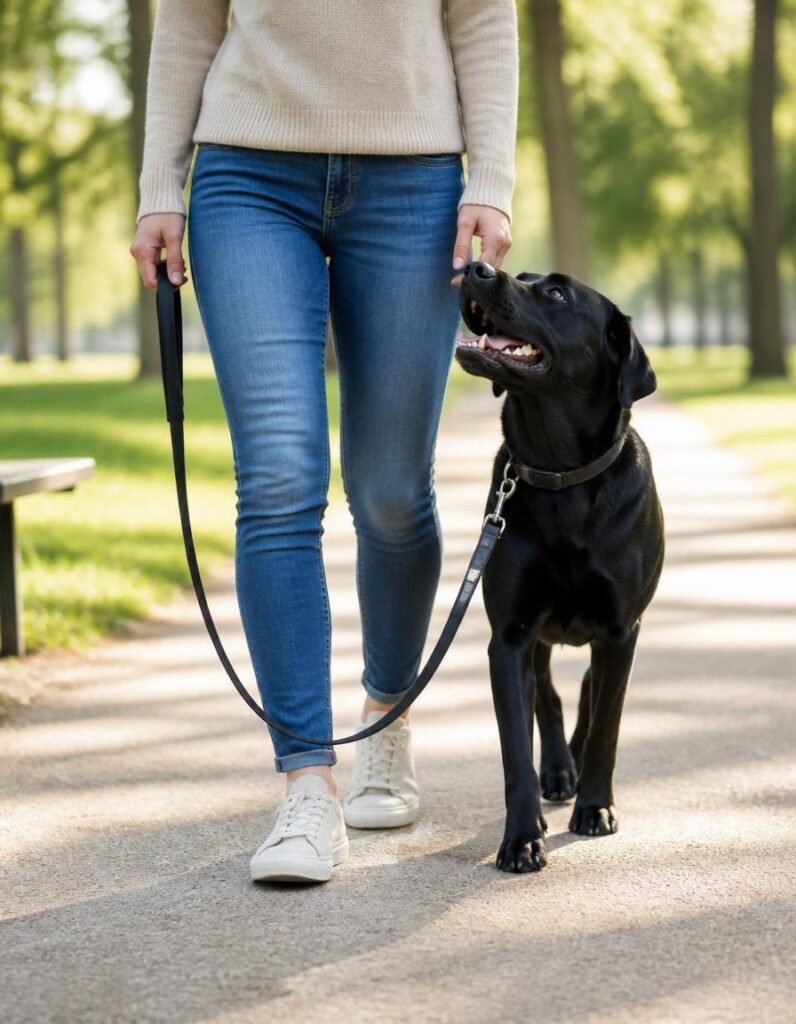
Stop dog pulling on leash, famously known as the “be a tree” method. The exact split-second the leash goes taut, freeze in your tracks and stop walking completely. Do not yank back, do not scold, and do not pull your dog toward you—simply lock your feet and become completely stationary. Your dog will eventually halt, turn around, and look back at you in confusion. The moment the line slackens even a fraction of an inch, immediately reward them by resuming the walk.
The lesson your dog learns here is absolute: a tight leash equals an instant full stop to the fun, while a loose leash means the walk continues forward. While this tactic makes your first few walks incredibly slow, it is one of the most effective structural ways to stop dog pulling on leash behaviors by the second week of consistency.
2. Reward the Position You Want
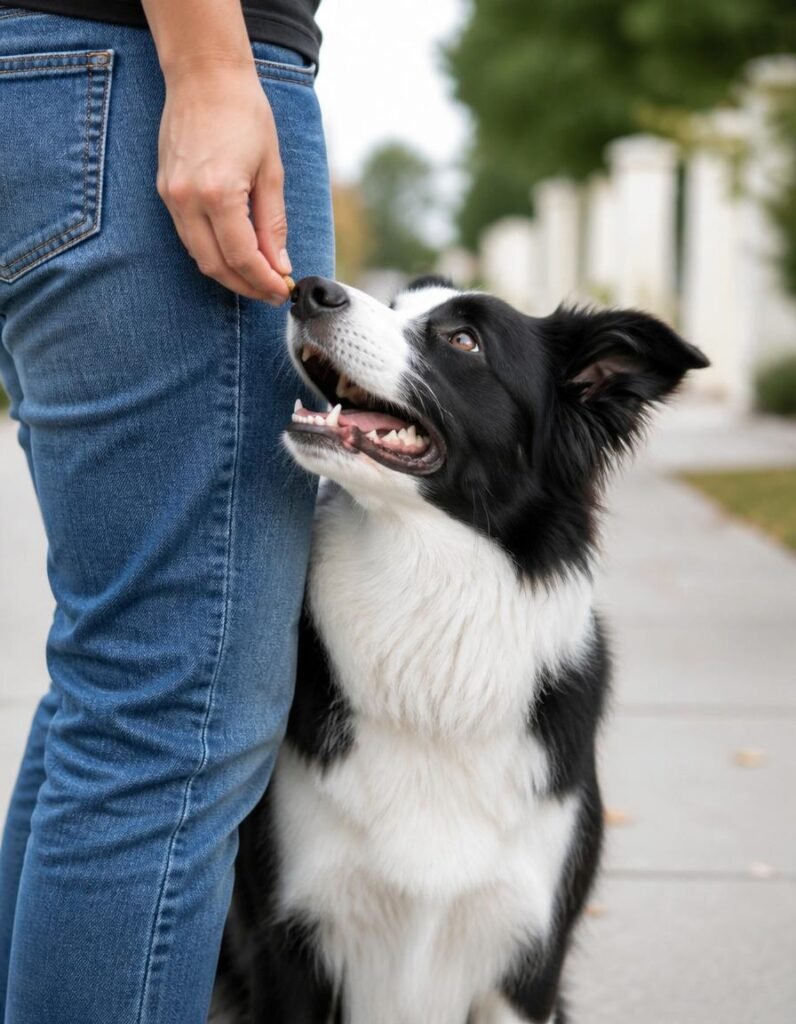
Never leave your house without a pouch full of small, high-value rewards. Whenever your dog chooses to walk directly beside you with a slack, loose line—even if it is only for three brief steps—instantly mark the behavior with an enthusiastic “yes!” and deliver a treat right at your hip. You are essentially paying your dog a high wage for occupying the exact physical zone you want them to stay in.
Pro Tip: Always deliver the reward directly against the outer seam of your pants rather than out in front of your body. Where your hand delivers the treat is the exact spatial zone your dog learns to target during motion.
3. Use a Front-Clip Harness (The Game-Changer)
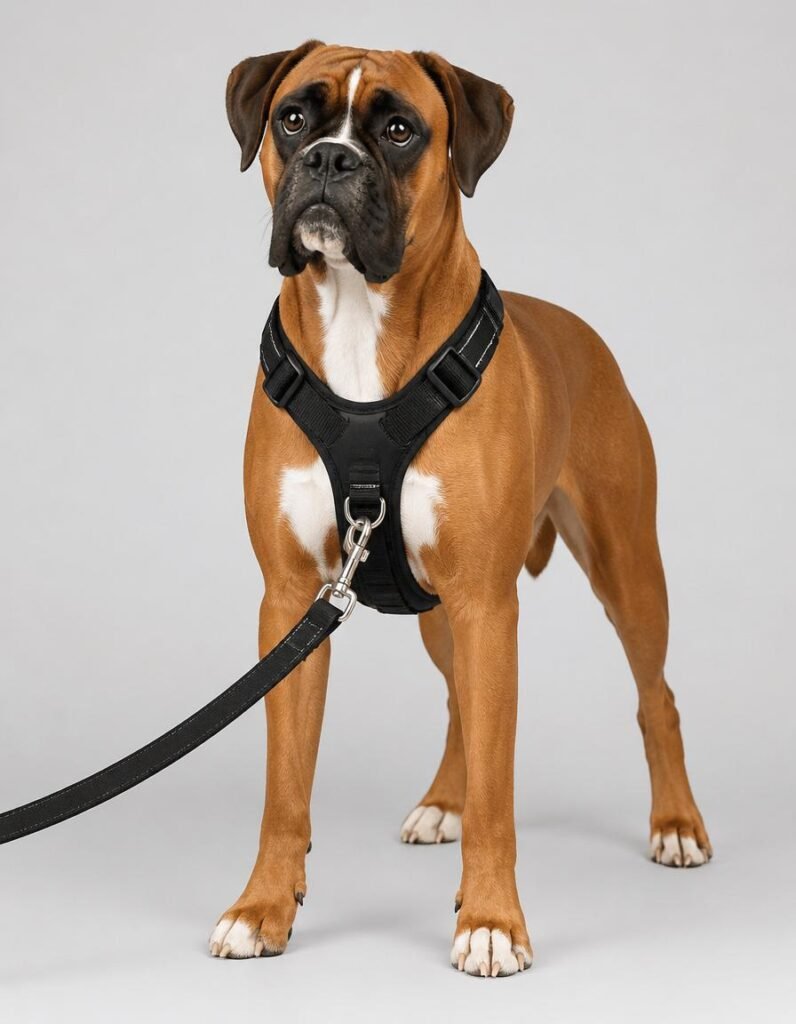
If you are struggling with a strong pet, stop dog pulling on leash mechanical hardware tool that makes your training loop instantly manageable. Standard back-clip harnesses actually trigger an opposition reflex that encourages harder pulling; it uses the exact same pressure anatomy that sled dogs utilize to haul weight. Conversely, a front-clip design connects to the chest area, gently redirecting your dog’s forward momentum sideways the moment they surge ahead, rendering pulling physically awkward rather than rewarding.
For the vast majority of deep-chested and powerful breeds, the difference is completely night and day on your very first outing. While it isn’t an overnight replacement for real obedience training, it makes your efforts to stop dog pulling on leash setups 10x easier because you are no longer fighting raw muscle strength. The absolute gold standard among professional trainers is the PetSafe chest-leash layout. You can read our comprehensive PetSafe Easy Walk Harness review guide to find the perfect anatomical fit and strap sizing for your dog’s frame.
4. Change Direction Often
Introducing unpredictable route changes forces a dog to keep their visual attention pinned directly on you. Every single time your dog begins to forge or surge ahead of your stride, calmly execute a 180-degree turn and walk the opposite direction without a word. Do not jerk the line; simply turn your body and walk away. Your dog quickly learns that they must watch your hip movements constantly because you might shift course at any random moment.
Practice these sudden turnabouts in a highly controlled, quiet environment first—such as your concrete driveway or an empty cul-de-sac—before attempting them in high-distraction environments like public parks.
Note on Humane Training: When working through complex behavior modification, sticking to force-free, science-based protocols keeps your pet emotionally secure. To read up on peer-reviewed guidelines regarding modern companion training, you can browse thepositive reinforcement position statements by the American Veterinary Society of Animal Behavior (AVSAB)to keep your methods completely humane.
5. Burn Energy Before the Walk
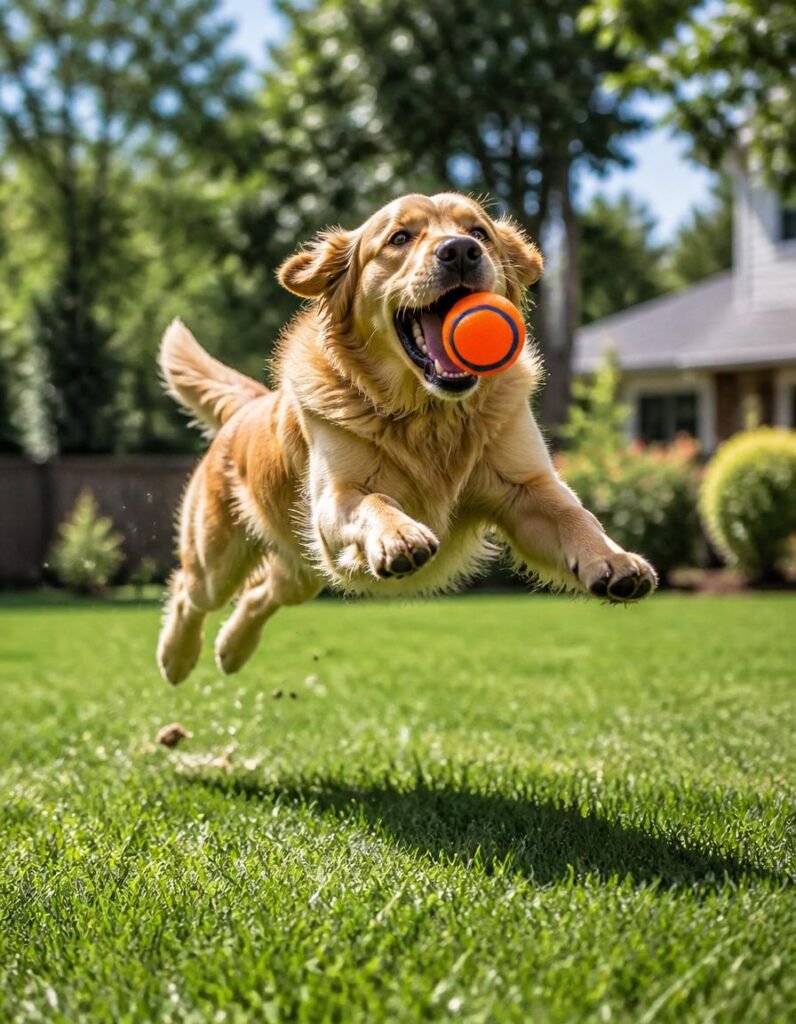
A dog that is loaded to the brim with pent-up, baseline physical energy is neurologically incapable of focusing on delicate loose-leash manners. Running a quick 10-minute game of high-speed fetch in your enclosed backyard right before you clip on the walking lead takes the frantic edge off their stamina, making your subsequent training walk incredibly productive.
While it sounds completely counterintuitive, isn’t the walk supposed to be the main source of exercise? The truth is that walks should be viewed primarily as mental training and sniffing enrichment sessions. Intense indoor or backyard play (like fetch or tug) burns physical energy cleanly and rapidly. To find a high-visibility, rubber throwing asset that maximizes pre-walk cardio, read our full Chuckit! Ultra Ball review guide to secure a toy built to tire them out safely.
6. Keep Training Walks Short and Frequent
Executing three distinct, highly focused 10-minute training sessions is infinitely better than dragging your pet through one exhausting, frustrating 45-minute battle. Short, rapid blocks prevent your dog from crossing their mental frustration threshold and make it significantly easier for you to maintain flawless, uncompromised consistency—which is the absolute secret weapon required to stop dog pulling on leash issues.
During this developmental training phase, completely lower your expectations regarding overall geographic distance. If you only manage to walk three houses down the block and back because you are stopping frequently to reinforce a loose line, that is an absolute victory. You are methodically installing a lifelong behavior pattern, not logging fitness mileage.
7. Be More Interesting Than the Environment
Dogs pull forward simply because the external environment appears vastly more stimulating and interactive than the person holding the other end of the lead. You must actively flip that script. Talk to your dog in high-pitched, engaging tones during your movement, alter your walking speed randomly from a slow crawl to a light jog, or drop a small handful of treats into the grass unexpectedly and command them to “find it.”
Consistently reward voluntary check-ins—those precious moments where your dog actively looks up to make direct eye contact with you without being prompted. A dog that discovers their handler is completely unpredictable and highly rewarding will check in constantly. Logically, a dog that is focused on watching your face cannot simultaneously drag you face-first down the sidewalk.
What NOT to Do
When trying to stop dog pulling on leash habits, implementing improper, old-school corrections can severely damage your dog’s physical health and amplify their walking anxiety:
- Hard Leash Yanking and Pushes: Forceful popping corrections can severely damage your dog’s delicate thyroid glands, trachea, and cervical vertebrae while teaching them absolutely nothing about the specific body position you want them to maintain.
- Retractable Cord Extensions: These reels maintain continuous, unyielding forward mechanical tension on the collar, literally training your dog that they must pull hard against the mechanism to expand their walking radius.
- Prong, Choke, or Electronic Collars: Pain-based, highly aversive hardware tools temporarily suppress unwanted behaviors through fear or physical discomfort rather than teaching long-term coping mechanisms. Leading animal behaviorists overwhelmingly advise owners against their usage.
- Intermittent Inconsistency: If your dog is permitted to pull forcefully to greet neighbors on casual weekend strolls but is expected to walk perfectly on a loose line during weekday mornings, they will continue to pull. Every person who handles the leash must enforce the exact same operational rules.
Final Thoughts: Stop Dog Pulling on Leash
While dealing with a heavy puller is incredibly frustrating, it remains one of the most fixable and straightforward behavioral problems in the pet world. There is no instant, overnight magic switch; the ultimate combination that successfully stops dog pulling on leash patterns involves combining a reliable front-clip chest harness for immediate mechanical leverage, paired with strict stop-and-go boundaries and heavy, reward-based training for a permanent behavioral fix.
The vast majority of dogs display massive, measurable loose-line progress within just two weeks of dedicated, daily practice. Maintain your boundaries, pack your treat pouch full of high-value rewards, and enjoy the process—the peaceful, single-handed loose-leash walk waiting for you on the other side is worth every bit of effort.
Note: Marketplace pricing for specialized canine training harnesses fluctuates based on seasonal availability. Always measure your dog’s chest girth accurately before finalizing an equipment order.
We want to be entirely transparent that Daily Pet Picks is a proud participant in the Amazon Services LLC Associates Program designed for independent product reviewers, an affiliate advertising program built to allow websites to earn small advertising fees by linking directly to product listings. This means we may earn a small commission if you purchase through our links, at absolutely no extra cost to you.