This post contains affiliate links. As an Amazon Associate, we earn from qualifying purchases at no extra cost to you.
Most people buy a no-chew spray the same way. They spray a little on a finger, taste it, pull a face, and decide it will work. Then the dog licks the table leg clean and carries on chewing.
That finger test is the problem. Dogs and people do not taste bitterness the same way, and the research on this is surprisingly specific. A spray that is unbearable to you can be mild to your dog. So the useful question is not “which bottle is the most bitter?” It is “How do I find out, cheaply, whether this bottle works on my dog, and what do I buy if it doesn’t?”
This guide answers that. It explains why your own tongue is the wrong judge, gives you the two-minute test that animal behaviour experts actually recommend, and then picks three sprays that are built on different formulas, so a failure with one leaves you somewhere to go.
Quick Picks
- Best overall: Rocco & Roxie No Chew Spray, alcohol-free, safe to use on skin and on furniture
- The original, for coat chewing on intact skin: Grannick’s Bitter Apple Spray, 16 oz
- Best second bottle: NaturVet Bitter YUCK! No Chew Spray, a water-based formula that names its active ingredient
Why Tasting It Yourself Proves Nothing
The most common bittering agent in products designed to stop things from being swallowed is a chemical called denatonium benzoate. It goes into antifreeze, detergents, and nail-biting treatments because people find it horrible at tiny doses. A toxicology review found that humans perceive it as extremely bitter at just 10 parts per million.
Dogs are a different story. A 2022 study published in PLOS One tested how dogs respond to the same compound and found that dog bitter taste receptors are far less sensitive to it than the human versions. One receptor that is highly sensitive in people barely responds at all in dogs. In drinking tests, dogs on average did not reject water carrying about 4.5 ppm. They did reject it at roughly 45 ppm, around ten times higher, but the researchers noted that even then, this was not true for every dog on every exposure.
Two honest caveats. The study measured bitter water, not a sprayed shoe, and its authors worked for a pet food company. It does not prove that any particular no-chew spray fails. What it does show is the mechanism behind a very common complaint: the level of bitterness that makes you gag is not a reliable guide to what stops a dog.
And you cannot read your way around this, because the labels don’t tell you. Grannick’s lists “bitter principles and extractives”. Rocco & Roxie list “bitter agent”. Neither says what the agent is or how much is in the bottle. Of the sprays in this guide, only one names its active ingredient and gives a percentage.
That leaves one test that actually measures what matters, and it takes two minutes.
The Two-Minute Test That Tells You If a No Chew Spray Will Work
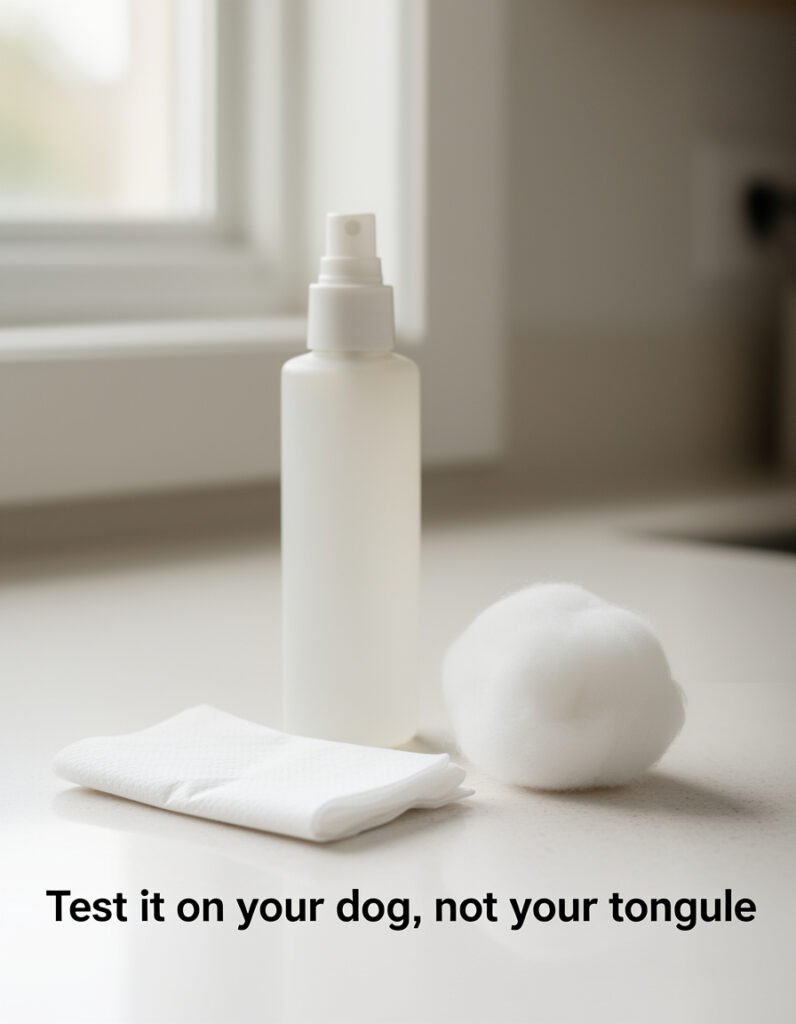
The ASPCA’s guidance on destructive chewing describes a simple introduction step that most owners skip. Before you spray anything in the house, put a small amount on a tissue or a piece of cotton wool and let your dog taste it.
Watch what happens next. A dog who dislikes the taste will usually shake their head, drool, or retch, and won’t go back for the tissue. A dog who chews it happily or picks it up again has just told you that this particular no-chew spray is not going to protect your sofa.
The test does two jobs at once:
- It checks the formula against your dog, which is exactly the information the label and the research can’t give you.
- It teaches the smell. Dogs rely heavily on scent, so the goal is for your dog to link the odour of the spray with the bad taste. After that, they are more likely to avoid treated objects without having to bite them first.
Be gentle. Don’t pry a reluctant dog’s mouth open; the aim is a taste, not a wrestle. If the test passes, spray the objects you want protected, and follow the ASPCA’s timeline: reapply every day for two to four weeks.
If the test fails, don’t just buy a “stronger” version of the same thing. Switch to a spray built on a different formula. That’s why the three picks below were chosen to differ from each other, rather than being three variations on bitter apple.
What a Chew Deterrent Can and Can’t Do
A no-chew spray makes one object less appealing. It does nothing about the reason your dog is chewing, and that reason decides whether the problem comes back.
Puppies chew because they are teething and exploring. Adult dogs chew from boredom, frustration, or anxiety about being left alone. Spray the skirting board and a bored dog will simply move on to the chair leg. Our guide on how to stop a dog from chewing everything goes through the causes in detail, and if chewing only happens when you leave the house, read about separation anxiety in dogs before buying anything.
The pattern that works is to block and replace at the same time. Spray the thing you want left alone, and put something your dog is allowed to chew within reach. A stuffed food toy from our best dog puzzle toys roundup or a spread lick mat gives the mouth a job. Enough daily activity matters too; our guide to how much exercise a dog needs is a good place to check.
Even the oldest brand in this category quietly admits the limit. Grannick’s own Amazon listing explains that many copycat products have failed because pets eventually acquired a taste for them. Take that seriously, and apply it to every bottle, including theirs: dogs can get used to a flavour. The daily reapplication and the redirection are what keep a no-chew spray working past the first week.
How We Chose
Every pick had to meet four tests:
- A different formula from the others. Alcohol-based, alcohol-free, and water-based with a named active ingredient, so the list gives you a real fallback when one fails the tissue test.
- A disclosed ingredient list. Even a vague one tells you about alcohol content, which matters for skin.
- A long, stable sales record. All three have been on sale for years from established brands, not short-lived generic listings.
- Under $20 for a standard bottle at major pet retailers.
The 3 Best No-Chew Sprays for Dogs
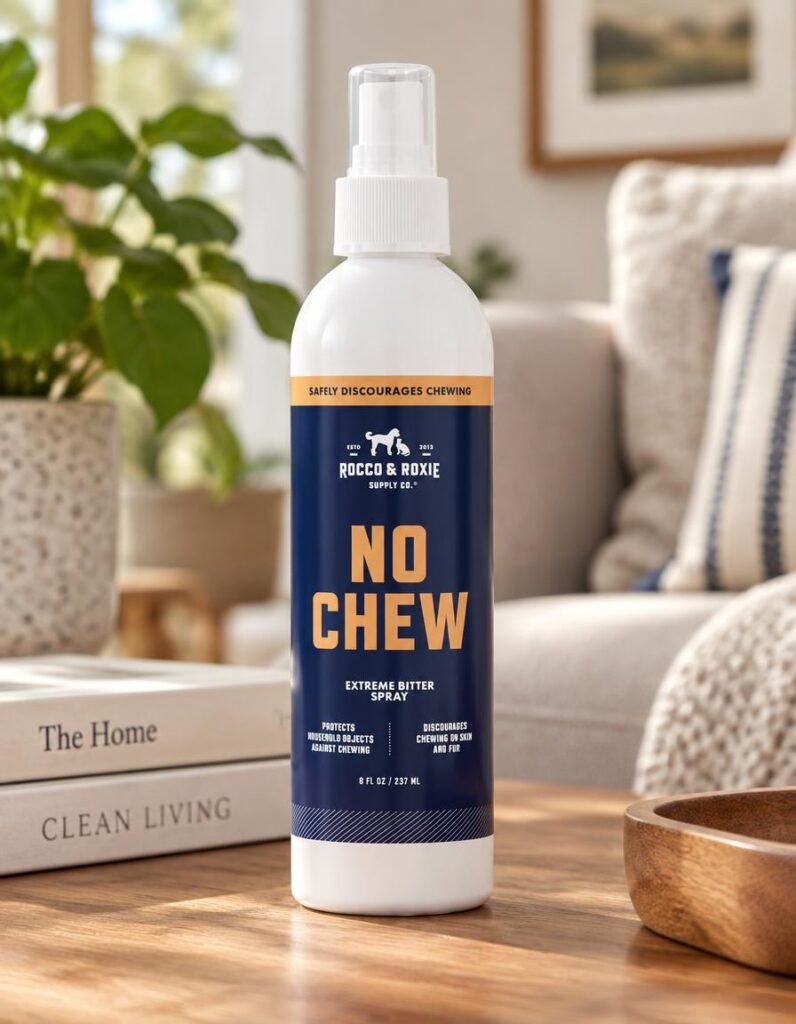
1. Rocco & Roxie No Chew Spray – Best Overall
Formula: Alcohol-free. Purified water, emulsifier, copaiba oil, bitter agent, preservative
Size: 8 oz
Amazon category rank: top 5 in Dog Repellent Sprays
This is the spray to try first for most homes, for one practical reason: it does both jobs a household usually needs. Because it contains no alcohol, the brand says it can go on skin as well as on furniture, cords, shoes, and plants. That means one bottle covers the chair leg and the paw your dog keeps worrying at.
It is also one of the best-selling sprays in its Amazon category, and it has been on sale since 2017, which makes it an easy bottle to find and reorder. The added copaiba oil is pitched as soothing for irritated skin. Treat that as a bonus rather than a reason to buy; the job here is deterrence.
What to watch out for: the label says “bitter agent” and nothing more, so you have no idea how strong it is until you run the tissue test. And “safe on skin” is not the same as “a treatment”. If your dog is licking a wound, a hot spot, or stitches, call your vet. A persistent licker can get through any bitter coating, and some sites need a proper recovery collar.
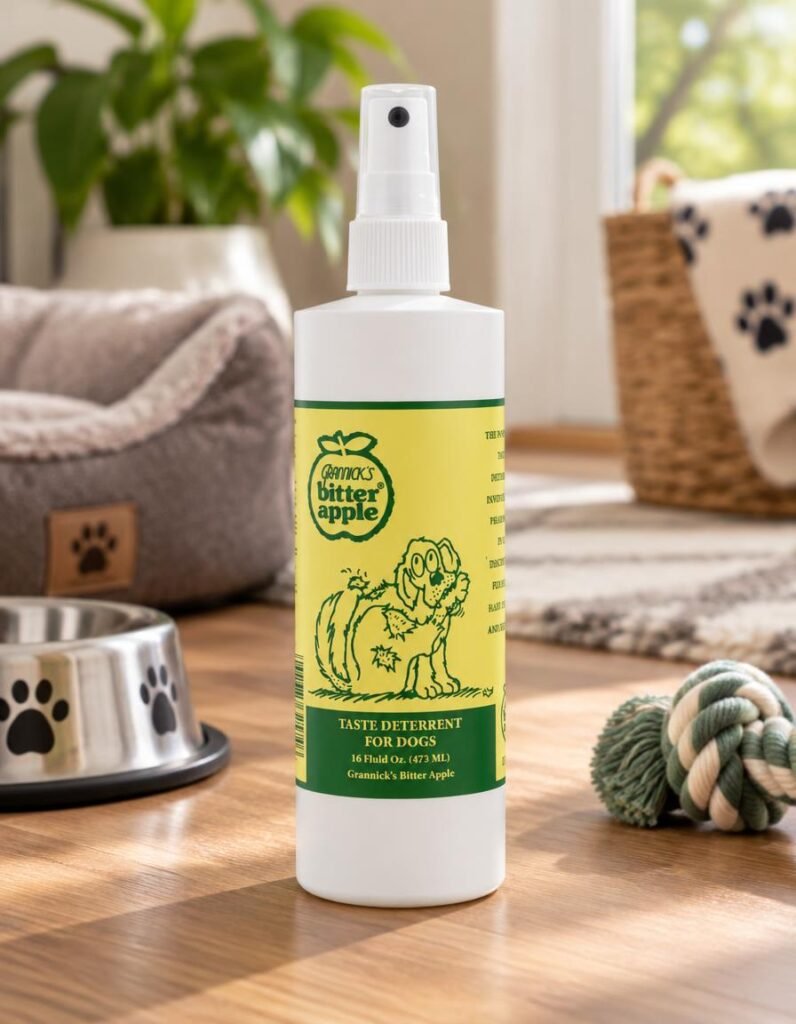
2. Grannick’s Bitter Apple Spray, 16 oz – The Original, for Coat Chewing
Formula: Water, isopropanol 20%, bitter principles, and extractives
Size: 16 oz
Around since: 1960
Bitter apple is the product that names the whole category. It was developed in 1960 by a pharmacist, Irv Grannick, for a show dog that chewed and licked its own coat before events. That origin still shows in how the product is described: its label focuses on fur biting, hair chewing, and hot spots, with furniture and shoes mentioned as extra uses.
The 16 oz bottle is the reason it’s here. A no-chew spray only works if you reapply it every day for weeks, and a large bottle makes that routine affordable. If your dog passes the tissue test with Grannick’s, this is the most economical way to keep going.
What to watch out for: the 20% isopropanol. Alcohol is what separates this pick from the other two, and it is the reason to keep it off broken or raw skin, where alcohol can sting. Use it on an intact coat and on objects. Two more label details that retailer copy tends to leave out: Grannick’s warns it may stain surfaces and says it is not for outdoor use. Test a hidden patch of fabric or wood first.
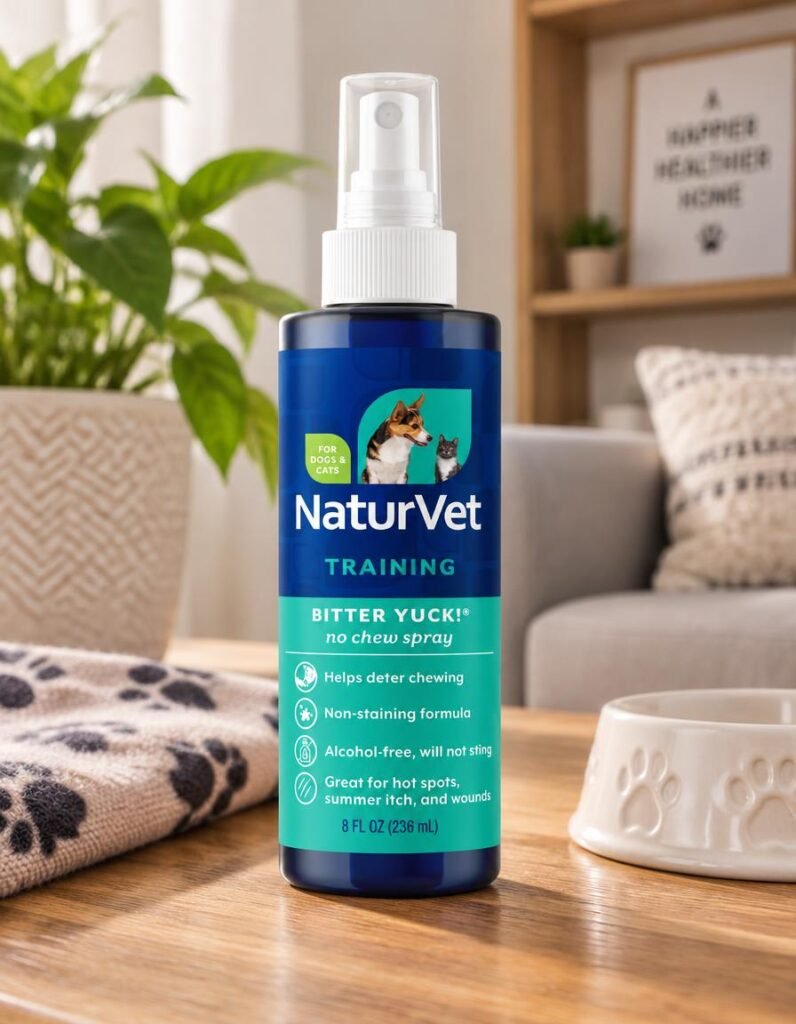
3. NaturVet Bitter YUCK! No Chew Spray – Best Second Bottle
Formula: Water-based. Active ingredient: rosemary (0.5%); inert ingredients: water and sodium bicarbonate
Size: 8 oz
On Amazon since 2005
Bitter YUCK! is the one bottle in this guide that tells you what is doing the work. The label names rosemary as the active ingredient and gives a percentage. That transparency is rare in this category, and it matters for the argument of this whole guide: if your dog shrugs off a spray built on an undisclosed bitter agent, you want the next bottle to be meaningfully different, and this one plainly is.
It is water-based, and NaturVet’s own listing makes the point that alcohol-based products can sting, which is why it positions Bitter YUCK! for wounds and bandages as well as furniture. It also says it can be used indoors and outdoors, on any washable surface. That makes it a sensible choice for a garden gate, a deck rail, or a crate that lives in the garage, which Grannick’s label rules out.
What to watch out for: retailer reviews are more mixed than for the other two. Some owners report their dog kept licking straight through it, which is exactly what the tissue test exists to catch before you spray the whole house. Buy it as an alternative formula to try when a first spray fails, rather than as the only bottle you ever try.
Why There Are Only Three Here
Search Amazon for a no-chew spray, and you’ll find dozens. Most are generic bottles with near-identical claims and no meaningful ingredient information, which makes them impossible to tell apart and impossible to choose between on anything except price.
Because the tissue test is the real decision-maker, a longer list doesn’t help you. What helps is a short list where each pick is genuinely different: one alcohol-free all-rounder, one alcohol-based original in a big bottle, and one water-based formula with a named active. If the first fails, move to a different formula. If two of three fail, the spray is probably not the right tool for your dog, and the answer is management and redirection instead.
How to Use a No-Chew Spray Properly
- Run the tissue test first. A small amount on tissue or cotton wool, a taste, and watch the reaction. No reaction, no point spraying.
- Patch test the surface. Spray a hidden area of fabric, leather, or wood and let it dry before treating anything visible.
- Spray every target, not just the favourite. Cover everything within reach that you don’t want chewed, or the dog just changes objects.
- Reapply daily for two to four weeks. The bitterness fades as it dries and wears, and daily repetition is what builds the habit.
- Offer a legal alternative every time. A chew toy or a dental chew placed nearby turns “no” into “not that, this”.
- Keep it out of eyes. Grannick’s label spells this out, and it is sensible for any spray. Treat objects from a distance, not near your dog’s face.
What to Skip
“Most bitter on earth” claims. At least one popular brand, Fooey!, holds a trademark on calling its spray the most bitter stuff on earth. A trademark is a legal right to a slogan, not a measurement. The same brand’s copy says its formula is guaranteed to work on most dogs, which is an honest admission that none of them works on all dogs. Bitterness to a human panel is exactly the wrong yardstick anyway, for the reasons above.
Using a no-chew spray instead of a cone on stitches. Some deterrent products are pitched as a friendlier alternative to a recovery collar after surgery. A spray reduces licking in dogs who dislike the taste; it does not stop a determined dog, and a reopened incision costs far more than a cone. Follow your vet’s aftercare instructions.
Homemade mixtures sprayed on your dog. Kitchen recipes using vinegar, citrus, or spices get passed around, but you have no idea what they do to skin, eyes, or a curious nose. If you want to experiment, keep homemade versions on objects only.
Spraying and walking away. A no-chew spray without supervision, redirection, and a reason for the chewing being addressed is a temporary fix. It buys you time to train; it does not do the training.
Frequently Asked Questions
Does No Chew Spray actually work?
It works on many dogs, but not all, and you can’t tell from the bottle. Dogs are less sensitive than people to at least one of the most widely used bitter compounds, so the only reliable check is the tissue test before you spray your home. When it works, it works best alongside daily reapplication and a chew toy to redirect to.
How often should I reapply a no-chew spray?
The ASPCA recommends reapplying every day for two to four weeks. Bitterness fades as the spray dries and gets rubbed off, and consistent daily application is what teaches your dog to avoid the object.
Can I use bitter spray on my dog’s skin or paws?
Some sprays are labelled for skin, and some are not ideal for it. Alcohol-based formulas like Grannick’s, at 20% isopropanol, are better kept to intact coats and objects. Alcohol-free and water-based formulas, like Rocco & Roxie and Bitter YUCK!, are the gentler choice. For wounds, hot spots, or surgical sites, ask your vet first.
My dog licks the spray off. What now?
That dog has failed the tissue test for that formula. Try a spray with a different base, for example, switching from an alcohol-based bitter apple to a water-based rosemary formula. If two different formulas fail, stop spending on sprays and focus on management: restrict access to the item and give your dog something appropriate to chew.
Is No Chew Spray safe for puppies?
Chew deterrents are a common part of teething management, and Rocco & Roxie markets its formula specifically for puppies. Check each label for age guidance, avoid the eyes, and remember that puppies need to chew. Pair the spray with plenty of legal options, and see our new puppy checklist for what to have ready.
The Bottom Line
The best no-chew spray is the one your dog dislikes, and neither your tongue nor the label can tell you which one that is. Start with Rocco & Roxie, an alcohol-free all-rounder that works on skin and furniture. Choose Grannick’s Bitter Apple for coat chewing on intact skin and a big, economical bottle. Keep NaturVet Bitter YUCK! in mind as a different formula to try when the first one fails.
Whichever you buy, do the tissue test before you spray, reapply daily for a few weeks, and always put something your dog is allowed to chew right next to the thing they aren’t.