Disclosure: dailypetpicks.com is a participant in the Amazon Services LLC Associates Program, an affiliate advertising program designed to provide a means for sites to earn advertising fees by advertising and linking to Amazon.com. This means we may earn a small commission if you purchase through our links, at no extra cost to you.
Almost every complaint about dog pee pads sounds the same: it leaked, it soaked through, it did not hold. So people buy thicker pads, more layers, higher absorbency numbers — and the puddle on the floor keeps happening. The reason is that the pad almost never failed in the middle. It failed at the edge, where there is no absorbent material at all. Once you know that, choosing between dog pee pads gets a lot simpler and cheaper.
Below are five dog pee pads that hold up, plus the specifications the packaging quietly hides and a straight answer about whether you should be using pads at all.
The Number on the Box Is Not the Pad
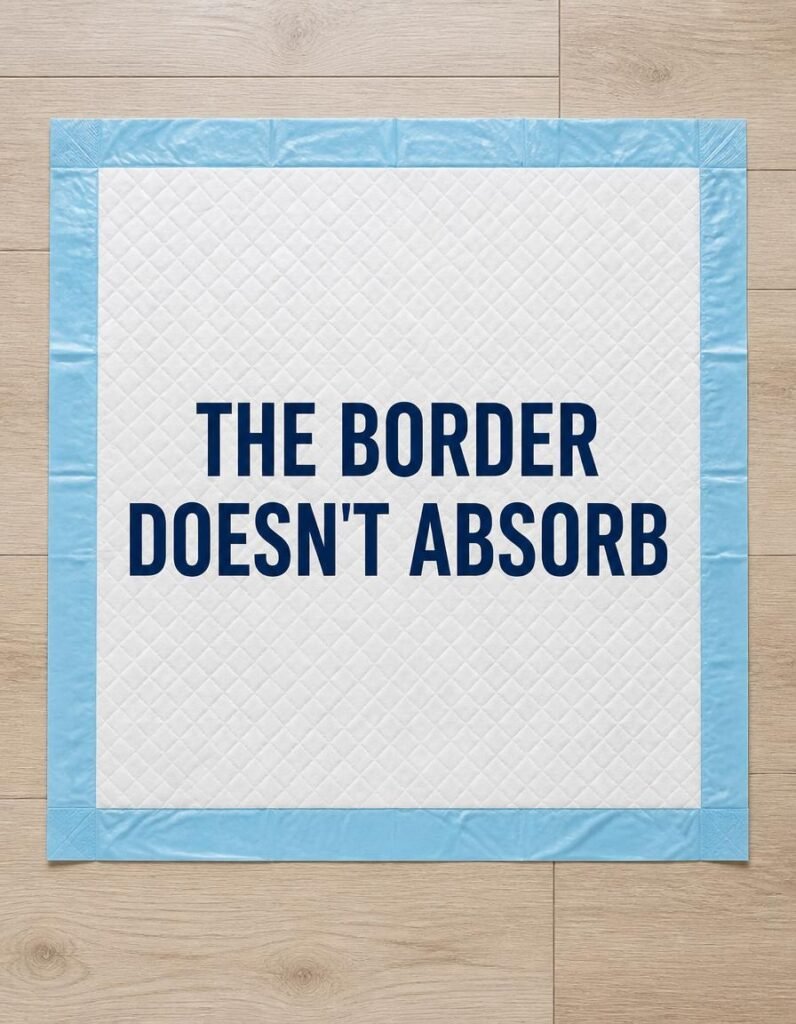
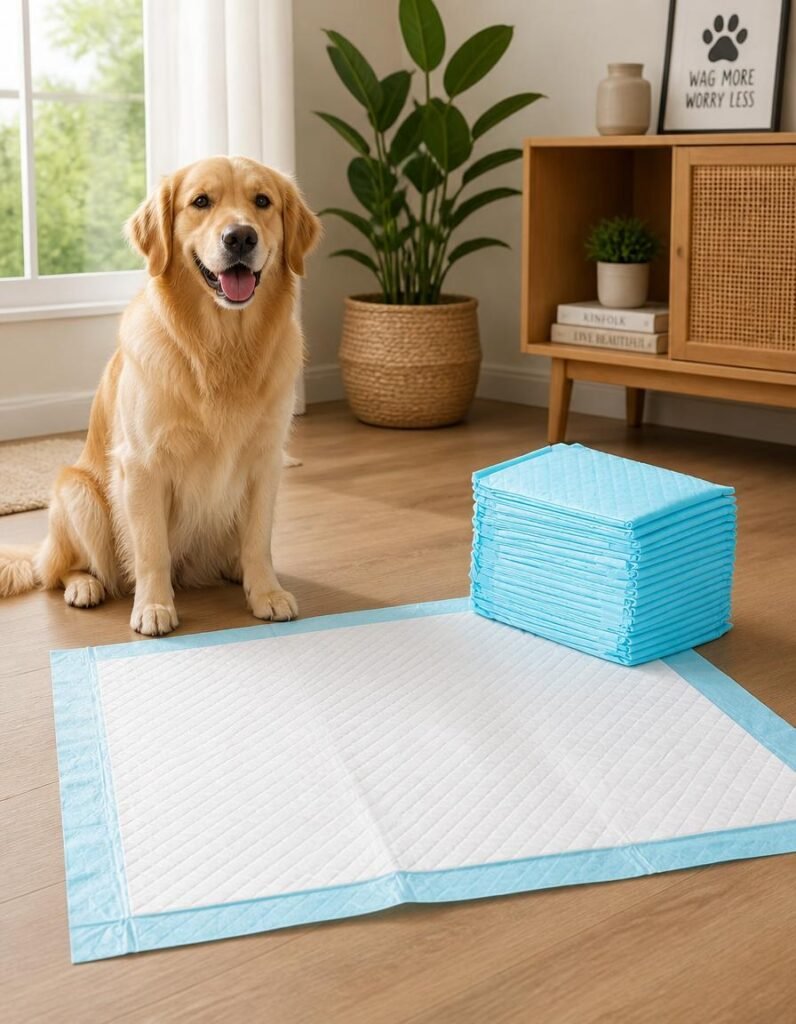
A “22 x 22 inch” pad is not 22 inches of absorbent surface. That measurement includes the plastic border sealed around the outside, and the border does not absorb anything — it is there to stop runoff, not to soak it up. Amazon Basics publishes both numbers on its own listing: the regular pad is 22 x 22 inches overall, with a 19 x 19 inch centre pad and a 1.65 inch border on each side.
Work that through, and you lose about a quarter of the area you thought you bought. The extra-large version is the same story: 28 x 34 inches overall, 23.6 x 29.5 inches of actual pad, with a 2.2-inch border. This is the single most useful thing to know about dog pee pads, because your dog does not aim at the centre. Dogs circle, shuffle backwards, and males lift a leg — all of which puts the stream near the perimeter, which is exactly where the absorbent material stops.
Absorbency Is Almost Never Your Problem
Manufacturers compete on cups. A standard 23 x 23 inch charcoal pad is rated at around four cups; a heavy-duty 24 x 24 inch pad claims six. Those numbers sound meaningful until you compare them to how much urine a dog actually produces.
Veterinary references put normal output at roughly 20 to 40 ml per kilogram of body weight per 24 hours. For a 10 lb dog, that is somewhere around half a cup to three-quarters of a cup — for the entire day, spread across several trips. A 20 lb dog needs one to one and a half cups a day. A single void is a fraction of that.
So a four-cup pad is not straining to contain one wee from a Chihuahua. It is being missed, or it is being used for two days when it should have been changed. Chasing bigger absorbency ratings solves a problem that most owners of small and medium dogs do not have. Buying more surface area, with a border that catches runoff, solves the one they do. That is the practical difference between dog pee pads that work and dog pee pads that get returned.
One manufacturer says the quiet part out loud in its own listing copy: size is the most common reason pads get sent back in this category.
What Actually Matters When You Compare Dog Pee Pads
- Usable centre area, not overall size. Look for the centre-pad dimension in the listing. If it is not published, assume roughly an inch and a half comes off every side.
- What the border does. A flat plastic seal is the bare minimum. Some pads use a raised or “rise” border that lifts at the edge, and some add a runoff guard across all four sides. That is the feature worth paying for if you are getting misses.
- Quilting on the top sheet. Oversized quilting spreads liquid sideways instead of letting it pool under the paws, which is what stops your dog from leaving a trail down the hallway.
- Gel speed. Polymer cores turn liquid to gel; the faster that happens, the less there is to track. Some listings quote fifteen seconds.
- Attractant. Most mainstream dog pee pads include a scent or pheromone attractant. It genuinely helps during the first fortnight and matters very little after that.
- Backing grip. A pad that slides across tile gets bunched up and peeled beside.
Before You Buy: Should You Be Using Pads at All?
This is a training decision before it is a shopping one, and it is worth being straight about the trade-off. Teaching a puppy to relieve itself indoors while also teaching it to hold on until it gets outdoors is two rules at once. Trainers and vets both flag the same consequences: the transition to outdoor-only can take considerably longer, and a puppy that learns “soft absorbent thing on the floor is the toilet” may well apply that rule to a bath mat or a dropped newspaper. Preventive Vet’s write-up on whether pee pad training is a good idea also raises two practical risks worth knowing: puppies shred and swallow pads, and plenty of them decide the pad is a nice place to nap.
None of that makes dog pee pads wrong. It makes them right for specific situations:
- A puppy that is not yet fully vaccinated and should not be on shared ground.
- An apartment where the trip down in a lift takes longer than a young bladder can manage.
- A senior dog with incontinence, or a dog on crate rest after surgery.
- Whelping, travel, and overnight crate lining.
- Owners with limited mobility, or brutal winters, or a very small dog.
If your goal is outdoor training and none of the above applies, the crate route usually gets you there faster — our guides to potty training a puppy and crate training a puppy cover that path. And when you do want to move off pads later, the AKC’s guidance on potty pad training describes the standard method: shift the pad toward the door a short distance at a time, then outside, then shrink it until your dog is using the ground.
The 5 Best Dog Pee Pads
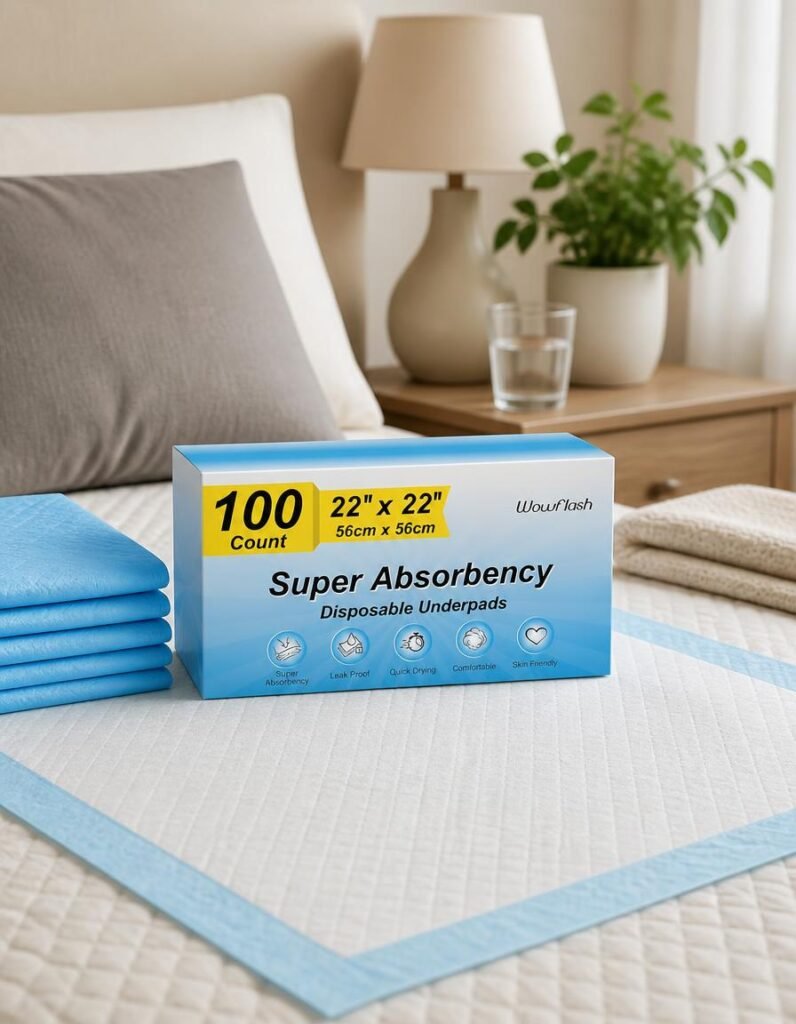
1. Amazon Basics Leak-Proof Pee Pads, 22 x 22 in, 100 Count — Best Overall Value
These are the default dog pee pads for a reason. Five layers, a quick-dry top sheet, a polymer core that gels on contact, a plastic lining underneath, and a built-in attractant — at a per-pad cost that nothing branded gets close to in a 100-count box. For a small or medium dog on a normal schedule, it is the sensible buy.
The honest caveat is the one this article opened with: the border here is a flat 1.65-inch plastic seal, so you get 19 x 19 inches of working pad. If your dog is placing accurately, that is plenty. If you are already finding wet patches at the edge, buy the next pick instead — more layers will not fix an aiming problem.
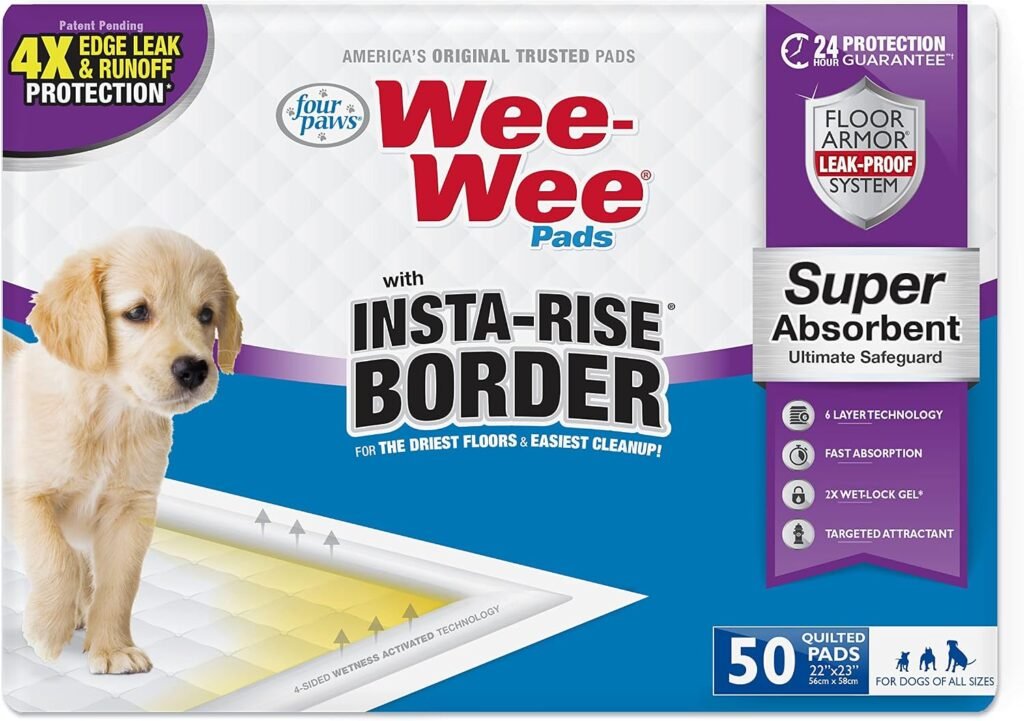
2. Four Paws Wee-Wee Super Absorbent with Insta-Rise Border, 22 x 23 in, 50 Count — Best for Edge Misses
Four Paws invented the Wee-Wee pad in 1970, and this version is the one that addresses the actual failure point. The Insta-Rise border is wetness-activated: instead of lying flat, the perimeter rises on contact with liquid, and the manufacturer claims four times the edge leak and runoff protection as a result. Underneath that it is the brand’s six-layer construction, with a wet-lock gel and oversized quilt pockets on the top sheet specifically to stop wet paws tracking through the house.
The footprint is roughly the same as pick 1, so understand what you are actually buying here: not more room, just an edge that holds. If you have a male dog who lifts, a dog who circles before going, or a pad that keeps getting hit at the corner, that is the upgrade that changes the outcome, and it costs more per pad than the Amazon Basics box.
One recurring complaint is worth knowing before you buy: a fair number of owners feel the centre holds less than a standard pad, as though capacity was traded for containment. By this article’s own argument, that is the right trade for a small or medium dog, which was never going to exhaust the middle of a pad anyway. For a large dog producing several times as much, go to the next pick instead.
3. Amazon Basics X-Large Heavy Duty Pads, 28 x 34 in, 50 Count — Best for Big Dogs and Crates
Larger dogs need area, not thickness, and this is where the extra-large size earns its money: 23.6 x 29.5 inches of absorbent centre inside a 28 x 34 inch pad, with a 2.2 inch border. It is also the right size for lining a crate floor or a playpen base overnight without leaving bare patches for your dog to find.
Heavy-duty absorbency here is genuinely useful, because this is the pad most likely to be left down for a full night or used by a dog producing several times what a toy breed does. If you are lining a crate, check the floor dimensions first — our dog crate sizing guide has the measurements by weight.
4. Glad for Pets Activated Carbon Charcoal Pads, 23 x 23 in, 100 Count — Best for Odour Control
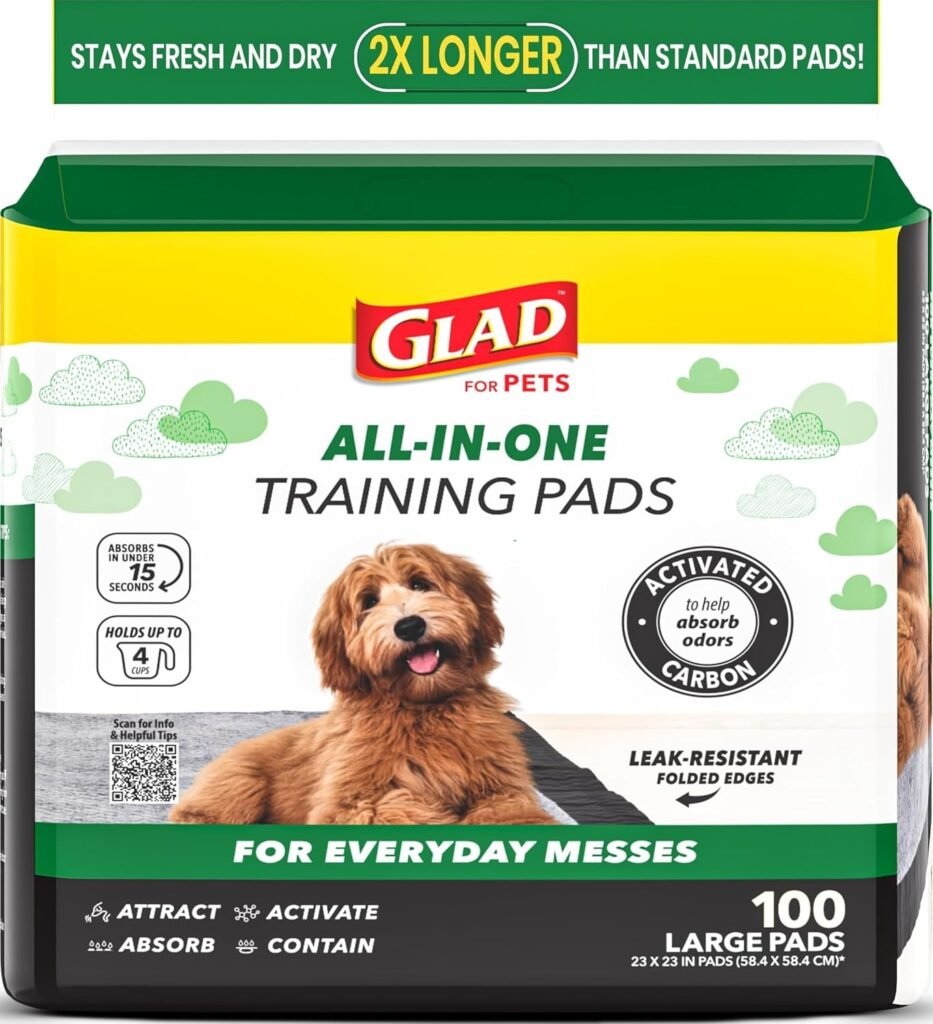
Six layers built around an activated carbon core, on a black charcoal sheet rather than the usual white. Two things follow from that. The carbon traps urine odour at the source instead of covering it, which matters a great deal in a flat where the pad lives in the same room you do. And the dark surface does not display yellow stains, which sounds cosmetic until you have looked at a white pad all week.
These also carry a pheromone attractant and are pitched at exactly the mixed use most people have: puppies in training, seniors with incontinence, post-surgery recovery, and whelping. A heavier 24 x 24-inch version rated at six cups exists if you need it, but for most households, the standard 100-count box is the better value.
5. Pet Parents Pawtect Washable Pads, 18 x 24 in, 2-Pack — Best Reusable Option
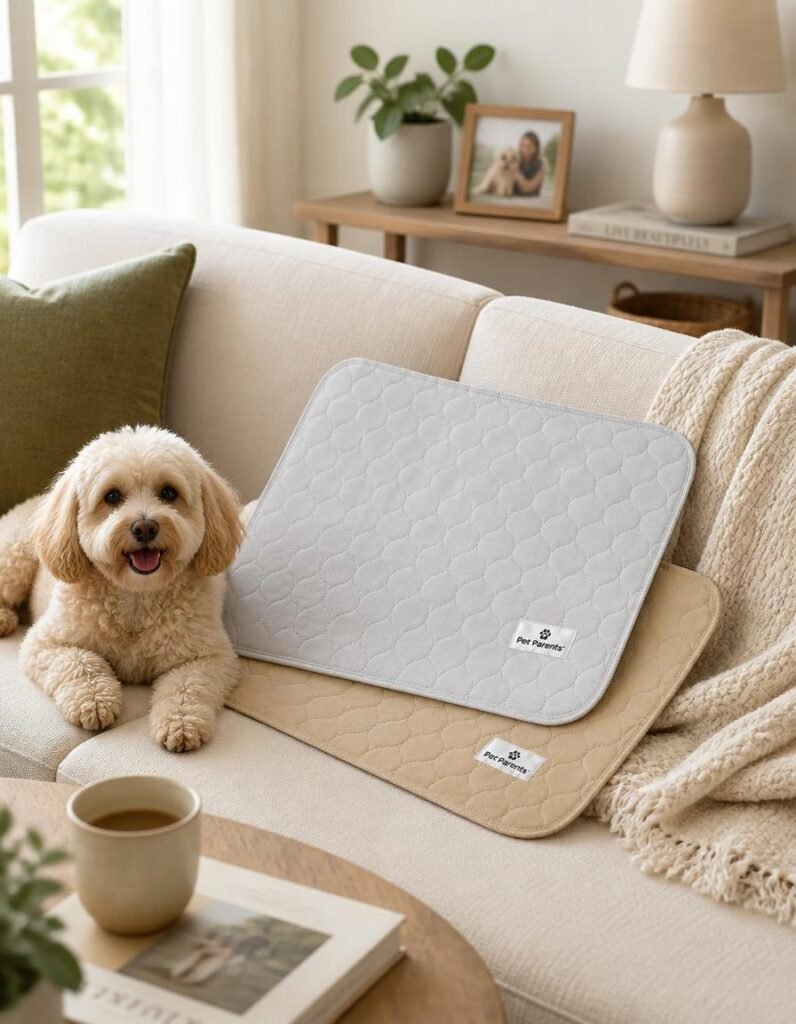
The reusable alternative to disposable dog pee pads is sold in twos so one can be down while the other is in the wash. The top layer wicks liquid away from the surface so it is not sitting where paws land; the backing is waterproof with a grip that keeps the pad from sliding; and the edges are triple-stitched, which is the part that survives a dog who likes to worry at corners.
This is the pick for long-running situations rather than a six-week training push — ongoing incontinence, a whelping box, a permanent spot under a crate or water bowl. See the cost comparison below before you decide, and read the honest note about the laundry, because that is the part nobody mentions.
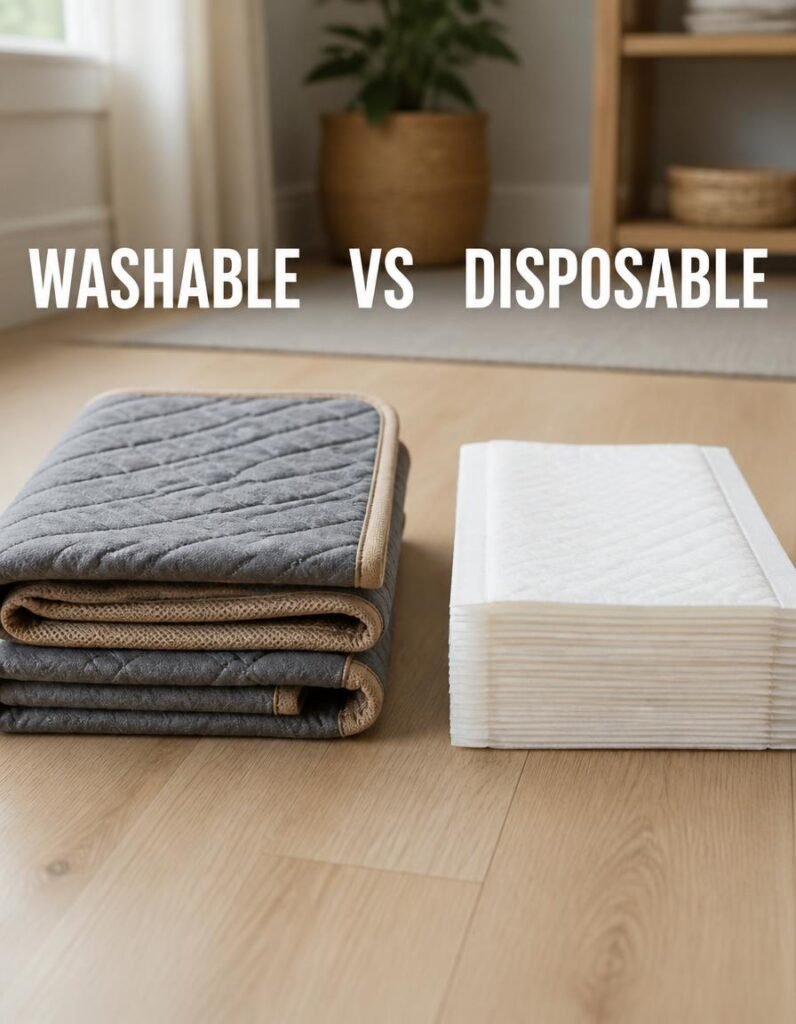
Disposable vs Washable: The Honest Maths
The reusable pitch is straightforward and largely true. A puppy in active training gets through three to five pads a day, so a 100-count box is roughly three or four weeks. Over a year of daily use, disposable dog pee pads are a recurring cost with no end date, while a two-pack of washables is paid once.
Here is the part the marketing leaves out. Two washable pads are not enough for a dog using three to five a day — you would be running a wash every single day, and you cannot use a pad that is still damp. Reusables work when the pad is being changed once or twice a day, which describes incontinence management and crate lining far better than it describes an eight-week-old puppy. They also mean urine-soaked fabric going through your machine, so plan on a hot wash of its own, no fabric softener, and a separate cycle from your clothes.
The sensible answer for most people is both: a bulk box of disposable dog pee pads for the training phase, and a washable pad for the fixed spot that stays down permanently.
Placement Beats Product
- Pick the spot and keep it. Low traffic, hard floor, away from where your dog eats and sleeps. Moving it later means moving it inches at a time.
- Overlap two pads at the start. A wider target during the first fortnight costs pennies and prevents the misses that teach a puppy the floor beside the pad is also fine.
- Change it before it looks full. Most dogs will refuse a soaked pad and go next to it, which reads as a failure of the dog pee pads and is not one.
- Clean misses properly. Residual scent is an instruction to repeat, and ordinary cleaners leave it behind — this is what our dog urine enzyme cleaner roundup is for.
- Do not punish a miss. It teaches secrecy, not aim.
What to Skip
Heavily scented pads are worth avoiding unless you have already tried them and know your dog tolerates the smell; a fragrance strong enough to mask urine to a human nose is considerable to a dog. Adhesive-tab pads only pay off if you are sticking them down inside a tray. And be wary of any listing that leads on layer counts and cup ratings without publishing a centre-pad measurement — among dog pee pads, that omission is usually deliberate.
One more: buying a 150- or 200-count box before you know your dog will use the pad at all. Start with the smaller pack.
Related reading: dog doorbells for potty training and black lights that find old urine stains.
Frequently Asked Questions
How many dog pee pads a day does a puppy get through? Three to five during active training is typical, dropping quickly as the bladder matures. A 100-count box is around three to four weeks at that rate.
Why does my dog pee right next to the pad? Nearly always, one of three things: the pad is too small for how your dog positions itself, it is already soiled, or the previous miss was never cleaned with an enzyme cleaner and still smells like the toilet.
Do the attractants in dog pee pads actually work? They help in the first week or two by making the pad the obvious target. They do not substitute for taking your dog to the pad on a schedule and rewarding the result.
Will using pads ruin outdoor training? It will not ruin it, but it usually lengthens it, because you are teaching two rules at the same time. Plan the transition rather than assuming it happens by itself.
Can I use human incontinence underpads instead? Physically, yes, and they are often cheaper per unit. They have no attractant and are generally sized for a bed rather than a dog’s turning circle, so you are back to the edge problem.
What size should I buy? Take your dog’s length from nose to tail, add room to turn around, and match that to the centre measurement rather than the overall one. Most people should size up once.
The Short Version
Buy area, not absorbency. The Amazon Basics 100-count box is the right default for most households; the Four Paws Insta-Rise is the fix if you are getting edge misses; the extra-large Amazon Basics pad is for big dogs and crate floors; Glad’s charcoal pads handle odour in small flats; and Pawtect washables make sense for anything long-term. Whichever of these dog pee pads you choose, size up once and change it more often than feels necessary — that combination solves more problems than any upgrade in layer count ever will.
Setting up for a new arrival? Our new puppy checklist covers everything else you will want in the house before day one.
Note: Pack sizes and pricing in this category change frequently. Always check the current listing details, including pad dimensions, before completing your order.