DailyPetPicks is reader-supported. When you buy through links on our site, we may earn an affiliate commission at no extra cost to you.
Most guides to dog bowls for flat-faced dogs stop at the nose. A French bulldog or pug can’t reach the bottom of a deep bowl without pressing its face into the food, so the advice is to buy a tilted bowl and move on. That part is true, but it’s the smaller half of the problem.
The bigger half is what happens after the food goes down. Flat-faced breeds are unusually prone to regurgitation, reflux, and gulping air at meals, and the way a dog eats affects all three. So a good bowl for these dogs has more than one job: it should make the food easy to reach, slow down a dog that inhales its dinner, and fit a feeding routine that keeps food where it belongs.
This guide explains those jobs, what veterinary specialists actually recommend, and which five dog bowls for flat-faced dogs do each job best.
Quick picks
Here are our five favorite dog bowls for flat faced dogs at a glance, each matched to a different problem.
- Best overall: Petygooing 15° Raised Ceramic Bowl, a weighted tilted bowl on a non-slip bamboo stand.
- Best for small dogs and small meals: HCHLQLZ Small Tilted Ceramic Bowl, in 480 ml and 800 ml sizes.
- Best adjustable height: SSAWcasa Adjustable Elevated Tilted Bowls, a bamboo stand with six heights.
- Best slow feeder for short muzzles: Hifrenchies Slow Feeding Bowl, with low ridges a flat face can work around.
- Best shallow dish: BNOSDM Silicone Dog Plate, ideal for soaked kibble and wet food.
Why flat-faced dogs struggle at the bowl
Breeds with short skulls, such as French bulldogs, pugs, English bulldogs, Boston terriers, and Shih Tzus, are called brachycephalic. Their faces are compressed, but the soft tissue inside isn’t scaled down to match. That’s why so many of them snore and pant heavily, and it’s also why eating can be messy and uncomfortable.
There are two separate problems, and it helps to keep them apart.
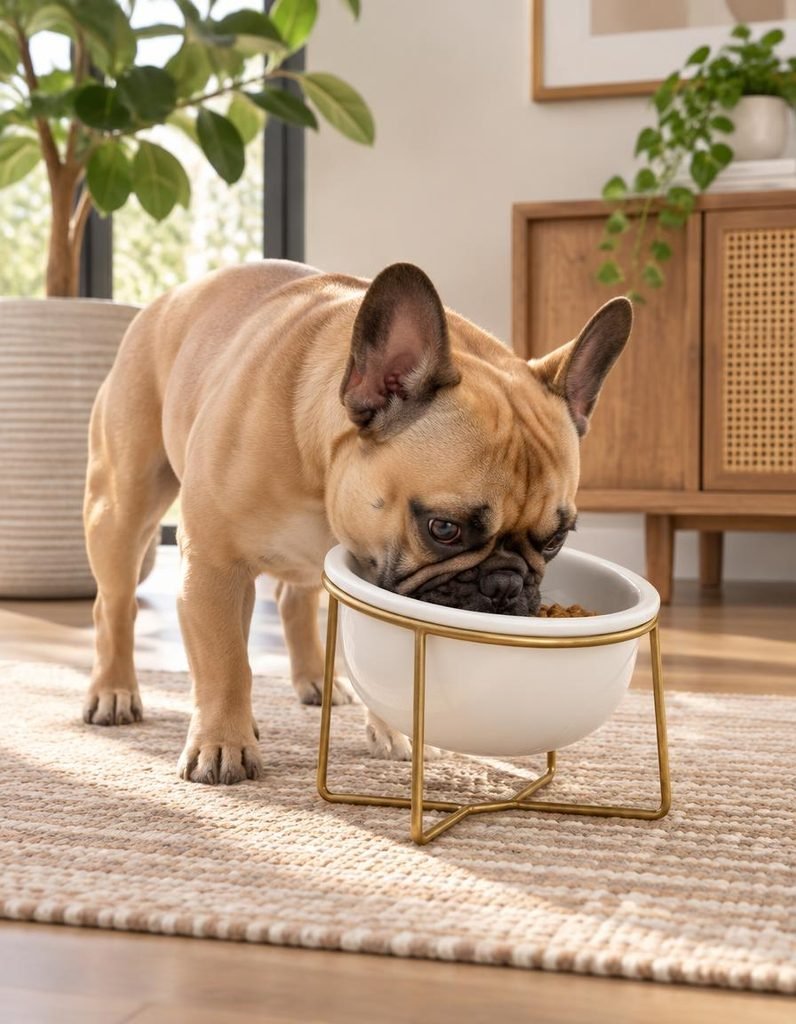
Reach. With almost no muzzle, a flat-faced dog meets the rim of a standard bowl with its nose, cheeks, and eyes before its mouth reaches the food. The last third of a deep bowl is the hardest part, so many dogs push the bowl around the floor, give up early, or come away with food in their skin folds.
Digestion. This is the part most bowl guides skip. In a well-known study of 73 brachycephalic dogs with breathing problems, researchers found abnormalities in the oesophagus, stomach or small intestine in 71 of them, and nearly half had severe drooling, regurgitation or vomiting. The University of Edinburgh’s vet school has published similar work showing that short-nosed dogs frequently have problems with their food pipe. A bowl can’t fix anatomy, but how fast and in what position a dog eats does make a difference. That is why dog bowls for flat-faced dogs need to do more than tilt.
The three jobs good dog bowls for flat faced dogs should do
When you shop for dog bowls for flat faced dogs, judge each one on three jobs. Most products only do one of them well, which is why the right pick depends on your dog.
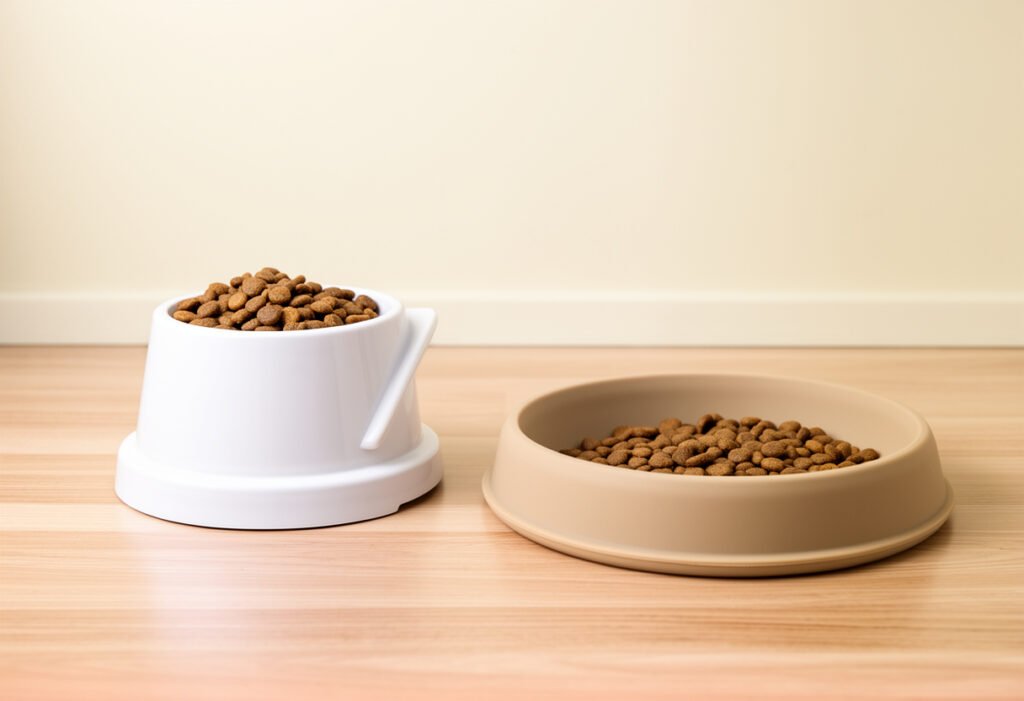
1. Bring the food to the front. A tilted bowl, usually set at about 15 degrees, makes kibble slide toward the low edge, where a short face can reach it. A wide, shallow dish does the same job a different way, by removing the deep sides altogether. Either way, your dog can eat without pressing its eyes and nose into the rim.
2. Slow the meal down. Dogs that gulp swallow more air, and air in the stomach is one of the things that brings food back up. A slow feeder breaks the meal into small mouthfuls. The catch for flat-faced dogs is that tall ridges are just as hard to reach around as a deep bowl, so the ridges need to be low.
3. Support a better eating position. Where the dog’s body is while it eats matters as much as the bowl itself. This is the job most people misunderstand, so it gets its own section below.
What a raised bowl does, and what it doesn’t
Langford Vets, a specialist referral hospital in the UK, gives owners of flat-faced dogs a feeding sheet for managing breathing and reflux problems. Alongside a slow-feed bowl or lick mat, it recommends feeding from a raised position so the front legs are higher than the back legs, using something like a low step, and keeping the dog upright for two to five minutes after eating.
Notice what that advice is about: the dog’s body, not just the bowl. Most elevated dog bowls for flat-faced dogs raise the bowl, so the dog’s head comes up a little, but the dog is still standing level on all four legs. That can make eating more comfortable for a dog with a stiff neck, but it isn’t the same as the front-legs-up position the vets describe.
If your vet has suggested that position, the simplest way to get it is to put a sturdy step or low platform in front of the bowl so your dog stands on it with its front feet. An adjustable stand like our Pick 3 helps you get the height right once the step is in place. If your dog has no reflux problems, a tilted bowl on the floor is usually all you need.
How to choose dog bowls for flat-faced dogs
Size the bowl to the meal, not the dog. Flat-faced dogs do better on several small meals than one or two big ones, which is also what Langford recommends for dogs with reflux. That means many of the dog bowls for flat faced dogs you’ll see, including some with modest capacity, are big enough. A French bulldog’s daily food split into three or four meals fits comfortably in a small bowl.
Pick a material you’ll actually wash. Even the best dog bowls for flat faced dogs need cleaning every day, and food tends to stick in corners and ridges. Stainless steel liners are the easiest to keep clean. Resin and melamine are fine if they’re dishwasher-safe. Silicone is soft and quiet but can hold onto smells if it isn’t washed thoroughly.
Make sure it stays put. A flat-faced dog pushes the bowl as it eats. A rubber or silicone base stops the bowl from travelling across the kitchen. A dog food mat with a raised edge under any bowl also catches the water and kibble these dogs tend to drop.
Ignore the medical claims in product names. Several bowls in this category are sold as “anti-vomiting.” A tilt can help food gather where a short face can reach it, and a slower, calmer meal may mean less food comes back up. But a bowl is not a treatment, and frequent regurgitation needs a vet, not a new dish.
The 5 best dog bowls for flat faced dogs
We picked these dog bowls for flat faced dogs from Amazon’s best-selling bowls, checked each listing for the details that matter here, and left out bowls whose listings don’t say what they’re made of or how to clean them. Rankings mentioned below were correct at the time of writing.
1. Petygooing 15° Raised Ceramic Bowl – Best overall
Best for: French bulldogs, pugs and other small flat-faced dogs.
This weighted ceramic bowl sits at a 15-degree tilt on a bamboo stand with a non-slip base, so the food gathers at the low front edge where a short face can reach it. It’s raised a little off the floor too, which brings the bowl up to meet your dog instead of making it dig down.
Ceramic is heavy, so it doesn’t skid when a flat-faced dog pushes at it, and the listing says it’s both hand-wash and dishwasher-safe. It ranks in the top 20 of Amazon’s Dog Raised Bowls with more than 600 ratings, which makes it one of the best-reviewed dog bowls for flat faced dogs at its price.
Watch out for: it’s sized for cats and small dogs, and the listing doesn’t print a capacity. For a larger bulldog, the adjustable stand in pick 3 is the better fit. Ceramic can chip if it’s dropped, so check it for cracks now and then.

2. HCHLQLZ Small Tilted Ceramic Bowl – Best for small dogs and small meals
Best for: pugs, Shih Tzus, and smaller French bulldogs eating three or four small meals a day.
This is a porcelain ceramic bowl on a slim metal stand, tilted at 15 degrees. It comes in two sizes: 480 ml for small dogs and smaller meals, and 800 ml if your dog eats more at a sitting.
The smaller size fits the small-meals routine vets recommend for flat-faced dogs with reflux. The listing describes a smooth surface that is easy to wash, and the bowl has close to 700 ratings.
Watch out for: it is also sold for cats, so choose the larger 800 ml size for anything bigger than a small dog. Lift the bowl off the stand to wash it properly.
3. SSAWcasa Adjustable Elevated Tilted Bowls – Best adjustable height
Best for: owners who want to fine-tune feeding height, or whose vet has suggested a raised feeding position.
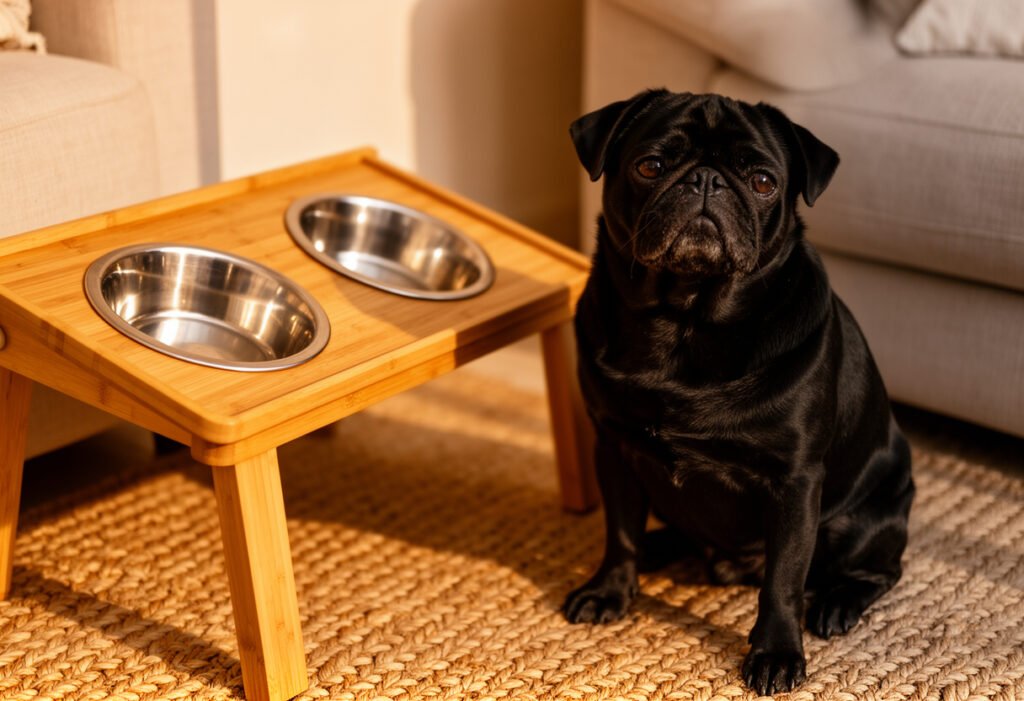
This is one of the few adjustable dog bowls for flat faced dogs: a folding bamboo stand that holds two stainless steel bowls. According to the listing, it adjusts to six heights from 2.4 to 6.9 inches, and you can set it flat or at a 15-degree tilt. That range covers most small and medium flat-faced dogs, and the stand comes apart without tools when you want to store it.
It ranks in the top 100 of Amazon’s Dog Raised Bowls with close to 1,000 ratings. Having food and water side by side on one stand also means fewer bowls to chase around the floor.
Watch out for: raising the bowls lifts your dog’s head, but it doesn’t put the front legs higher than the back legs, which is the position Langford describes. If your vet wants that position, pair the stand with a low step, as explained above.
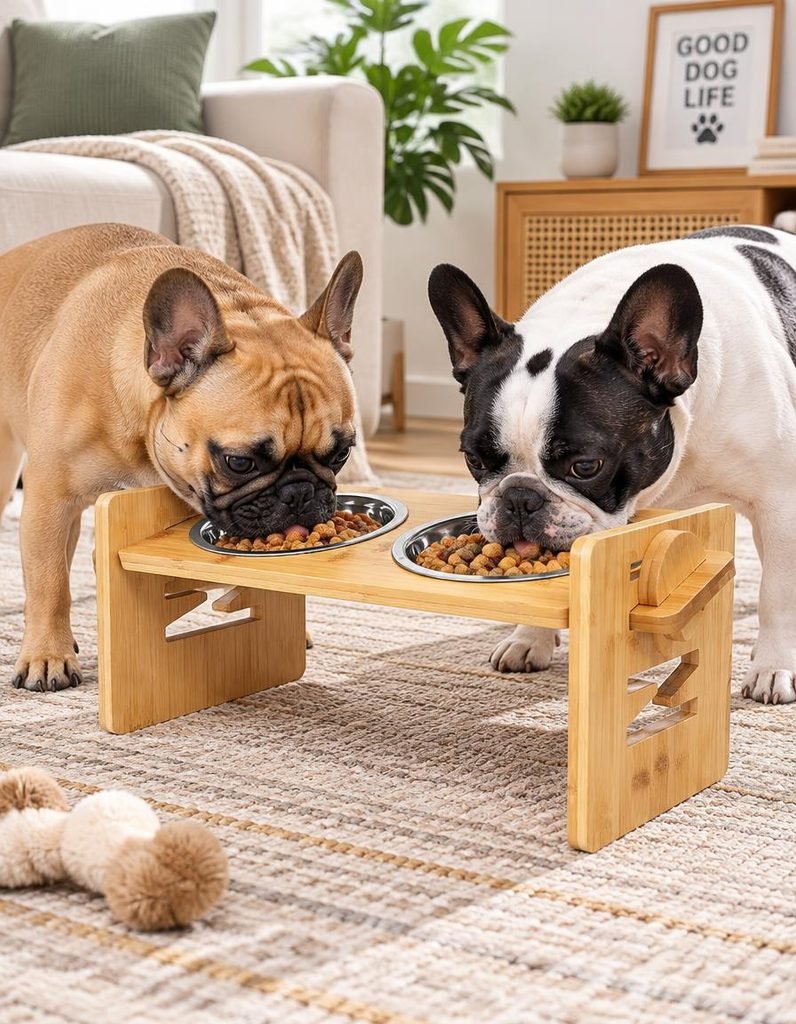
4. Hifrenchies Slow Feeding Bowl – Best slow feeder for short muzzles
Best for: flat-faced dogs that gulp their food.
Most slow feeders are designed for long-nosed dogs, with tall ridges and deep channels that a pug or French bulldog can’t reach into. This one was made with French bulldogs in mind. The listing describes the raised parts as “not too high,” in a striped pattern, so your dog has to work a little for each mouthful without pressing its face into deep grooves.
It’s made from food-safe PP resin, and the seller notes that their own French bulldog eats about one cup per meal from it. If you’d like a wider choice of slow feeders, our slow feeder dog bowl guide covers more designs, though most of them suit longer muzzles.
Watch out for: the listing doesn’t say whether the bowl is dishwasher-safe, so plan on washing it by hand. Check the ridges carefully, because food can collect in the grooves.

5. BNOSDM Silicone Dog Plate – Best shallow dish
Best for: soaked kibble, wet food, and dogs that hate having anything touch their face while eating.
Sometimes the best bowl for a flat face isn’t a bowl at all. This is a shallow silicone plate, about 7 by 6 inches and only an inch deep, so there’s no rim to push against. The listing says it’s dishwasher-safe, and the soft silicone doesn’t clatter or slide.
A shallow plate is a particularly good match for the feeding routine Langford recommends, which includes soaking kibble until it’s the consistency of canned food. Soaked food spreads out on a plate and is easy for a short face to lick up. For more flat-surface options, our guide to lick mats for dogs is worth a look, since lick mats double as slow feeders for wet food.
Watch out for: dry kibble slides off a shallow plate more easily than a tilted bowl. Use it on a mat, or keep it for wet and soaked meals.
What to skip
Not all dog bowls for flat faced dogs live up to the name. These are the designs we would avoid.
- Deep, narrow bowls. These are the hardest shape for a flat face. Your dog will either leave food at the bottom or push its eyes and nose into the rim to reach it.
- Slow feeders with tall ridges. They slow a long-nosed dog down, but a flat-faced dog often can’t reach between them at all.
- Tall elevated feeders made for big breeds. A stand built for a Labrador puts the bowl far above a pug’s head. Height should match your dog, which is why an adjustable stand is the safer choice.
- Bowls that promise to cure vomiting. Shape helps comfort, not anatomy. Persistent regurgitation is a reason to see your vet.
A feeding routine that helps
Even the best dog bowls for flat faced dogs are only one part of a routine. These habits come from the same Langford Vets feeding sheet for flat-faced dogs, and they’re worth discussing with your own vet if your dog brings food back up often:
- Feed three or four small meals instead of one or two large ones.
- Soak dry kibble until it’s soft, so it’s easier to swallow.
- Keep your dog upright for a few minutes after eating instead of letting it lie flat straight away.
- Keep your dog slim. Extra weight makes breathing harder for brachycephalic breeds, and the sheet recommends being able to feel the ribs easily.
If your dog is still gulping, our elevated dog bowls guide and slow feeder guide cover more options, but for most flat-faced dogs a tilted or shallow bowl plus smaller, slower meals is the combination that works.
Frequently Asked Questions
What kind of bowl is best for a flat-faced dog?
A tilted bowl or a wide, shallow dish is usually best, because both let a short face reach the food without pressing into the rim. Among the dog bowls for flat faced dogs in this guide, the Petygooing 15° Raised Ceramic Bowl is the best all-rounder, and the BNOSDM silicone plate is the best choice for soaked or wet food.
Do French bulldogs need a tilted bowl?
Not all of them, but many find it easier. A tilt of about 15 degrees moves the food toward the front of the bowl, so a French bulldog doesn’t have to dig its face into the bottom to finish its meal.
Are elevated bowls good for pugs?
A slightly raised bowl can make eating more comfortable, but height alone isn’t the same as the front-legs-higher position some vets recommend for flat-faced dogs with reflux. Choose a low, adjustable height and ask your vet whether a feeding step would help.
Can a slow feeder work for a dog with a flat face?
Yes, as long as the ridges are low. Tall ridges are as hard to reach around as a deep bowl. Pick a slow feeder designed for short muzzles, or use a lick mat with soaked food instead.
Why does my French bulldog throw up after eating?
Flat-faced breeds are prone to regurgitation and reflux, and eating fast makes it worse. Smaller, slower meals and a better eating position can help, but regular vomiting or regurgitation should always be checked by a vet.
Final verdict
Which of these dog bowls for flat faced dogs is right depends on what your dog struggles with. If the problem is reach, start with the Petygooing 15° Raised Ceramic Bowl, or the small HCHLQLZ tilted bowl for a small dog. If your dog gulps, the Hifrenchies Slow Feeding Bowl slows meals down without tall ridges. If you’re feeding soaked food or managing reflux, the BNOSDM shallow plate and the adjustable SSAWcasa stand fit the routine vets actually recommend.
Whichever you choose, pair it with smaller meals and a few calm minutes upright afterward. That routine, more than any single bowl, is what makes dog bowls for flat faced dogs work.
Prices and availability change often. Check the current price on Amazon before you buy.