DailyPetPicks is reader-supported. As an Amazon Associate, we earn from qualifying purchases, at no extra cost to you.
A self warming dog bed contains no heater. There is no battery, no coil, and no plug, and nothing inside it gets warmer than your dog does. That one fact explains almost every five-star review and almost every one-star review in this category, and once you understand it, choosing the right one gets much easier.
Below are four picks, each matched to a different kind of dog and a different spot in the house, plus the two specs that actually decide whether a self warming dog bed feels warm or feels like a thin blanket.
How a self warming dog bed actually works
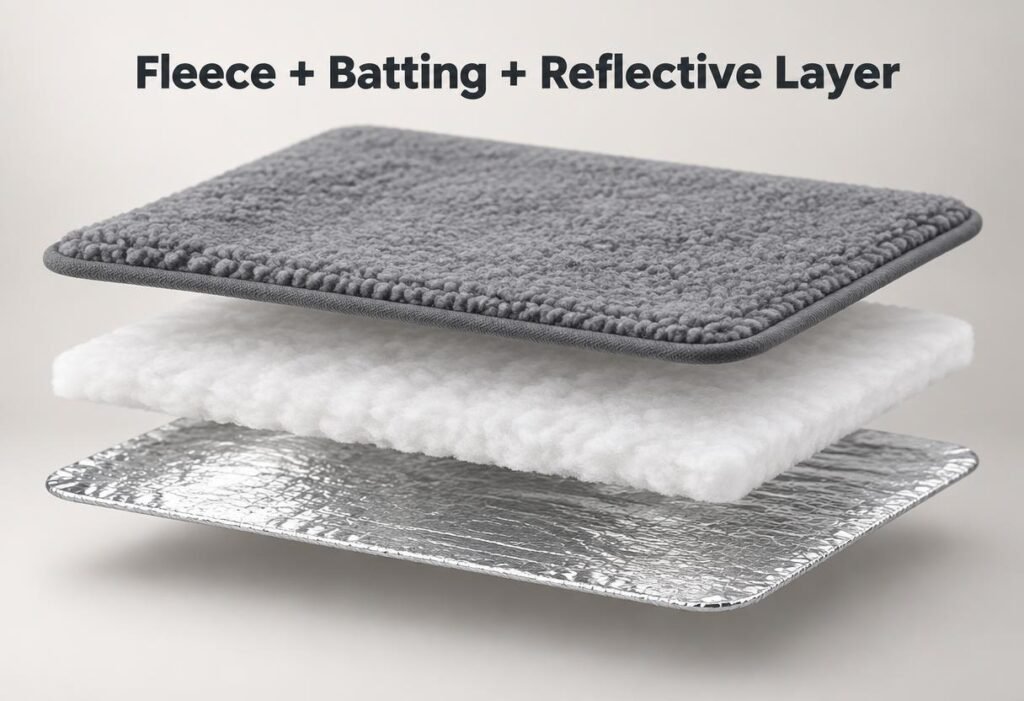
Every product in this category uses the same two-part trick. A layer of polyester batting traps the warm air your dog gives off, and a thin metallised sheet, the same family of material used in emergency space blankets, bounces radiant heat back toward the body instead of letting it escape. Furhaven describes its ThermaNAP mats as a reflective thermal sheet sandwiched between layers of fibre batting, and the K&H pads use what the company calls metallised plastic. Different brand names, same physics.
Notice what is missing: a heat source. The dog is the heater. The mat’s only job is to stop that heat leaking away, and a self warming dog bed can never be warmer than the animal lying on it. That is why these beds are safe to leave down all winter, and it is also why they disappoint people who expected a heating pad.
K&H, one of the oldest makers in the category, says so plainly in its own product notes: its self-warming pads are designed to raise the temperature of a bed that is already around room temperature. Chewy’s own answer under the K&H pad goes further and warns the pad may not be enough heat for winter. When the seller tells you the limit, believe it.
The floor is the problem, not the air
Here is the part most listings skip. A dog lying on tile, concrete, or a laminate floor loses far more heat downward, by direct contact, than it loses to the air around it. Cold hard floors pull warmth out of anything touching them. A thick coat on the back does nothing for a belly pressed against stone.
So the most useful thing a self warming dog bed does is put an insulating layer between the dog and the floor. The reflective sheet helps, but the batting underneath is doing most of the work. That gives you the first real buying rule: the colder and harder the floor, the more the thickness and backing matter, and the less the “space-age reflective layer” marketing matters. A 1-inch pad on carpet and a quarter-inch mat on a basement slab are not the same product, even if both say “self-warming” on the box.
The second spec: does your dog curl or sprawl?
Watch how your dog sleeps on a cold night. A dog that curls into a tight ball is already conserving heat by shrinking its exposed surface, and it gets the most from a self warming dog bed with raised sides or a bolster, because the walls trap a pocket of warm air around the curl. A dog that sprawls flat on its side is dumping heat across a wide area, and it needs a large flat mat that covers its whole length, not a round bed it hangs out of.
Get this wrong and the mat “doesn’t work”, not because the reflective layer failed but because half the dog is lying on the floor beside it. Measure your dog nose to tail while it is stretched out, and buy a self-warming dog bed at least that long if your dog is a sprawler.
The 4 best self warming dog bed picks
1. Furhaven ThermaNAP Faux Fur Mat, Large – best all-rounder for medium dogs
The ThermaNAP is the most widely bought mat in this category, and the Large size measures 36 by 24 inches, which is long enough for most medium dogs to stretch out on rather than overhang. Inside is the standard construction done properly: insulating fibre batting with a Mylar sheet, under a quilted faux-fur top that dogs tend to knead and settle into.
It is thin, about a quarter of an inch, so think of it as a topper. Laid straight on a cold tile floor, it is a modest improvement; laid inside an existing bed, on a sofa or over a crate tray, it turns a cool surface into a warm one. That flexibility is exactly why it suits most households as a first self warming dog bed. On a sofa, put a waterproof dog blanket underneath so the cushion is protected as well.
- Best for: medium dogs, sofa nappers, adding warmth to a bed you already own
- Size: 36″ x 24″ (Small 22″ x 17″ also available)
- Watch out for: too thin to be the only layer on stone or concrete
2. K&H Self-Warming Crate Pad – best for crates
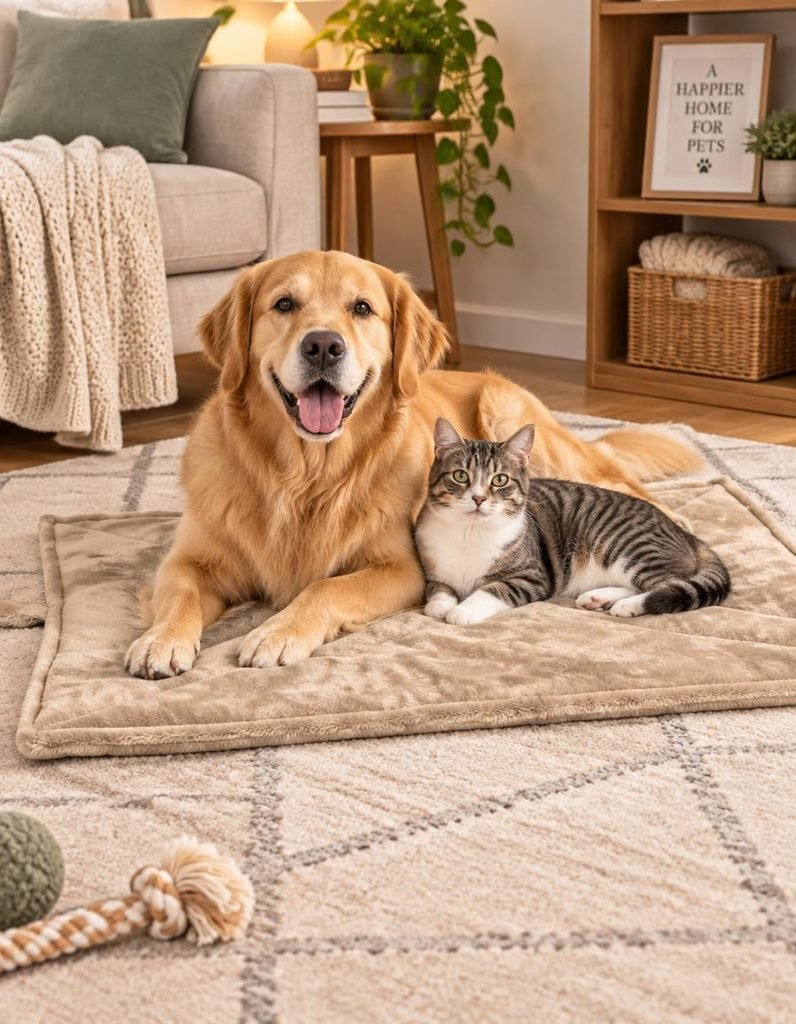
A crate tray is one of the coldest places in a house. It is thin plastic, it sits on the floor, and air moves freely underneath it. K&H’s crate pad is built for exactly that spot: it is sized to standard crate floors, has slits at the corners so it lies flat around the frame, and has a non-slip bottom so it doesn’t bunch up when the dog circles before lying down.
The top is microfleece, and the whole pad goes in the washing machine, which matters more in a crate than anywhere else. Size it to the crate, not the dog; if you are not sure what crate size you have, our guide to choosing the right dog crate size lists the standard floor dimensions. Pairing it with one of our crate cover picks cuts draughts from the sides as well as the floor.
- Best for: crated dogs and puppies, overnight crate time in winter
- Sizes: X-Small 14″ x 22″ up to XX-Large, matched to crate floors
- Watch out for: pick the size from your crate’s inside floor measurement
3. NWK Self Warming Thermal Pet Mat, X-Large – best for big sprawlers
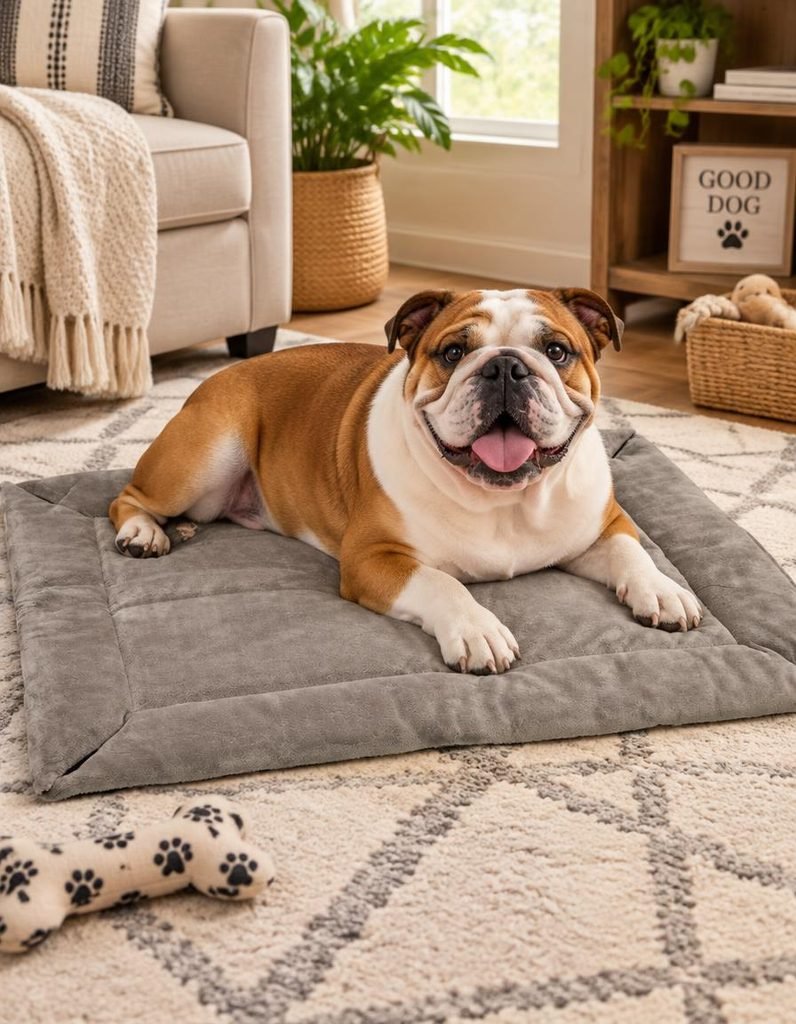
Large dogs are the ones most often let down by this category, because most self-warming mats are sized for cats. NWK’s X-Large mat is one of the few budget options sized for a big dog: at 45 by 28 inches, a Labrador can stretch out on it rather than hang off the edge. It’s a thin reflective thermal mat with no plug or cord, and the listing says it’s made with recycled material certified to the Global Recycled Standard.
At under half an inch thick, it is more blanket than bed, so it works best draped over the base of a big dog bed or folded double on a hard floor, which roughly doubles the insulation underneath your dog. For a big dog on a cold floor, folding it double is the single best thing you can do with it.
- Best for: large dogs, dogs that sleep stretched flat
- Size: 45″ x 28″
- Watch out for: thin on its own, so fold it or layer it on hard floors
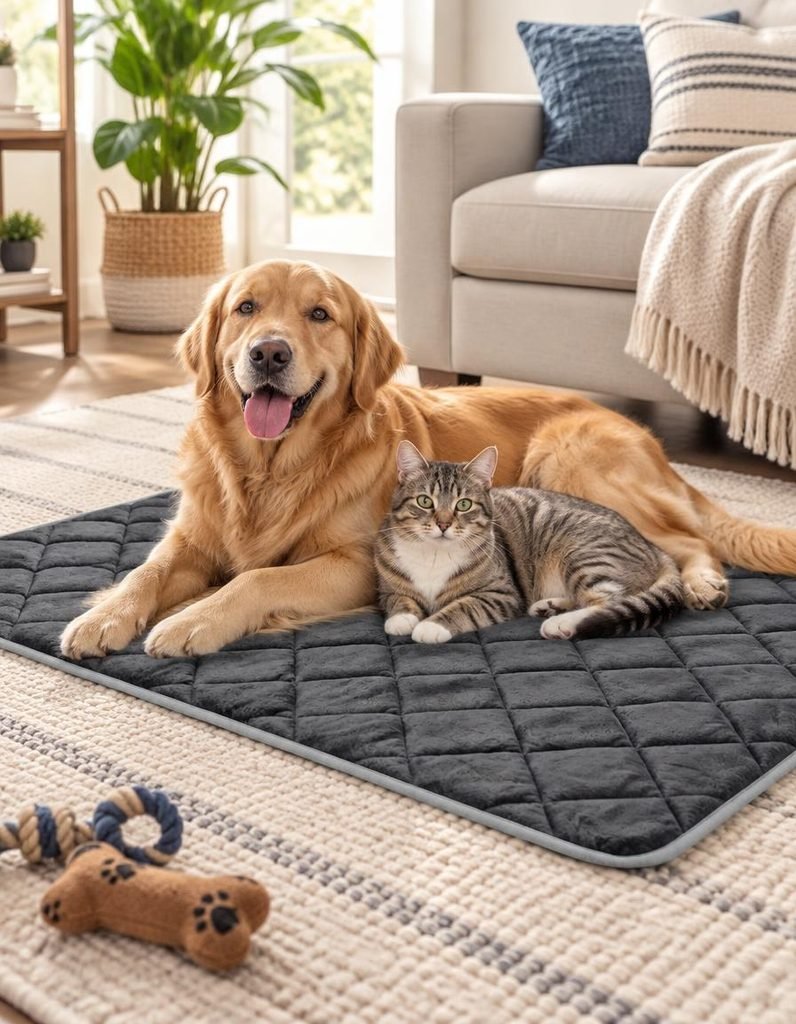
4. Aspen Pet Self-Warming Round Bed – best for small dogs that curl
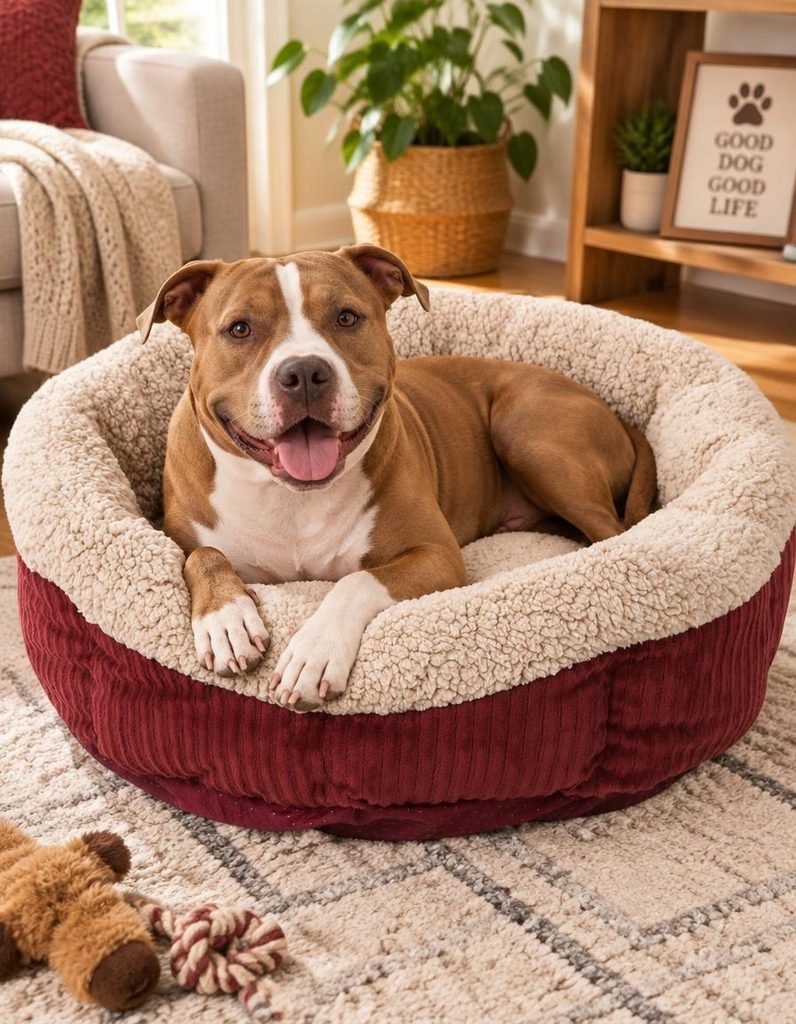
This is the bolster option, and it is the right self warming dog bed for the tight-ball sleepers described above. The round 19.5-inch bed has raised cushioned walls and a reflective layer under the sleeping surface, so a small dog curled in the middle sits inside a trapped pocket of its own warm air. It has a non-slip base and a faux lambswool surface.
Be honest about size here. The listing describes it for small pets under about 10 pounds, which makes it a Chihuahua, Yorkie, or toy-poodle bed, not a beagle bed. Small dogs are also the ones that lose heat fastest, so for a tiny dog in a cool house, this is the most effective pick on the page.
- Best for: toy and small breeds under about 10 lb, dogs that curl up
- Size: 19.5″ round
- Watch out for: too small for anything bigger than a toy breed
Self-warming beds work best when they fit snugly. Measure your dog below to get the right size.
Self-warming vs electric: why the “weaker” one is often the right one
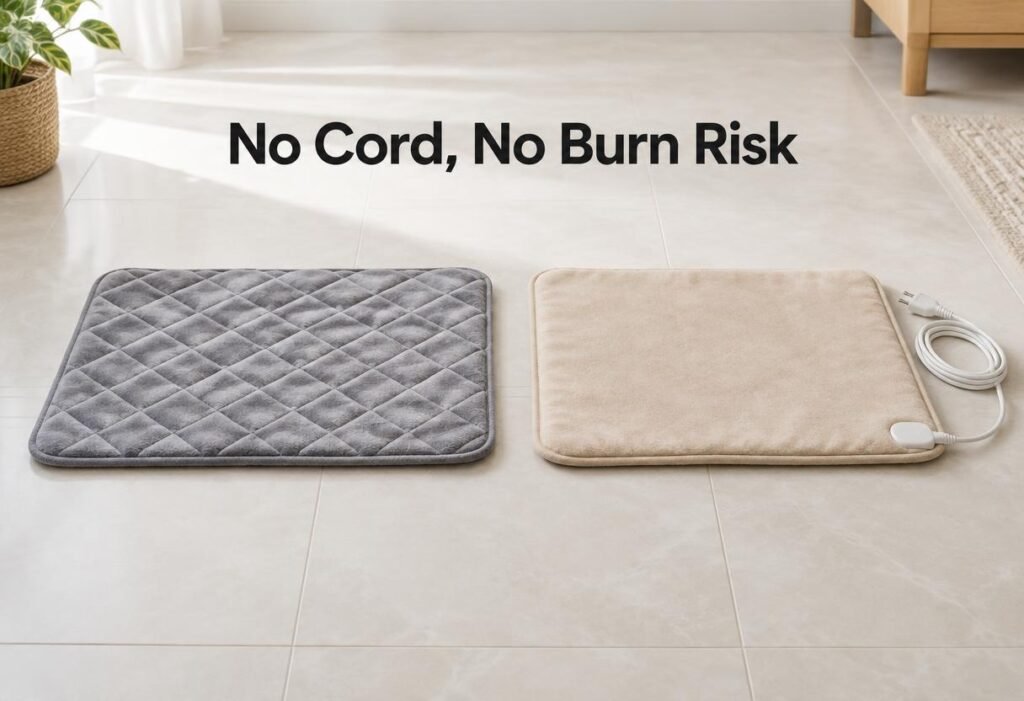
Electric heated pads do make real heat, and for some dogs that is genuinely needed. But they carry a risk that a self warming dog bed simply cannot: burns. Veterinary regulators have flagged this repeatedly. A Nevada veterinary board bulletin notes that the AVMA’s professional liability trust identified electric heating pads intended for human use, along with microwave-heated pads, as the devices most commonly linked to patient burns. Veterinary Practice News describes uneven hot spots and malfunctions as the usual cause.
The dogs most at risk are the ones who most want warmth: seniors who are slow to get up, dogs recovering from surgery, and dogs with thin coats. A self-warming mat cannot overheat, because its maximum temperature is the dog’s own. If you do use an electric pad, use one made for pets, cover only part of the bed so the dog can move off it, and never use a human heating pad.
When a self warming dog bed is not enough
Because the mat only recycles the dog’s own heat, it has hard limits worth stating plainly:
- Outdoor dogs in freezing weather. These mats are built for indoor rooms. A dog sleeping outside in sub-freezing temperatures needs proper shelter, not a mat. Kinship’s vet-reviewed guide stresses that cold tolerance varies hugely by size, coat, and age, so there is no single safe number.
- Sick or post-surgery dogs. A dog that can’t hold its own temperature has little heat for the mat to reflect. Ask your vet what warming they want you to use.
- Wet dogs. A damp coat loses heat fast, and a mat can’t fix that. Dry your dog first; our dog drying towel picks cover that step.
How to wash one without ruining it
Most mats in this category are machine washable (check each label), but the reflective layer is the fragile part. K&H’s own care instructions say to line dry or use the no-heat dryer cycle, and high dryer heat can crinkle or delaminate the metallised sheet. Wash cold, skip fabric softener, and air-dry flat. A self warming dog bed that has been through a hot dryer a few times may look fine and simply stop feeling warm.
One more small thing: some reflective sheets crinkle faintly when a dog moves. Most dogs ignore it within a night or two, but a noise-sensitive dog may avoid a new mat at first. Put a familiar blanket on top for the first few nights, and it usually settles. If your dog also needs a full-size bed underneath, our best dog beds roundup covers supportive bases, and in summer the same spot can swap to one of our dog cooling mat picks.
FAQ
Do self-warming dog beds really work?
Yes, within their limits. A self warming dog bed noticeably warms a dog in an indoor room by insulating it from the floor and reflecting body heat back. It will not heat a cold room or keep an outdoor dog safe in freezing weather.
Can a self-warming mat overheat my dog?
No. It has no heat source, so it can never get warmer than your dog’s own body. A dog that feels too warm will simply move off it, which is why these mats are considered safer than electric pads for seniors and unsupervised use.
Can I put a self-warming mat inside my dog’s existing bed?
Yes, and for thin mats like the ThermaNAP that is often the best use. The bed provides cushioning and floor insulation, and the mat adds the reflective layer on top.
Is a self warming dog bed good for puppies?
It can be, especially in a crate at night, but supervise at first because puppies chew. Choose a washable pad and check it regularly for torn fabric, since you don’t want a puppy swallowing batting or the reflective sheet. Our puppy crate training guide covers setting up the crate itself.
Why does my dog ignore the new mat?
Usually smell or sound. A new mat smells of the factory and may crinkle. Put it where your dog already likes to sleep, lay a blanket that smells of home on top, and give it a few nights.
The bottom line
Buy a self warming dog bed for what it is: an insulator that recycles your dog’s own warmth. Match the shape to how your dog sleeps: curled dogs get a bolster and sprawlers get a long flat mat, and match the thickness to the floor underneath. For most medium dogs, the Furhaven ThermaNAP Large is the easy first choice; for a crate, get the K&H crate pad; for a big dog, fold the NWK X-Large mat double; and for a tiny curled-up dog, the Aspen round bed does the most with the least.
Still looking for something?
Find the Right Gear for Your Dog
Tell us what's going on, and we'll point you to the picks and guides that fit your dog.
Describe what you needTry: pulls on the leash sheds everywhere peeing inside crate size