DailyPetPicks is reader-supported. As an Amazon Associate, we earn from qualifying purchases, at no extra cost to you.
Here’s something most clicker guides won’t tell you: when researchers have put the dog training clicker head to head against a spoken marker word and against plain food rewards, the clicker usually hasn’t won. A 2021 study was literally titled “The click is not the trick.” So why do so many trainers still swear by one, and is it worth a few dollars of your money?
It is, but for different reasons than the packaging claims. Below we cover what the research actually found, the real advantages of a dog training clicker (consistency, timing and ease for the human), how to pick one by sound level and grip, and four picks for different dogs and owners.
What the research says about clickers
A clicker is a marker: a sound that tells the dog “that exact thing you just did earns a treat.” It works because the click has been paired with food so many times that the dog learns to expect a reward the instant it hears it.
Three studies are worth knowing. In 2016, a University of Trieste team taught 51 pet dogs to open a breadbox using a clicker, the spoken word “bravo”, or food alone. As psychologist Stanley Coren summarised, there were no significant differences in how fast the groups learned or how well they generalised a week later. In 2021, researchers including Clive Wynne trained shelter puppies on sit-stay and targeting tasks with food only, a verbal marker or a clicker, and their paper in PeerJ concluded that no positive reinforcement method was significantly more effective than any other.
The third result is the interesting one. In a 2018 study of owners training at home, people using a dog training clicker reported finding nose-targeting less challenging than owners using food alone. The dogs weren’t measurably smarter; the humans found it easier. That is the honest case for a clicker.

So why use a dog training clicker at all?
- It sounds the same every time. Your voice changes with mood, volume and who’s speaking. “Good” said by three family members is three different sounds. A dog training clicker is identical whether you’re tired, excited or it’s your teenager holding it.
- It’s fast. A click takes a fraction of a second, so it can mark the exact moment a paw lifts or a bottom touches the floor. That precision matters most when you’re shaping a new behaviour in small steps.
- It separates “yes” from everyday chatter. Dogs hear their owners talk all day. A click only ever means one thing.
- It’s easier for the person. As the 2018 owner study suggests, having a clear tool to mark the moment helps people train more confidently.
The flip side is equally honest: a clicker is one more thing to carry, and if it’s in a drawer when your dog does something great, a consistent word like “yes” does the same job. Plenty of excellent trainers use both. The clicker for teaching new skills, the word for everyday life.
How to choose: sound level matters more than brand
The biggest difference between clickers isn’t quality; it’s how loud they are. A sharp, loud click carries across a park and cuts through wind and traffic. The same click right next to a sound-sensitive or anxious dog’s ear can make it flinch, which is the opposite of what you want from a sound that’s supposed to predict good things.
- Loud clicker: outdoor training, distance work, confident dogs.
- Soft clicker: indoor training, puppies, noise-sensitive or nervous dogs.
- Adjustable clicker: one tool for both, or a dog you’re not sure about yet.
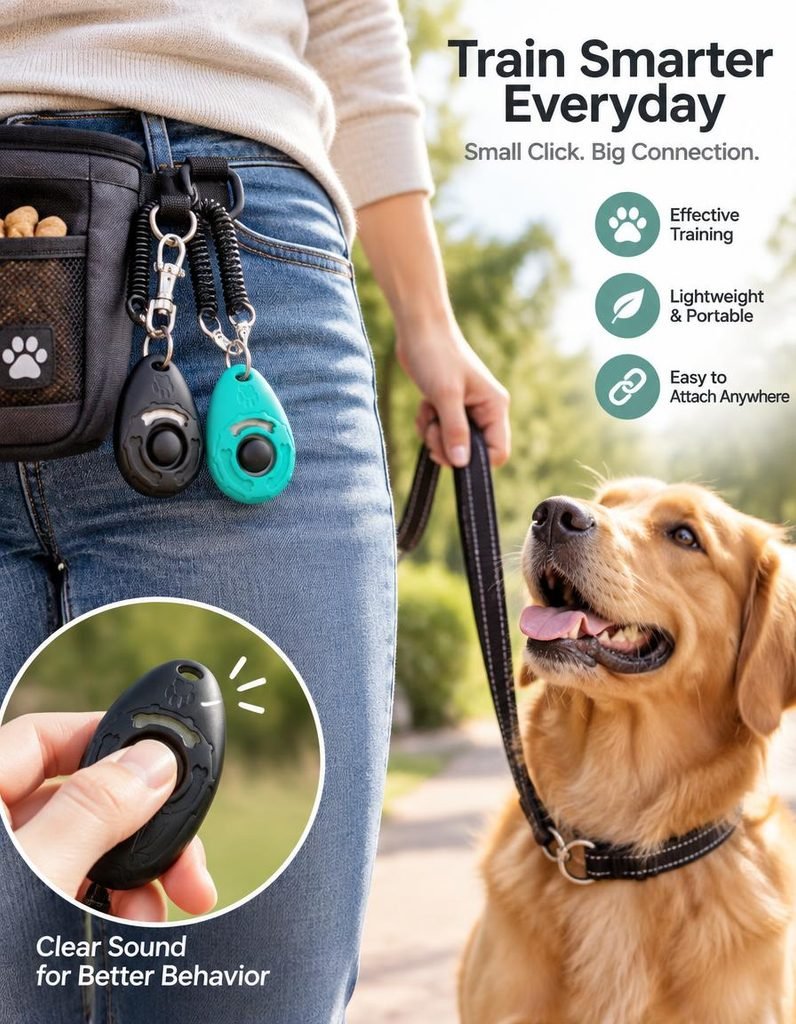
The second difference is how you hold it. You’ll often have a leash in one hand and a treat in the other, so a dog training clicker with a wrist strap or finger band means you can let go of it without dropping it. Pair it with a treat pouch and your hands stay free for the important part, delivering the reward quickly.
The 4 best dog training clicker picks
1. Starmark Pro-Training Clicker – best for outdoors and distance
Starmark’s clicker is one of the longest-running and best-selling options on Amazon, with a clear, consistent click designed to carry outdoors. It comes with a step-by-step training guide, which is genuinely useful if this is your first dog training clicker, and it clips to a keyring or lanyard so it can live on the leash.
Its strength is also its limit. It’s loud enough to mark a recall from across a field, which is exactly why it’s not our first choice for a nervous puppy in a small kitchen. For confident dogs and outdoor work, it’s the one to get.
- Best for: outdoor training, recall and distance work, confident dogs
- Sound: loud, crisp
- Watch out for: may startle sound-sensitive dogs; muffle it in a pocket for the first few clicks
2. PetSafe Clik-R Trainer – best for puppies and sensitive dogs
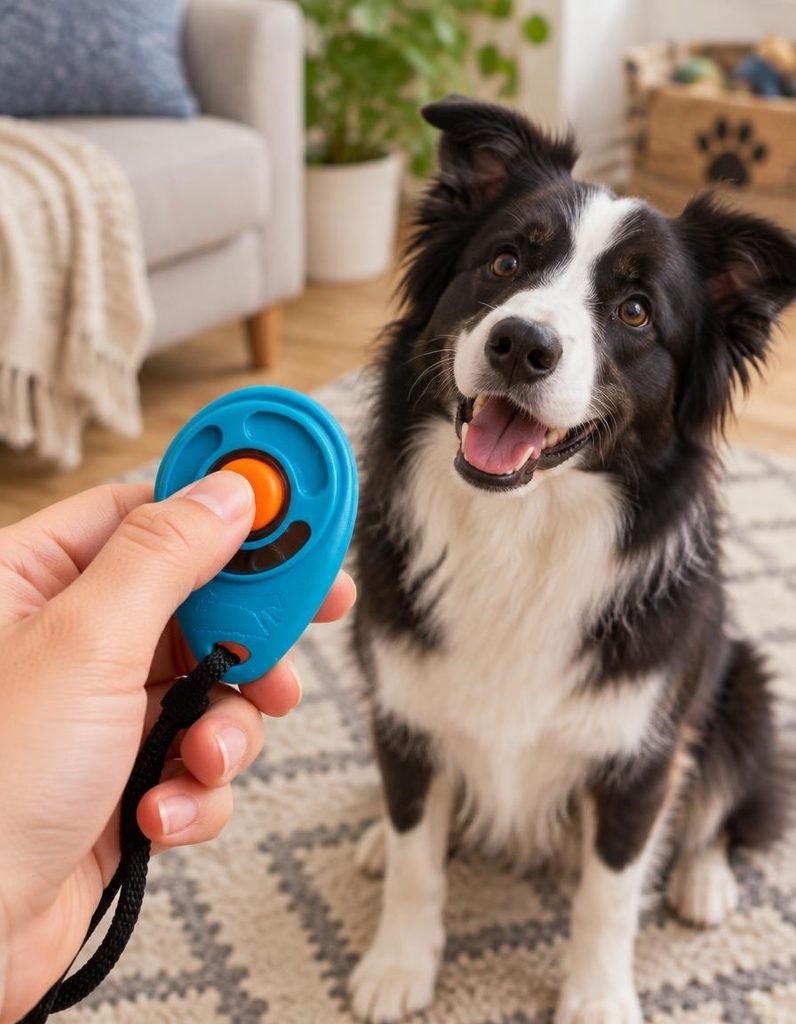
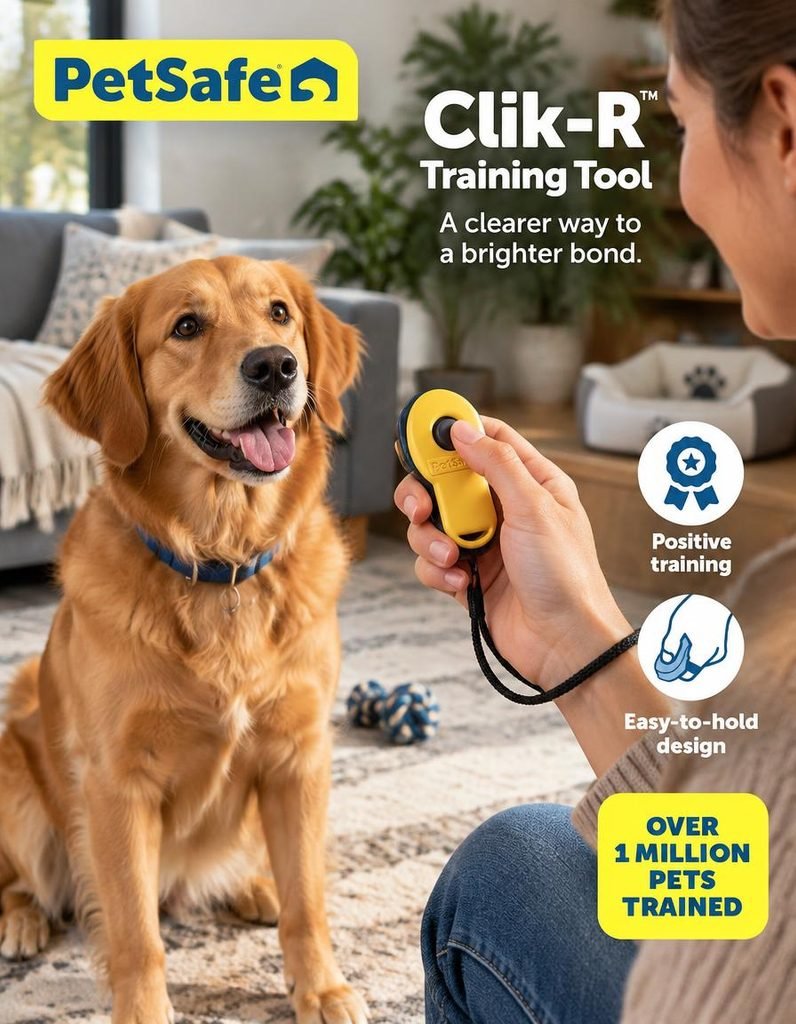
The Clik-R is the opposite tool: a deliberately soft, consistent click meant for indoor use and sensitive pets, with an attached finger band so it sits on your finger while your hand does other things. Buyers in the listing’s Q&A describe it as quite soft, which is exactly what you want for a puppy’s first lessons or a dog that startles at sudden noises.
That softness makes it a poor choice for a windy park or a busy street, where the dog simply may not hear it. Many owners end up owning this and pick 1: soft indoors, loud outdoors. It’s ideal for the early house manners covered in our crate training and potty training guides.
- Best for: puppies, nervous or noise-sensitive dogs, indoor training
- Sound: soft
- Watch out for: too quiet for outdoor or noisy environments
3. Educator Finger Clicker – best adjustable-volume clicker
If you don’t want to own two clickers, this is the compromise. Don’t let the brand confuse you: Educator is best known for e-collars, but this is a plain handheld clicker that straps to your finger, with no collar involved. One of Amazon’s top three in the category, it has four volume levels and a hook-and-loop finger strap, so you can turn it down for a sensitive dog or indoor sessions and up for the garden or the park.
The finger strap keeps it in place while you hold a leash, which makes it particularly handy for loose-lead work. If pulling is your main battle, our guide on how to stop a dog pulling on the leash uses exactly this kind of mark-and-reward approach.
- Best for: one clicker for every situation, dogs whose sound tolerance you’re still learning
- Sound: adjustable
- Watch out for: once you’ve charged it at one volume, keep it roughly there so the click stays recognisable
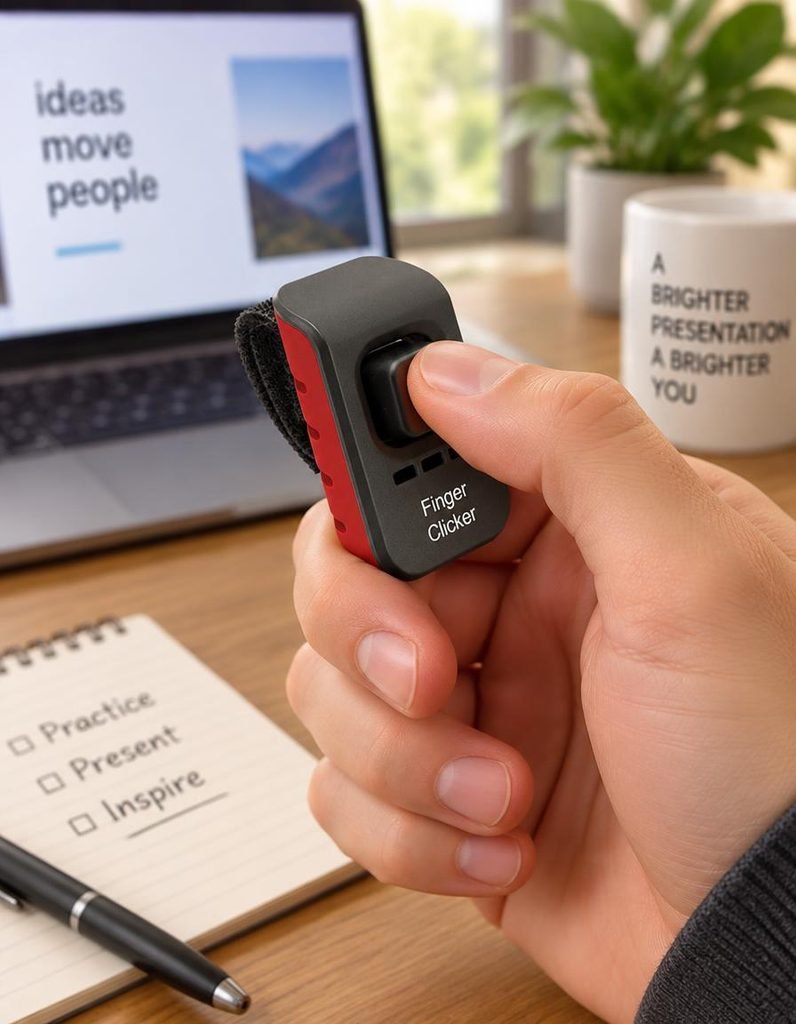
4. OYEFLY Dog Training Clicker with Wrist Strap – best budget pick
OYEFLY’s clicker is one of the two best-selling options on Amazon, and its appeal is simple: it’s cheap, lightweight and has a wrist strap so you can drop it mid-session without losing it. Check the listing for the pack size and colours on offer; having more than one dog training clicker means one can live by the back door, one in the car and one in your coat.
Budget clickers vary more in sound from unit to unit than the branded ones. Click each one a few times before you start and use the one your dog reacts to calmly. Once your dog knows the sound, stick with that clicker.
- Best for: trying clicker training cheaply, families, spares
- Sound: standard
- Watch out for: sound can vary between units; test before charging
How to start with a dog training clicker
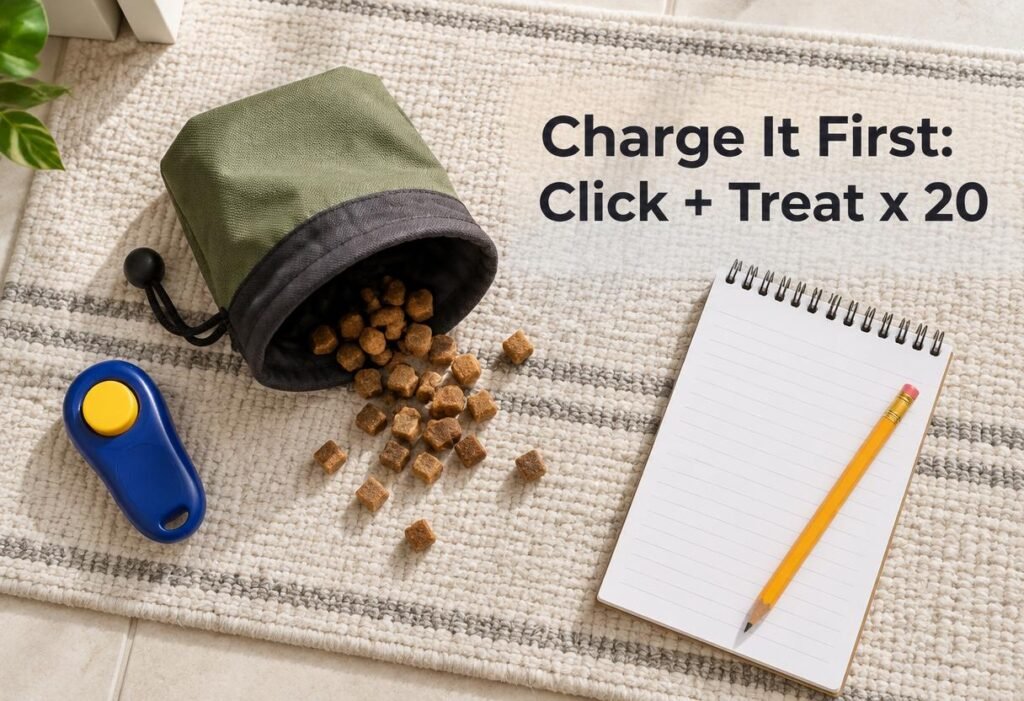
- Charge it. In a quiet room, click once and immediately give a tiny treat. Repeat 15 to 20 times, with a pause between each. Don’t ask for anything yet. You’ll know it’s charged when your dog’s head whips toward you at the sound.
- Use small, soft treats. You’ll be giving a lot of them, so pea-sized pieces your dog can swallow quickly work best. Our dog training treat picks are chosen for exactly this.
- Click the moment, then treat. The click marks the exact instant of the behaviour; the treat can follow a second or two later. Every click earns a treat, even if you clicked by accident.
- Start with something your dog already does. A sit, eye contact, or touching your hand with its nose. Click, treat, repeat.
- Keep sessions short. Three to five minutes, a few times a day, beats one long session.
- Fade the clicker for known skills. Once a behaviour is reliable on cue, you don’t need to click it any more. Keep the clicker for teaching new things.
One fun first project: teaching your dog to ring a bell to go outside. It’s a perfect clicker task, and our dog doorbell roundup covers the bells themselves.
Common clicker mistakes
- Using it to get attention. The click means “yes, reward coming”, not “look at me”. Clicking to call your dog dilutes it.
- Clicking without treating. Each empty click weakens the link between the sound and the reward.
- Clicking late. If you click as your dog stands up from a sit, you’ve rewarded standing up. Watch closely and click a fraction early rather than late.
- Clicking right by the ear. Hold the dog training clicker behind your back or in a pocket for sensitive dogs.
Clicker training runs on treats, so they add up fast. Check your dog’s daily treat budget with the calculator below.
FAQ
Does a clicker make dogs learn faster?
Studies so far haven’t found that it does. Dogs trained with a clicker, a marker word or food alone have learned at similar rates. The clicker’s advantages are consistency, precise timing and making training easier for the owner.
Can I use a word instead of a dog training clicker?
Yes. A short, distinct word like “yes” or “yip”, used consistently and always followed by a treat, works as a marker. Many trainers use a clicker for new skills and a word for everyday reinforcement.
My dog is scared of the clicker. What should I do?
Switch to a soft or adjustable clicker, click it inside a pocket or behind your back, and pair each click with a really good treat. If your dog is still uneasy, use a marker word instead.
Do I have to use a clicker forever?
No. Once a behaviour is reliable on cue, you can stop clicking it and reward occasionally with praise or treats. The clicker is a teaching tool, not a permanent requirement.
Is clicker training good for older dogs?
Yes. Dogs of any age can learn to associate the click with a reward. For older dogs with reduced hearing, a louder clicker, or a hand signal as the marker, may work better.
The bottom line
A dog training clicker isn’t magic, and the research says so. It’s a consistent, fast, cheap way to tell your dog exactly what earned the treat, and that makes training easier for you. Choose by sound: the Starmark for outdoors and confident dogs, the PetSafe Clik-R for puppies and sensitive dogs, the Educator if you want one adjustable clicker for everything, and the OYEFLY if you’d like to try it for the price of a coffee. Then charge it, keep the treats small, and click the moment, not the moment after.
Still looking for something?
Find the Right Gear for Your Dog
Tell us what's going on, and we'll point you to the picks and guides that fit your dog.
Describe what you needTry: pulls on the leash sheds everywhere peeing inside crate size